A sow producing 8 piglets per litter instead of 11 costs you ₱7,500 to ₱12,000 in lost weaners every cycle, and the damage compounds across 4-5 farrowings. Bad breeding decisions never hurt immediately. Inbred boars still sire piglets, gilts bred too young still get pregnant. Here are seven mistakes quietly draining backyard farms across Visayas and Mindanao.
Mistake #1: Breeding at First Heat
What happens: A gilt shows first standing heat at 5-6 months, and the farmer breeds her immediately because "she is ready."
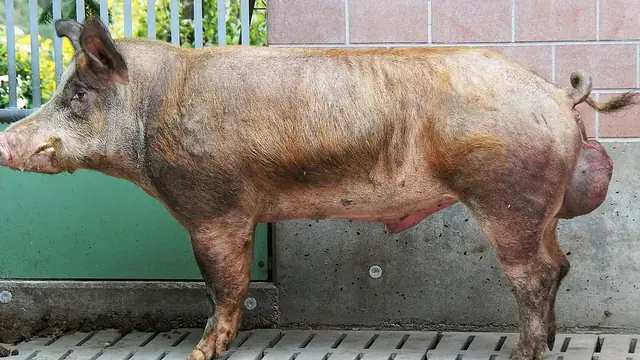
Why it is wrong: First heat does not mean reproductive maturity. At 5-6 months, most gilts weigh only 70-90 kg. Her body is still growing. If she gets pregnant now, nutrients go to the pregnancy instead of her own development. The result:
- First litter is small (typically 6-8 piglets instead of 9-11)
- Higher chance of farrowing complications (dystocia), the narrow pelvis is the single biggest predictor of a stuck delivery
- More stillbirths
- Sow's lifetime productivity is reduced because she never reaches her frame potential
The fix: Wait until the 2nd or 3rd heat cycle. For commercial crossbreeds (Landrace, Large White, Duroc crosses), breed at:
- Minimum age: 7.5-8 months
- Minimum weight: 120-130 kg
- Minimum heat cycles: 2nd or 3rd (not first)
For native pigs, which mature smaller, breed at 8-10 months and at least 60-70 kg. Most farmers we have talked to in Cebu and Leyte breed their native gilts way too early.
For the full guide, see when is a gilt ready to breed.
Mistake #2: Inbreeding in Small Herds
What happens: A farmer with 2-3 sows and one boar breeds father-to-daughter or brother-to-sister because "they are all good pigs" and buying a new boar is expensive.
Why it is wrong: Inbreeding depression is real and measurable. Research from FAO livestock genetics programs shows that each 10% increase in inbreeding coefficient reduces:
- Litter size by 0.3-0.5 piglets
- Piglet survival to weaning by 2-4%
- Growth rate by 2-5%
After just two generations of close inbreeding (father-daughter, then that offspring bred back), you can see noticeably smaller, weaker litters. The piglets may look fine at birth but grow slower and convert feed worse. This is especially common in isolated barangays in Samar, Leyte, and Bohol where farmers have limited access to unrelated boars.
Provincial governments in pig-producing areas like Negros Occidental run breeder loan programs that deliver boars to improve genetics. Ask your Municipal Agriculturist about availability, or check if the BAI PNAD program has native breeding stock in your region.
The fix:
- Replace your boar every 18-24 months or whenever his daughters reach breeding age
- Swap boars with a neighbor. Costs nothing and breaks the inbreeding cycle
- Use AI (artificial insemination). Semen from improved boars is available for ₱300-₱800 per dose through the DA's AI sa Barangay program, with 16 centers in Western Visayas alone. Your municipal agriculturist can connect you with the nearest provider.
- Rule of thumb: never breed animals that share a grandparent
| Inbreeding Level | Relationship | Litter Size Impact | Piglet Survival Impact |
|---|---|---|---|
| 0% (unrelated) | No common ancestors | Baseline | Baseline |
| 6.25% | Half-siblings | -0.2 piglets | -1% |
| 12.5% | Half-uncle/niece | -0.4 piglets | -2% |
| 25% | Father/daughter or full siblings | -0.8 to -1.2 piglets | -4 to -6% |
| 37.5% | Two generations close breeding | -1.5+ piglets | -6 to -10% |
Mistake #3: Keeping Unproductive Sows Too Long
What happens: A sow has been producing litters of 6-7 piglets for the last 3 cycles, but the farmer keeps her because "she is a good mother" or because replacing her costs money.
Why it is wrong: Every farrowing cycle with a low-litter sow costs you the difference between her output and what a good sow would produce.
Example math:
- Your sow produces 7 piglets per litter, 2.2 litters per year = 15.4 weaners/year
- A good sow produces 10 piglets per litter, 2.2 litters per year = 22 weaners/year
- Difference: 6.6 weaners/year at ₱3,000 each = ₱19,800/year in lost revenue
- A replacement gilt costs ₱8,000-₱15,000
The replacement pays for itself within 6-8 months. You can run the numbers yourself with the profit simulator.
Free Tool
Pig Profit Simulator
Plug in your sow's actual litter size and weaner price, then compare it to a herd-average sow. The peso difference per year usually justifies the replacement gilt twice over.
The fix: Cull sows that consistently produce below your herd average. Specifically, cull when:
| Reason to Cull | Threshold |
|---|---|
| Consecutive small litters | 2+ litters below 8 piglets born alive |
| High pre-weaning mortality | More than 20% piglet death across 2 litters |
| Poor mothering | Crushing or refusing to nurse repeatedly |
| Reproductive failure | Fails to conceive after 3 breeding attempts |
| Structural problems | Lameness, teat problems, chronic illness |
| Age | After 6-8 parities (production typically declines) |
"Ayaw kaluoy sa anay nga dili na produktibo, mas dako ang malugi nimo." (Do not take pity on a sow that is no longer productive. Your losses are bigger.)
Mistake #4: Wrong Boar Selection
What happens: The farmer buys the cheapest boar available, or picks one based solely on size ("the biggest boar must be the best").
Why it is wrong: The boar contributes 50% of the genetics to every piglet. A bad boar affects every litter he sires. Size alone tells you nothing about:
- Litter size genetics (boar contributes to this through his daughters)
- Feed conversion efficiency
- Growth rate potential
- Carcass quality (backfat, loin depth)
- Structural soundness passed to offspring
The fix: When selecting a boar, evaluate:
| Trait | What to Look For | Why It Matters |
|---|---|---|
| Breed/Cross | Duroc or Pietrain for terminal sire; Landrace or Large White for maternal line | Terminal sires add growth and meat quality; maternal lines add litter size |
| Growth record | 100 kg by 5-5.5 months | Indicates feed efficiency genetics |
| Conformation | Long body, strong legs, good feet, level topline | Structural problems pass to offspring |
| Teat count | Minimum 12 (6+6), evenly spaced | Boars with fewer teats sire gilts with fewer teats |
| Temperament | Active but manageable | Aggressive boars are dangerous; lethargic boars have low libido |
| Source | Known breeder with records, not a random market pig | Records tell you the sow side (litter size, survival) |
A good boar costs ₱15,000-₱25,000 for commercial breeds from NPPC-accredited multiplier farms in Tarlac, Bulacan, or Davao. That feels expensive. But if he sires 200-400 piglets during his working life, his per-piglet genetic contribution cost is ₱40-₱125. Cheap boars that produce slow-growing, small-litter offspring cost far more in the long run. Honestly, the boar is the single best investment you can make on a small farm.
For breed comparison data, see best pig breeds for Philippine small farmers.
Mistake #5: Ignoring Litter Records
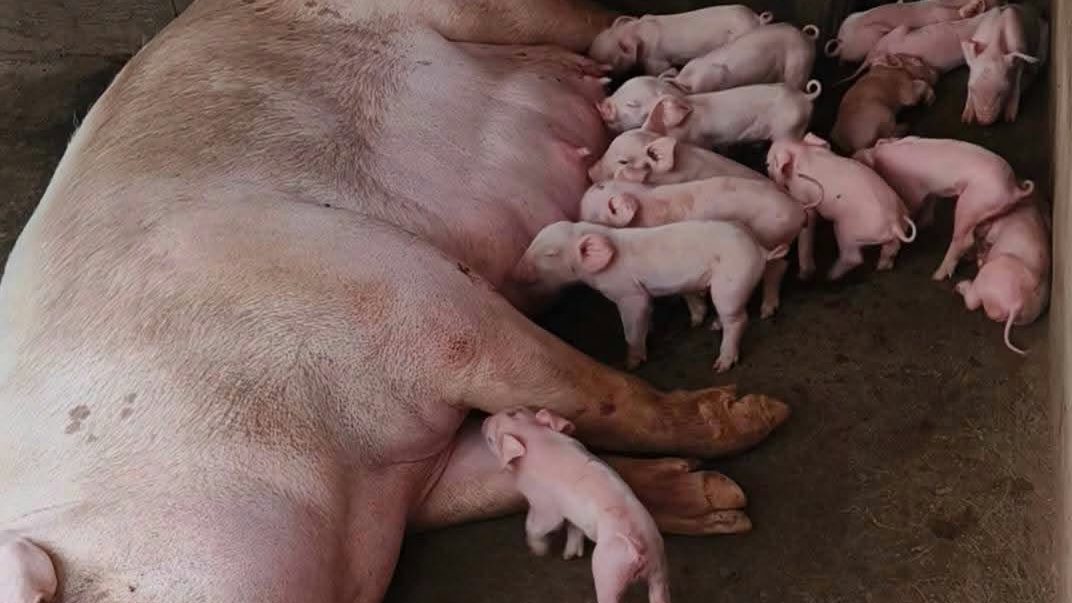
What happens: The farmer does not track which sow produced how many piglets, how many survived to weaning, or which boar was used. Decisions are made from memory and gut feeling.
Why it is wrong: Without records, you cannot identify your best and worst sows. You cannot track whether litter sizes are improving or declining. You cannot see patterns in piglet mortality. You are managing blind.
The fix: Keep a simple record for each sow. It does not need to be fancy. A notebook works.
Minimum records per farrowing:
| Data Point | Example |
|---|---|
| Sow ID | Sow #3 |
| Breeding date | January 15, 2026 |
| Boar used | Boar #1 (Duroc) |
| Farrowing date | May 19, 2026 (114 days gestation) |
| Born alive | 10 |
| Stillborn | 1 |
| Mummified | 0 |
| Weaned | 9 (at 28 days) |
| Weaning weight (avg) | 6.5 kg |
| Notes | Farrowed at night, no assistance needed |
After 2-3 litters, patterns emerge. You will see which sows consistently produce 10+ piglets and which always come in at 6-7. That data drives culling and replacement decisions worth tens of thousands of pesos per year.
According to pig333.com production benchmarks, top-performing Philippine farms wean 24-26 piglets per sow per year. Backyard average is 14-18. The difference is not just genetics, it is management informed by records.
See also native pig litter size expectations for breed-specific benchmarks.
Mistake #6: Not Culling Soon Enough
What happens: The farmer knows a sow or boar is underperforming but delays the culling decision for months or even years. "Maybe next litter will be better."
Why it is wrong: Every cycle you keep an underperformer, you are paying her feed bill (₱80-₱120/day for a gestating/lactating sow) while getting below-average returns. Sow feed over a full gestation + lactation cycle runs ₱12,000-₱18,000. If she only produces 6 weaners worth ₱3,000 each (₱18,000), you barely break even on feed alone. And you have not counted pen space, vaccines, or your time.
Meanwhile, that pen could hold a replacement gilt who produces 9-11 piglets.
The fix: Set clear culling criteria (see table in Mistake #3) and follow them. The emotional attachment is real. These are animals you have cared for. But a farm is a business. A sow that costs more than she produces is not doing well by any measure.
Practical culling schedule:
- Evaluate every sow after weaning each litter
- Give one "grace" litter if a normally good sow has one bad cycle (illness, stress)
- Two consecutive underperforming cycles = cull
- Sell cull sows as breeder stock (if still reproductively sound) or for processing. Cull sow price runs ₱120-₱160/kg liveweight in most regions. That is still decent money, pretty much enough to cover half a replacement gilt.
Mistake #7: Overbreeding Young Gilts
What happens: The farmer breeds a gilt on her first successful heat after reaching target weight, then rebreeds her at the first heat after weaning her first litter, without giving her time to recover body condition.
Why it is wrong: A gilt's first parity is the hardest on her body. She is still growing, lactation depletes her reserves, and if she is rebred before recovering condition, her second litter is often worse than the first. Research from Merck Veterinary Manual swine reproduction guidelines shows that gilts rebred in poor body condition have:
- 1-2 fewer piglets in the second litter
- Higher embryonic mortality
- Greater risk of not conceiving at all
The fix:
- After weaning the first litter, let the gilt skip one heat cycle before rebreeding (breed at 2nd post-weaning heat, about 5-6 weeks after weaning)
- Ensure she is at body condition score 3-3.5 (on a 1-5 scale) before rebreeding
- Feed a flushing diet (increase feed by 30-50%) for 10-14 days before and after breeding to improve ovulation rate and embryo survival
- From 2nd parity onwards, breed at first post-weaning heat if body condition is adequate
| Parity | Recommended Rebreeding Timing | Why |
|---|---|---|
| After 1st litter | 2nd post-weaning heat (~35-42 days post-weaning) | Allow body recovery from first lactation |
| After 2nd litter | 1st post-weaning heat (~5-7 days post-weaning) if BCS 3+ | Body is mature, can handle faster rebreeding |
| After 3rd+ litter | 1st post-weaning heat (~5-7 days post-weaning) if BCS 3+ | Mature sows recover faster |
For heat detection techniques, see how to tell if a sow is in heat.
Summary: The Seven Mistakes at a Glance
| # | Mistake | Consequence | Fix |
|---|---|---|---|
| 1 | Breeding at first heat | Small first litter, farrowing problems, reduced lifetime production | Wait for 2nd-3rd heat, 8+ months, 120+ kg |
| 2 | Inbreeding in small herds | Smaller litters, weaker piglets, poor growth | Replace boar every 18-24 months, swap with neighbors, use AI |
| 3 | Keeping unproductive sows | ₱15,000-₱20,000/year in lost weaner revenue per sow | Cull after 2 consecutive poor litters |
| 4 | Wrong boar selection | Every piglet inherits poor genetics | Evaluate growth records, conformation, source |
| 5 | No litter records | Cannot identify best/worst animals, managing blind | Simple notebook: dates, born alive, weaned, weights |
| 6 | Delaying culling | Feeding a money-losing sow at ₱80-120/day | Set criteria, evaluate after each weaning |
| 7 | Overbreeding young gilts | Poor 2nd litter, higher failure-to-conceive rate | Skip one heat after 1st litter, ensure good body condition |
Every one of these mistakes is fixable without spending much money. The most expensive fix (a new boar) pays for itself within one cycle. Most fixes cost nothing. They just require discipline and record-keeping.
Bisaya / Cebuano
Para sa mga mag-uuma nga nagpa-anak og baboy
7 ka sayop sa pagpa-anak nga makadaot sa imong ganansya:
- Ayaw pa-anaka ang gilt sa una nga init. Hulata ang 2nd o 3rd heat, 8 ka bulan na ang edad, 120 kg na ang timbang.
- Ayaw i-breed ang amahan sa anak. Ilisan ang boar kada 18-24 ka bulan o baylo sa silingan.
- Ayaw tagai og taas nga pasyensya ang anay nga gamay og anak. Kung 2 ka sunod nga parity gamay, ibaligya na.
- Pagpili og maayong boar. Ayaw kuha ang pinaka-barato lang, tan-awa ang growth record ug porma.
- I-record ang matag pag-anak. Pila ang buhi, pila ang namatay, unsa nga boar gigamit.
"Ang maayong genetics, maayong resulta. Ang walay record, walay improvement." (Good genetics, good results. No records, no improvement.)
Learn More
- When is a gilt ready to breed?, full guide on first breeding timing
- How to tell if a sow is in heat, heat detection techniques
- How to tell if your pig is pregnant, pregnancy confirmation signs
- Sow abortion / nakunan response, what to rule out and how to react
- Cull-sow timing + replacement math, when productive parity ends
- Native pig litter size, breed-specific litter expectations
- Why piglets die in the first week, reduce pre-weaning mortality
- Best pig breeds for Philippine small farmers, breed comparison guide
- Breeding & Production topic cluster, the full sow-management library
Sources: FAO livestock genetics and breeding guidelines, Merck Veterinary Manual — Management of Reproduction in Pigs, pig333.com production benchmarks, DA AI sa Barangay program (ATI Western Visayas), BAI Philippine Native Animal Development (PNAD) program, Negros Occidental breeder loan program (SunStar), Lanada et al. 2005 — Philippine smallholder pig production (Preventive Veterinary Medicine).