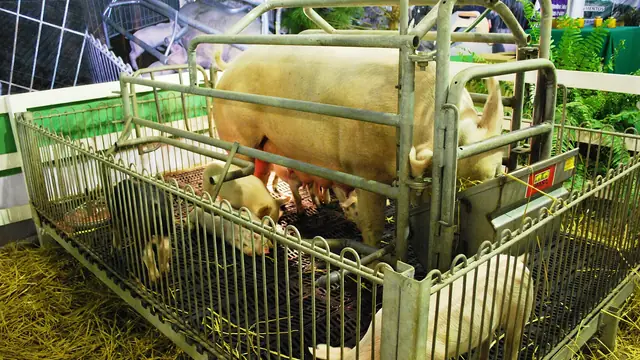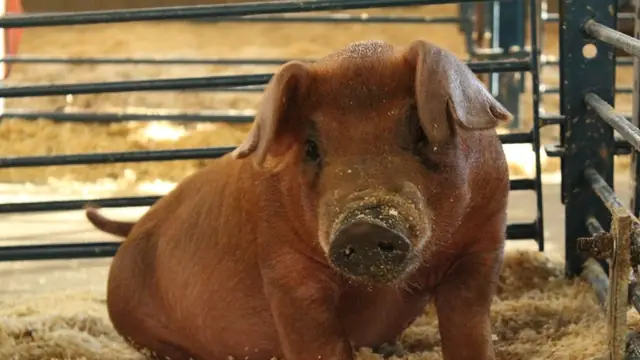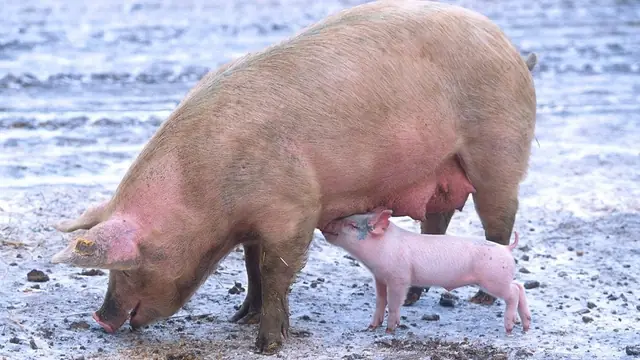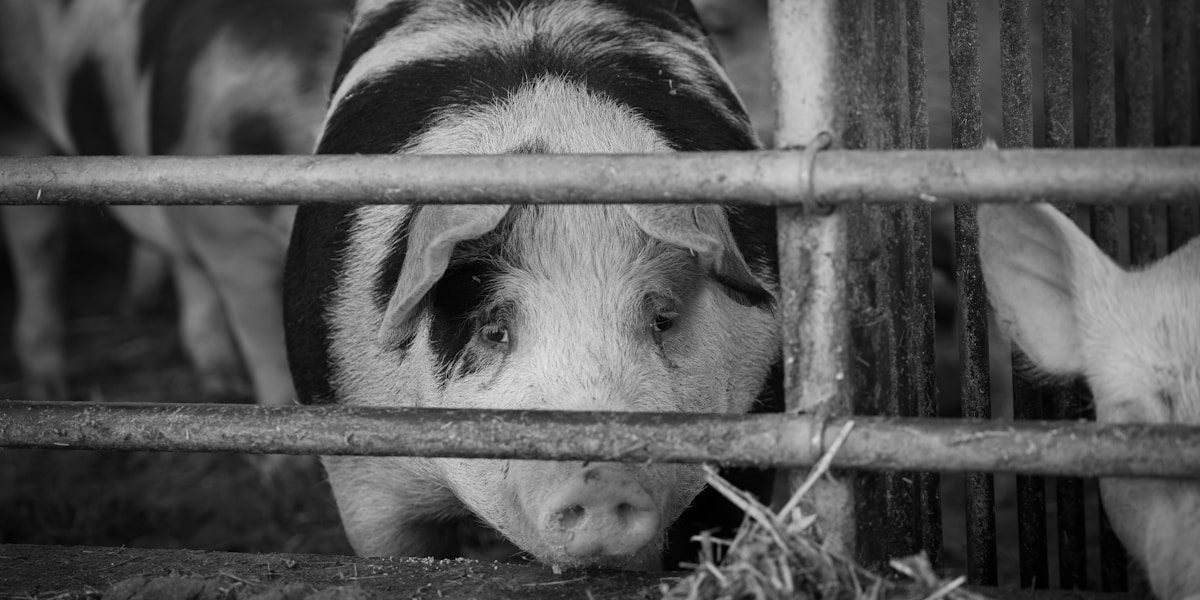
A gilt is ready to breed at 7.5-8 months and 120-130 kg for improved breeds (Landrace, Large White, Duroc crosses), or 6-7 months and 40-50 kg for native pigs — and skip her first heat. Breed on the 2nd or 3rd cycle for 1-2 more piglets per litter. Most backyard farms breed too early and pay for it in smaller litters and harder farrowings.
"Hulaton ang ikaduha nga init." (Wait for the second heat.)
Here is what the research says about when a gilt is truly ready, and how to set her up for a good first pregnancy.
Minimum Requirements Before Breeding
| Criterion | Improved Breeds (Landrace, Large White, Duroc crosses) | Native Pigs |
|---|---|---|
| Age | 7.5–8 months minimum | 6–7 months |
| Weight | 120–130 kg | 40–50 kg |
| Heat cycles | At least 2nd heat (skip the first) | 2nd heat |
| Body condition | Moderate, not too fat, not thin | Moderate |
| Teats | Minimum 12, well-spaced | 8–10 common for native |
Why skip the first heat? First heats produce fewer eggs (lower ovulation rate), meaning fewer piglets. By the 2nd or 3rd cycle, the gilt's reproductive system is more mature and litter size improves by 1–2 piglets. The Merck Veterinary Manual's breeding management guide confirms that ovulation rate increases over the first four parities, with the 4th to 6th litters being the largest.
Most farmers I talk to in Visayas skip the first heat and breed on the second. Some breeders in Davao and Bukidnon wait for the third cycle on Landrace and Large White gilts, especially if the animal hasn't hit 120 kg yet. That extra 21 days of growth is worth 1–2 more piglets per litter.
Signs a Gilt Is Mature Enough
Beyond age and weight, look for these physical indicators:
- Body frame is fully developed. Broad back, good length, strong legs. If she still looks like a grower, she's not ready.
- At least 12 functional teats. Count them before selecting a gilt for breeding. Fewer than 12 means she cannot nurse a full litter. Count on the boar too.
- Regular heat cycles. She should have shown at least 2 clear heats, roughly 21 days apart. The Merck Veterinary Manual puts the average estrous cycle at 18–24 days, with estrus in gilts lasting 36–48 hours.
- No leg or foot problems. Structural issues worsen during pregnancy under the extra weight.
- Good appetite and health. No chronic cough, no mange, no history of poor growth.
"Kinahanglan dako na siya, dili pa baktin." (She needs to be big enough, not still a piglet.)
Body Condition Score: The Quick Visual Check
Body condition score (BCS) on a 1-5 scale is what experienced breeders actually use. Skip the calipers, just learn what a BCS 3 looks like and feel for the ribs and hip bones.
| BCS | What you see | Breeding decision |
|---|---|---|
| 1-2 | Hip bones and ribs prominent | Too thin. Delay breeding, increase feed. |
| 3 | Ribs felt with light pressure, hip bones rounded | Target. Breed her. |
| 4 | Need firm pressure to feel ribs | Slightly fat. Acceptable but flush carefully. |
| 5 | Cannot feel ribs even with pressure | Too fat. Conception drops, savaging risk rises. |
A BCS 3 gilt at 120 kg conceives more reliably than a BCS 4 gilt at 130 kg. Most gilts I have seen culled after one parity were either underweight at first breeding or overweight, the middle is where the litters come from.
Where to Source Quality Gilts
The biggest mistake backyard farmers make is buying whatever gilt is cheapest at the local market. A ₱15,000 gilt from an unknown source might save you money upfront but could cost you 2–3 fewer piglets per litter for years.
What replacement gilts cost (2025–2026): Breeder gilts from established farms run ₱220–300 per kg liveweight, or roughly ₱19,800–33,000 per head for a 90–110 kg animal, according to PSA and DA price monitoring data. Native gilts cost less, ₱3,000–6,000 per head depending on your province.
Where to buy:
- BAI-accredited breeder farms. INFARMCO is one of the larger Philippine-bred suppliers of Landrace, Large White, and F1 gilts. Ask for pedigree certificates and genetic performance records.
- Provincial multiplier farms. Your Municipal Agriculturist's office can point you to accredited breeders in your area. In Negros Occidental, Jamarli Inc. in Bago City supplies performance-tested breeding stock through the provincial government's breeder dispersal program.
- DA INSPIRE program. The government's Integrated National Swine Production Initiatives for Recovery and Expansion (INSPIRE) program disperses gilts to qualified backyard farmers and cooperatives. In 2025, the DA allocated ₱600 million for swine repopulation in ASF-affected zones, and plans to procure 32,000 gilts for distribution in early 2026.
- LandBank SWINE lending. If you need financing, LandBank's Special Window to Nurture Hog Enterprises (SWINE) program offers loans for breeding stock. DA-ACPC also provides up to ₱300,000 for individual borrowers at 0% interest, payable in 5 years.
Ask your Municipal Agriculturist about current gilt dispersal programs in your area. Many LGUs run their own breeder loan programs where you receive a gilt and repay with piglets from the first litter.
Preparing the Gilt for Breeding
Flushing
Increase the gilt's feed by about 1 kg per day (50% more than maintenance) for 10–14 days before the expected heat. This "flushing" technique stimulates a higher ovulation rate, potentially adding 1 more piglet to the litter.
A 50 kg bag of B-MEG Hog Gestating feed costs around ₱1,400–1,600 depending on your area. At 1 kg extra per day for 14 days, that's roughly 14 kg or about ₱400–450 worth of extra feed. Pretty cheap for an extra piglet.
Return to normal feeding after breeding. Do not overfeed during gestation. Fat sows have more farrowing complications and higher embryo mortality.
Boar exposure
House the gilt within sight and smell of a mature boar starting at about 5.5 months of age. Boar pheromones stimulate stronger and more regular heat cycles, reducing the chance of "silent heats" that are hard to detect.
If you don't own a boar, ask a neighbor if you can pen your gilt next to theirs for a few weeks before the target breeding date. Most will agree, lalo na kung ila sad ang laki nga ipasakop.
Record keeping
Write down every heat date you observe. This lets you predict the next cycle and plan the breeding. A simple calendar on the pen wall works. Nothing fancy needed.
Natural Service vs Artificial Insemination
Most backyard farmers in the Philippines still use natural service (hand-mating), but artificial insemination (AI) is expanding fast, especially in Western Visayas and parts of Mindanao.
| Factor | Natural Service | Artificial Insemination (AI) |
|---|---|---|
| Cost per breeding | ₱500–1,500 stud fee, or 1 piglet from the litter | ₱150–400 per semen dose (2 doses typical) |
| Genetics access | Limited to boars in your barangay | Access to genetically superior boars from accredited AI centers |
| Disease risk | Direct contact spreads diseases | No animal contact, lower biosecurity risk |
| Skill needed | Basic (supervise mating) | Trained technician or farmer training required |
| Availability | Depends on local boar owners | DA's "AI sa Barangay" program covers 16+ centers in Region 6 alone |
The DA's AI sa Barangay program provides village-level AI services through the Agricultural Training Institute. Each center receives two boars, a semen refrigerator, microscope, and other lab equipment. Processed semen from genetically superior boars is sold at subsidized rates. The program currently operates in Iloilo, Aklan, Capiz, Antique, Negros Occidental, and Guimaras.
DA-BAI Administrative Order No. 02, Series 2009 sets the standards for AI centers: boars must be sourced from BAI-accredited breeder farms, minimum 7 months old at first collection, with annual replacement of 50% to keep genetics fresh.
If AI services aren't available in your municipality, natural service is still fine. Just make sure the boar isn't related to your gilt.
First Pregnancy Risks
Even with proper timing, first-time mothers face higher risks:
- Smaller litters. First-parity sows average 1–2 fewer piglets than experienced sows. Litter size is usually smallest in the first litter and peaks between the third and fifth, per Alberta Pork Research's guide on ThePigSite, which tables 9.5 born alive at parity 1 against 11.0–11.5 at parities 4–5. Expect 7–9 total born on a first litter for improved breeds under backyard conditions. Commercial-farm figures run higher, but they come from controlled conditions with air-conditioning and precise nutrition. Don't count on those numbers.
- Higher risk of difficult farrowing (dystocia). The gilt's pelvic canal is narrower than a mature sow's, see my full guide on recognizing and managing dystocia in pigs for what to do when labor stalls.
- Savaging. Some first-time mothers attack or reject their newborn piglets out of confusion or stress. More common than most guides admit.
- Higher crushing rate. Inexperienced sows don't lie down carefully. This is the leading cause of piglet death in the first week.
Be present during the gilt's first farrowing. Have supplies ready: clean towels, iodine for navels, thread for tying umbilical cords. If labor stalls for more than 30 minutes between piglets, call your nearest veterinarian or animal health technician.
Choosing the Right Boar
"Dili parente ang laki." (The boar should not be a relative.)
Inbreeding is extremely common in Philippine barangays where one boar services every sow in the area for years. Sus, the results show up fast: smaller litters, weaker piglets, higher mortality.
Source your boar from a different farm, different barangay. Or ask your Municipal Agriculturist about boar loan programs. In Negros Occidental, the provincial veterinary office distributes performance-tested boars from Jamarli Inc. to pig raiser associations in multiple districts. Replace or rotate boars every 1–2 years.
"Taga pila ka titi?" Count teats on both the gilt and the boar. Select for 12+ teats on both sides. Teat count is heritable, and you don't want to breed a 14-teat gilt to a 10-teat boar.
If you're buying an F1 gilt (Landrace × Large White cross) for a backyard fattening operation, breed her to a terminal sire line like Duroc. The three-way cross gives you good mothering from the F1 dam and fast growth from the Duroc sire. That's the standard commercial approach, scaled down.
Mistakes That Cost You Piglets
Most of these are preventable. And most of them, I see repeated every farrowing season across Visayas and Mindanao.
- Breeding at first heat. Skip it. The 2nd or 3rd cycle gives a larger litter, every time.
- Gilt too thin or too fat at breeding. Both reduce conception rate. Target moderate body condition, ribs not visible but not buried in fat.
- Not counting teats. A gilt with only 8–10 teats cannot nurse a full litter of 12 piglets. You'll end up bottle-feeding or losing the runts.
- Using a related boar. Inbreeding depression shows up immediately in litter size and piglet vigor. If the boar has been servicing your neighbor's sows for 3+ years, find a different one.
- No flushing. About ₱400–450 worth of extra feed for 14 days. That's a missed chance at 1 more piglet worth ₱2,500–5,000 at weaning.
- Not being present at first farrowing. First-time mothers are unpredictable and need supervision. Budget the time.
- Buying the cheapest gilt available. A quality F1 gilt from an accredited farm costs ₱20,000–30,000, but she'll produce larger, healthier litters for 5+ parities. Ang barato, mahal sa kadugayan.
Worked Example: Quality F1 Gilt vs Cheap Market Gilt
The cheap-gilt math feels good for one cycle and then quietly bleeds money for years. Here is the side-by-side over 5 parities, using realistic backyard numbers.
| Metric | Quality F1 (BAI-accredited) | Cheap market gilt |
|---|---|---|
| Purchase price | ₱25,000 | ₱12,000 |
| Avg total born/litter (parity 1-5) | 10.5 piglets | 7.5 piglets |
| Pre-weaning mortality | 12% | 22% |
| Avg weaned/litter | 9.2 piglets | 5.8 piglets |
| Total weaned over 5 parities | 46 piglets | 29 piglets |
| Weaner price (₱2,500 each) | ₱115,000 | ₱72,500 |
| Net over purchase price | ₱90,000 | ₱60,500 |
The quality gilt produces ₱29,500 more income over her productive life despite costing ₱13,000 more upfront. And that ignores the carcass premium when she is finally culled, F1 sows from accredited farms still grade well at slaughter, while market-source culls often go at penalized rates because of mixed breed traits and unknown health history.
The math gets even more lopsided if you breed her to a Duroc terminal sire and sell finishers instead of weaners.
Free Tool
Pig Profit Simulator
Plug in your gilt cost, expected litter size, and weaner price to model your own 5-parity returns. The default scenarios assume backyard mortality rates similar to the table above.
Bisaya / Cebuano
Para sa mga mag-uuma: Pagpaanak sa dalagang baboy
Kanus-a andam na?
- Edad: 8+ ka bulan (improved breeds), 6–7 ka bulan (native)
- Timbang: 120+ kg (improved), 40–50 kg (native)
- Heat cycles: Ikaduha o ikatulo na ang init, ayaw sa una
Sa dili pa ipasakop:
- Flushing: dagdagi og 1 kg ang feeds sulod sa 10–14 ka adlaw bago ang init. Mga ₱400–450 ra ang gasto, pero makadagdag og 1 ka baktin sa litter.
- Boar exposure: ibutang ang dalaga duol sa laki para regular ang init
- Ihap ang titi: kinahanglan 12 o labaw, sa dalaga ug sa laki
Asa makapalit og maayong dalaga? Pangutana sa inyong Municipal Agriculturist bahin sa gilt dispersal program o breeder loan. Ang DA INSPIRE program namuhatag og gilts sa mga backyard farmer sa mga lugar nga naapektuhan sa ASF.
"Andam na ba ipasakop?" Kung dili pa siya 120 kg o wala pa sa ikaduha nga init, hulata pa. Mas daghan ang baktin kung sakto ang timing.
Learn More
- How to tell when your sow is in heat: detecting the breeding window
- How to tell if your pig is pregnant: confirming successful breeding
- Best pig breeds for small farmers: reproductive traits by breed
- How many piglets does a native pig have?: realistic litter size expectations
- Why piglets die in the first week: preparing for your gilt's first farrowing
- Crossbreed pig prices (updated monthly): current gilt and weaner pricing
- Profit simulator: model your breeding operation's returns
Sources:
- Merck Veterinary Manual: Breeding Management of Pigs: estrous cycle data, flushing protocol, ovulation rates by parity
- DA-BAI Administrative Order No. 02, Series 2009: registration and accreditation of swine AI centers
- DA Administrative Order No. 41: Code of Practice and Minimum Standards for Pigs
- ATI Western Visayas: Swine AI sa Barangay: village-level AI center program
- DA INSPIRE Program: swine repopulation and gilt dispersal
- LandBank SWINE Lending Program: financing for breeding stock
- PSA and DA Price Monitoring Data: breeder gilt and weaner pricing, 2025–2026
- PCAARRD Swine Breeding Technology Manual: gilt selection and management