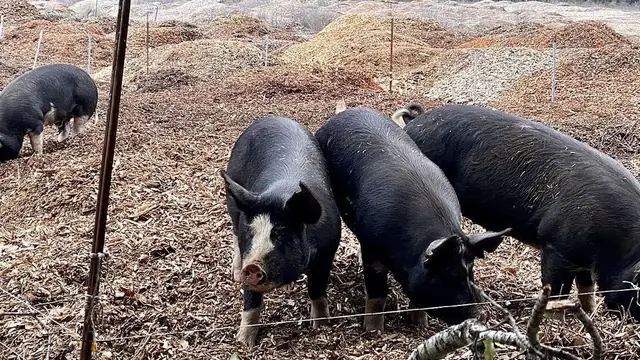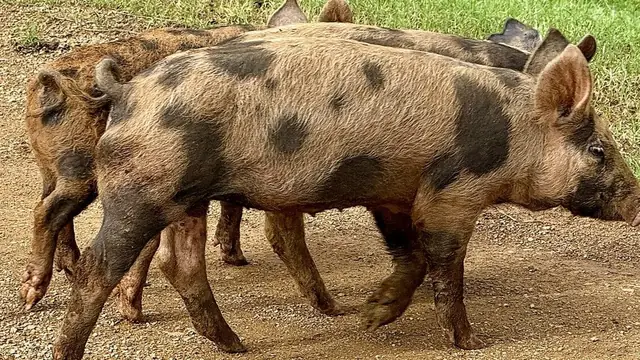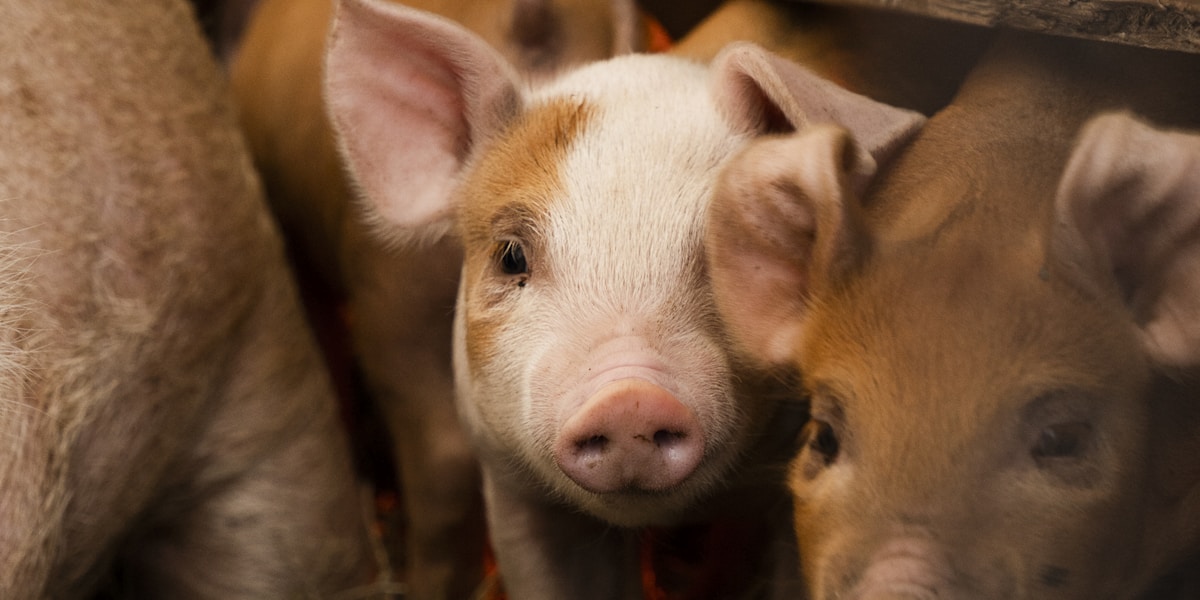
A crossbreed weaner in the Philippines runs ₱3,000-₱4,500 in 2026, around ₱3,500 typical for a Landrace x Large White cross from a local multiplier; native crosses are cheaper at ₱2,000-₱3,000, commercial hybrids ₱4,000-₱5,500. But the purchase price is the wrong number to obsess over. A ₱2,500 native-cross weaner that takes 6 months to reach 80 kg at FCR 3.5 costs more in total than a ₱3,500 Landrace/Large White cross that hits 95 kg in 4.5 months at FCR 2.8. The weaner price is just the down payment. Feed is the real cost.
This page gives you current prices by breed type, weight, and region, plus the total-cost math behind a smart buying decision.
Farmgate figures re-checked 16 October 2026 against PSA OpenSTAT and DA statements; weaner and finisher price ranges were last checked against multiplier-farm listings on 12 July 2026. Next review: January 2027. Weaner prices move fast during ASF movement bans, confirm locally before you buy.
Free Tool
Pig Profit Simulator
Compare native, crossbreed, and hybrid economics with your own feed and farmgate prices.
Farmgate Price by Breed Type (2026)
The anchor for all of this is the PSA national average, and it sits lower than most people think. Q2 2026 came in at ₱172.44/kg liveweight (Apr ₱174.00, May ₱171.56, Jun ₱171.76), after ₱176.03/kg in Q1 2026, ₱182.83/kg in Q4 2025 and ₱191.51/kg in Q3 2025. The 2025 high was June at ₱214.52/kg. That was a peak, not a normal level. PSA has not yet published July to September 2026, but the DA said in September that the national liveweight price was ₱150/kg in August, and industry data put Luzon at ₱153.72 and the Visayas and Mindanao at ₱131.66. Farmgate is not ₱200-₱230, and it has not been above ₱200 since mid-2025.
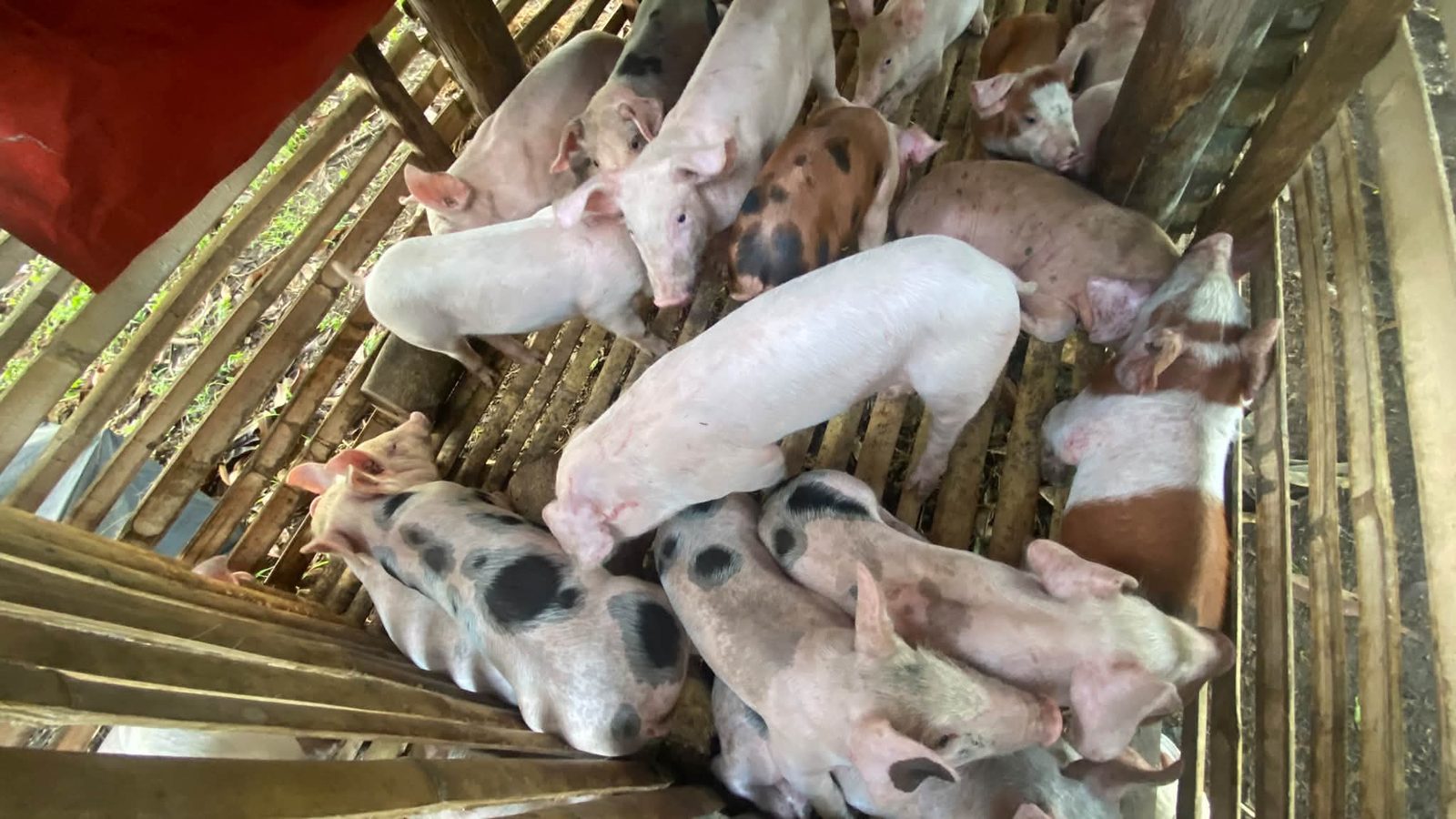
The ₱210/kg floor was agreed on 4 November 2025 by the DA with SINAG, NFHFI and PROPORK. It is an industry target the DA backs, not an enforceable price. The national average has never reached it since it was set. Some regions have, in some months: the Cordillera five (November and December 2025, April to June 2026), BARMM and Central Visayas two each, Metro Manila once (₱250, January 2026). For most raisers, treat it as a target somebody announced, not a floor you will be paid. Cost of production, meanwhile, is ₱180-₱190/kg per producer groups in October 2026, so the average farm is selling below what it costs to produce, and at the DA's ₱150 far below. PSA's June 2026 regional numbers, still the newest published, also break the old assumption that Luzon pays best: the top prices are Cordillera at ₱224.10 and Central Visayas at ₱208.73, while Central Luzon is sixth at ₱181.05, Negros sits at ₱166.29, and SOCCSKSARGEN is lowest at ₱141.98.
The finisher ₱/kg ranges below are quality spreads observed in the first half of 2026, when the commercial line ran about ₱172-₱190: native and lechon-type pigs trade below it, premium hybrids slightly above, the whole band moving with the national price. With the DA's August figure at ₱150, expect every band to sit lower now; the gaps between breeds are what still hold. These are indicative ranges, not a proprietary survey. The worked total-cost table further down shows the same batch at PSA's last official quarter (₱172.44) and at the DA's August figure (₱150), because the breed that survives a soft price is the one worth buying.
| Breed Type | Common Crosses | Weaner ₱/head (10-12 kg) | Finisher ₱/kg (liveweight) | Typical Use |
|---|---|---|---|---|
| Native (Bisaya, Sinirangan) | Pure native | ₱1,500-₱2,500 | ₱150-₱180 | Lechon de leche, heritage pork, fiesta |
| Native cross | Native x LW or Native x Duroc | ₱2,000-₱3,000 | ₱160-₱185 | Budget fattening, rural markets |
| Landrace x Large White | L x LW, LW x L (F1) | ₱3,000-₱4,500 | ₱178-₱193 | Standard commercial cross, most common |
| Duroc-sired | Duroc x LW, Duroc x (L x LW) | ₱3,500-₱5,000 | ₱183-₱198 | Better marbling, preferred by lechon buyers |
| Commercial hybrid | PIC, Hypor, Genetiporc lines | ₱4,000-₱5,500 | ₱185-₱200 | Best FCR, contract grower stock |
The ₱1,500-₱2,500 difference between a native-cross weaner and a Duroc-sired weaner looks big when you're buying 10 heads. That's ₱15,000-₱25,000 more upfront. Before you pick the cheapest, run the total cost.
Weaner Prices by Region (Indicative, mid-2026)
The same Landrace x Large White weaner does not cost the same in Bulacan as it does in Davao. Multiplier-farm density, freight, and local ASF zone status drive the spread. Indicative ₱/head for a 10-12 kg LW x Landrace cross from a known multiplier:
| Region | LW x Landrace weaner ₱/head | Native cross | Notes |
|---|---|---|---|
| Central Luzon (Bulacan, Pampanga) | ₱3,000-₱3,800 | ₱1,800-₱2,600 | Densest multiplier network, lowest prices |
| NCR / CALABARZON | ₱3,300-₱4,200 | ₱2,000-₱2,900 | High demand, short haul |
| Ilocos / Cagayan Valley | ₱3,400-₱4,400 | ₱2,200-₱3,000 | Fewer accredited multipliers |
| Western Visayas (Iloilo, Negros) | ₱3,300-₱4,300 | ₱2,000-₱3,000 | Strong backyard demand |
| Central Visayas (Cebu, Bohol) | ₱3,500-₱4,600 | ₱2,200-₱3,200 | Lechon pull keeps native-cross firm |
| Northern Mindanao (Bukidnon, CDO) | ₱3,000-₱4,000 | ₱1,800-₱2,700 | Corn belt, competitive multipliers |
| Davao / SOCCSKSARGEN | ₱3,200-₱4,200 | ₱1,900-₱2,800 | Furthest from Luzon genetics hubs |
The regional gap on a weaner is smaller in pesos than the finisher gap, but on a 10-head batch a ₱600/head difference is ₱6,000 before you've bought a single sack of feed. ASF status matters more than region: a movement ban in your province can push local weaner prices up 15-25% overnight regardless of the table above (see the ASF section below).
The Real Comparison: Total Cost of Ownership
This is where most buyers get it wrong. They compare weaner prices and pick the cheapest one. But feed is about 57% of pig operating cost (PIDS), and FCR varies dramatically by breed. Here's what the full batch actually costs at July-2026 commercial feed prices (premium grower and finisher run ₱34.90-₱38.20/kg, so about ₱36/kg blended across starter, grower, and finisher), sold at PSA's last official quarter and at the DA's August 2026 figure:
| Metric | Native Cross | LW x Landrace | Duroc-Sired | Commercial Hybrid |
|---|---|---|---|---|
| Weaner price | ₱2,500 | ₱3,500 | ₱4,000 | ₱5,000 |
| Target market weight | 80 kg | 95 kg | 95 kg | 100 kg |
| Days to market | 150-180 | 120-140 | 120-140 | 110-130 |
| Backyard FCR | 3.3-3.8 | 2.8-3.2 | 2.7-3.1 | 2.5-2.8 |
| Feed consumed | ~260 kg | ~240 kg | ~235 kg | ~240 kg |
| Feed cost (@ ₱36/kg avg) | ₱9,360 | ₱8,640 | ₱8,460 | ₱8,640 |
| Other costs (vet, transport, mortality) | ₱3,200 | ₱3,200 | ₱3,200 | ₱3,200 |
| Total cost/head | ₱15,060 | ₱15,340 | ₱15,660 | ₱16,840 |
| Revenue (@ ₱172.44/kg, PSA Q2 2026) | ₱13,795 | ₱16,382 | ₱16,382 | ₱17,244 |
| Net profit/head | -₱1,265 | ₱1,042 | ₱722 | ₱404 |
| Revenue (@ ₱150/kg, DA August 2026) | ₱12,000 | ₱14,250 | ₱14,250 | ₱15,000 |
| Net profit/head at ₱150 | -₱3,060 | -₱1,090 | -₱1,410 | -₱1,840 |
| Breakeven ₱/kg | ₱188 | ₱161 | ₱165 | ₱168 |
| Months of capital tied up | 5-6 | 4-4.5 | 4-4.5 | 3.5-4 |
Two revenue rows, because there are two numbers and averaging them is how this site got things wrong before. The top pair is PSA's official Q2 2026 average, the latest the government has published. The bottom pair is the DA's own statement that the national price was ₱150/kg in August 2026, ₱22.44/kg lower, or about ₱2,130 a head. They are not averaged here.
The result flips the intuition either way. The "cheap" native-cross weaner fattened all the way to 80 kg loses money at both prices: a ₱188/kg breakeven against a sale price of ₱172 or ₱150. It also ties up your capital the longest (5-6 months). The LW x Landrace at ₱3,500/head does best per head and has the lowest breakeven at ₱161/kg, but at ₱150 even it loses about ₱1,090 a head.
Be honest about what that ₱161 leaves out, though. It is a backyard model that charges nothing for your own labour and no rent on the pens. Full industry cost of production is ₱180-₱190/kg (producer groups, October 2026), so at ₱172.44 the average commercial farm was already selling below it, and at ₱150 it is ₱30-₱40/kg under. At the official price, three of these four breed choices clear under ₱1,100 a head and the fourth loses ₱1,265. At the DA's August price all four lose. That is the honest range for late 2026, and pretending otherwise is how people end up borrowing to feed a batch that never pays them back.
Two things to take from this. First, straight farmgate fattening is loss-making at the national price in late 2026, so the breed you pick and the price you sell at decide how much you lose, or whether you scrape a profit. Second, for most backyard operations the LW x Landrace cross is the sweet spot: lowest breakeven, reasonable purchase price, fast enough cycle. Duroc-sired commands a ₱5-₱15/kg premium from lechon buyers, which can claw back the higher weaner cost if you have those buyer connections. Do not build a plan on the ₱210/kg floor. It was agreed in November 2025, the DA cannot enforce it, and no month of the national series has hit it since. A handful of regions have in a handful of months, the Cordillera most often; for most raisers it has not been paid.
The exception: if you're selling to the lechon market specifically, native and native-cross pigs command ₱350-₱500/kg as a whole dressed animal, compared to ₱250-₱350/kg for commercial breeds. At those retail prices, native pigs are significantly more profitable per head. The catch is you need the lechon buyer relationship already established before you invest in native stock.
Price by Weight Category
Different weights serve different markets. The ₱/kg shifts at each stage.
| Weight Class | Liveweight | Typical Market | Farmgate ₱/kg | Per Head Range | Who Buys |
|---|---|---|---|---|---|
| Weaner | 8-15 kg | Grow-out stock | ₱200-₱350/kg | ₱2,000-₱5,000 | Farmers, backyard raisers |
| Grower | 30-50 kg | Lechon de leche | ₱185-₱220/kg | ₱5,500-₱11,000 | Lechon operators, early sellers |
| Finisher | 80-100 kg | Standard slaughter | ₱170-₱195/kg | ₱13,600-₱19,500 | Biyaheros, wet market, institutional |
| Heavy finisher | 100-120 kg | Institutional, lechon | ₱160-₱190/kg | ₱16,000-₱22,800 | Large-scale buyers, processors |
| Gilt (breeder) | 90-110 kg | Breeding stock | ₱220-₱300/kg | ₱19,800-₱33,000 | Multiplier farms, breeders |
These per-kilo ranges, like the breed table above, were observed in the first half of 2026; with the national finisher price at ₱150 in August per the DA, expect the finisher rows to sit lower now. Weaners carry the highest ₱/kg because you're buying genetics and growth potential. Finishers above 110 kg get discounted because excess backfat reduces dressing percentage and buyers know it. The sweet spot for selling is 90-100 kg at 4.5-5 months.
And here's a trick most backyard farmers miss: if you're selling into the lechon de leche market, pigs at 30-40 kg sell for ₱185-₱220/kg. That's only 8-10 weeks of feeding. Your total feed cost is maybe ₱2,000-₱3,000. With a ₱3,500 weaner, you're all-in at ₱5,500-₱6,500 and selling for ₱5,500-₱8,800. Short cycle, fast capital turnover, less mortality risk. Not everyone has lechon de leche buyers, but if you do, the math works.
When Prices Peak (And When to Avoid Selling)
Same pig, different prices depending on when you sell:
| Period | Price vs annual average (PSA median, 2014-2025) | Why | Action |
|---|---|---|---|
| May-June | +2.8% / +3.3%, about +₱5-6/kg | Fiestas, graduations; June is most often the yearly high | Sell here (buy weaners Dec-Jan) |
| November-December | −1.6% / +0.4% | Christmas, New Year, office parties | Sell to lechon and whole-pig buyers (buy weaners July-Aug) |
| March-April | +0.2% / +0.5% | Holy Week lechon, graduation fiestas | Sell to lechon buyers before Easter |
| October | −1.6% | All Saints' Day, local fiestas | Local fiesta buyers only |
| January-February | −2.6% / −1.1% | Post-holiday; January is most often the yearly low | Avoid selling here |
| July-August | +1.0% / −0.5% | Rainy season, school spending | About average |
An earlier version of this table said November-December paid ₱15-25/kg over the annual average. PSA's own monthly series does not show that. December beats November in every year, but by a median 1.8%, about ₱3/kg or ₱285 on a 95 kg pig, and December was the year's top month in only 3 of 12 years. Q4 averaged below Q3 in 7 of them, including 2025. The premium that is real at Christmas is the buyer's: a lechon operator or a family buying a whole pig pays over the biyahero rate. Plan your batch cycle around a named buyer, or around May-June.
Don't buy weaners in December-January. Prices are inflated because everyone is restocking after the Christmas sales. Wait until February-March when weaner supply normalizes and prices drop ₱300-₱500/head.
Where to Source Weaners (And What to Watch Out For)
BAI/NPPC-accredited multiplier farms sell the best genetics but at premium prices (₱4,000-₱5,500 for commercial crosses). You get health certificates, vaccination records, and known parentage. Worth it for 20+ head batches where genetics directly affects batch profitability.
Local multipliers and known breeders are the sweet spot for most backyard farmers. ₱3,000-₱4,500 for LW x Landrace weaners, around ₱3,500 typical. Ask to see the sow. Ask about vaccination status. If they can't tell you what vaccines the piglets received, walk away.
Roadside and wet market sellers offer the cheapest weaners (₱1,500-₱2,500) but the highest risk. No health certificates, unknown vaccination status, and a real chance of introducing ASF or other diseases into your herd. The ₱1,000-₱2,000 you save is not worth the risk of losing your entire batch.
Kung makapalit ka og barato pero namatay ang tanan nimong baboy, wala kay na-save.
How ASF Movement Bans Spike Weaner Prices
Weaner price isn't just genetics and region. It's ASF zone status, and that can swing a price 15-25% in a week. Under the DA's November 2025 zoning rules, every area sits in a tier: red (infected), pink (buffer), yellow (surveillance), light green (protected), green (free). When a province goes red or pink, pigs can't move across the boundary. That does two things at once: weaners trapped inside a quarantine zone get dumped cheap (no buyers can haul them out), while clean zones next door see weaner prices spike because supply suddenly can't come in.
In 2026 this is not hypothetical in the Visayas. Negros Occidental confirmed ASF in San Enrique on 23 June (about 1,902 pig deaths province-wide by 25 June, not all of them from ASF), Iloilo recorded its first case in four years at Barotac Viejo on 29 June, Bacolod and La Libertad in Negros Oriental followed on 1 July, Capiz red-zoned five LGUs and closed its border to pork on 24 June, and Cebu banned Negros pigs and pork on 7 July under EO 39, a ban it has since extended. In September ASF was confirmed in Cebu province itself (Ginatilan), with hotspots reported in Cebu City; in October Iloilo resumed accepting Negros Occidental pigs from areas 50+ days case-free. In Luzon, Camarines Sur (August) and Lal-lo, Cagayan (October) are newer cases. If you are buying weaners anywhere in Panay, Negros, or Cebu right now, check the current ban list before you hand over money.
One change worth knowing: the AVAC ASF live vaccine was cleared for commercial sale on 2 September 2026, for fatteners only. Ask your municipal vet whether it is available in your area before you stock a batch.
The practical play: if your province is clean and a neighboring one locks down, expect to pay 15-25% more for weaners for a few weeks. If you're inside a locked-down zone, you may find very cheap weaners, but moving the finished pigs out later is the problem you'll have bought into. Check your barangay's current tier with the municipal vet or the BAI ASF disease situation reports before you commit, zones change as outbreaks flare and clear. The ASF-recovery-era playbook covers buying and biosecurity during a live outbreak.
The Lechon Angle: Where Native Pigs Beat Everything
If you're in Cebu, Davao, or anywhere with a lechon culture, this section matters more than the tables above. The economics of native pigs for lechon are completely different from standard farmgate selling, and the lechon de leche profit math is the full version of what follows.
The Lechon Value Chain Math
Here's what a lechon operator pays vs what they sell for:
| Stage | Native Pig (20 kg liveweight) | Commercial Cross (90 kg) |
|---|---|---|
| Farmer sells at | ₱3,500-₱4,500/head | ₱16,000-₱18,000/head |
| Lechon operator buys at | ₱175-₱225/kg liveweight | ₱175-₱200/kg liveweight |
| Retail lechon price | ₱690-₱800+/kg (whole) | ₱400-₱600/kg (chopped) |
| Example: Rico's Lechon | Chopped at ₱990/kg | Chopped at ₱990/kg |
The lechon operator who buys your 20 kg native pig at ₱4,000 sells the finished lechon for ₱13,000 to ₱16,000, going by the per-kilo whole-lechon prices above. Call it a 3x to 4x markup. They're making good money, which means they're willing to pay a premium for the right pig.
How to Make Native Pigs Profitable
The problem with native pigs for standard farmgate selling is the low price per kg (₱150-₱180) and slow growth (6-8 months to 60-80 kg). At 2026 feed prices that math barely breaks even, as the total-cost table above showed. But for lechon, you don't need 90 kg pigs. You need 15-30 kg pigs. That changes everything:
| Metric | Native for Lechon (20 kg) | Native for Farmgate (80 kg) | Commercial for Farmgate (95 kg) |
|---|---|---|---|
| Age at sale | 3-4 months | 6-8 months | 4-4.5 months |
| Feed cost (@ ₱36/kg) | ₱1,500-₱2,500 | ₱10,000-₱11,500 | ₱8,400-₱8,700 |
| Total cost/head | ₱3,000-₱4,500 | ₱15,000-₱16,500 | ₱15,000-₱15,700 |
| Revenue/head | ₱3,500-₱5,500 (lechon, per head) | ₱12,000-₱15,000 (₱150-₱180/kg native) | ₱14,250-₱16,380 (₱150-₱172.44/kg) |
| Profit/head | ₱500-₱1,000 | -₱2,500 to -₱500 | -₱1,450 to +₱1,380 |
| Batches per year | 3-4 | 1.5-2 | 2-2.5 |
| Annual profit (10 head) | ₱15,000-₱40,000 | loss to thin | about -₱36,000 to +₱35,000 |
The middle column is the one that matters. Fattening a native pig all the way to 80 kg for standard farmgate in 2026 is a money-loser at conservative feed and pork prices. That is not a knock on native pigs; it just means you sell them at the size that pays, which is lechon-de-leche weight. The per-head profit on 20 kg lechon-size natives is small (₱500-₱1,000), but the cycle is short (3-4 months), so you can run 3-4 batches a year on tiny capital. For a farmer with ₱30,000-₱45,000 to work with, native lechon pigs are a real entry point. The commercial column is only in profit near PSA's last official quarter, ₱172.44; at the DA's August figure of ₱150 it loses money on every pig. Budget for the bottom of the range.
The catch: you absolutely need the lechon buyer lined up before you start. Growing native pigs to 20 kg and then discovering nobody wants them at that size means you're stuck feeding them to 60-80 kg at low farmgate prices.
How to find lechon buyers: Visit 3-5 lechon roasters in your municipal or city market. Ask what size pigs they want (most want 15-30 kg liveweight for lechon de leche, 60-90 kg for full lechon). Ask how many they buy per week and who supplies them. Offer to deliver 2-3 pigs as a trial. If they like the quality, you're on the list. Cebu alone has hundreds of lechon operations, and consistent native pig supply is genuinely tight: a lot of backyard raisers shifted to commercial breeds after ASF, so a reliable native supplier can name a fair price and keep the buyer.
Which Breed for Which Market?
Here's the decision framework:
You have lechon buyer connections → native or native cross. Higher margin per peso invested, shorter cycle, lower capital. But only if the buyer is secured first.
You're selling standard farmgate → LW x Landrace. Best combination of price, FCR, and growth speed. The workhorse breed for a reason.
You're selling to institutional buyers or processors → Duroc-sired or commercial hybrid. They want uniformity, good dressing percentage, and consistent supply. The premium genetics pay for themselves at 20+ head batches.
You're a first-time farmer → LW x Landrace, 100% commercial feed. Most predictable. Least can go wrong. Learn the business first, optimize the breed choice later.
Calculate Which Breed Works for You
Your actual costs depend on your feed prices, local farmgate, and management. Run the numbers:
- Break-even Calculator: find your breakeven per kg by breed
- Profit Simulator: compare scenarios side by side
- Feed Calculator: estimate feed cost differences by breed/FCR
- FCR Calculator: track your actual conversion ratio
Related:
- Liveweight Pig Price by Region: current farmgate prices and buyer strategies
- Cost to Raise a Pig: full cost breakdown per head
- Best Pig Breeds for Small Farmers: breed comparison guide
- Best Age to Buy Piglets for Fattening: what weight to buy at and why
Sources: PSA OpenSTAT Farmgate Prices and PSA Livestock and Poultry Quarterly Bulletin (2026 monthly liveweight: Apr ₱174.00, May ₱171.56, Jun ₱171.76, Q2 mean ₱172.44; Q1 2026 mean ₱176.03; Q4 2025 ₱182.83; Q3 2025 ₱191.51; 2025 high June at ₱214.52; June 2026 regional: Cordillera ₱224.10, Central Visayas ₱208.73, Central Luzon ₱181.05, Western Visayas ₱152.75, SOCCSKSARGEN ₱141.98); DA, national liveweight ₱150/kg in August 2026 (The Manila Times, 28 Sep 2026); industry data Luzon ₱153.72, Visayas+Mindanao ₱131.66, August 2026 (BusinessMirror, 8 Sep 2026); cost of production ₱180-₱190/kg (Daily Tribune, 2 Oct 2026; BusinessMirror, 9 Oct 2026); ₱210/kg floor agreed 4 November 2025 (PNA) (with SINAG / NFHFI / PROPORK; non-enforceable per Philstar, 21 Sep 2026; never met by the national average since it was set, met in some months in the Cordillera, BARMM, Central Visayas and NCR); DA: AVAC ASF vaccine cleared for commercial sale, 2 Sep 2026; PIDS (feed is about 57% of pig operating cost); BAI ASF disease situation reports (zoning status; Visayas outbreaks June to September 2026 per LGU and DA advisories); DA price monitoring; Rico's Lechon Cebu prices; DA-BAI breed registry. Farmgate figures verified 16 October 2026, weaner ranges 12 July 2026; regional spreads are indicative ranges anchored to the PSA national average, not a proprietary survey.
Bisaya / Cebuano
Giya sa Pagpili og Breed: Para sa Mag-uuma sa Visayas ug Mindanao
Kung standard farmgate ang baligya: Ang LW x Landrace mao ang pinakamaayo para sa kadaghanan. Mas barato ang feed tungod sa maayo nga FCR (2.8-3.2), mas paspas moabot sa market weight (4-4.5 ka bulan), ug pinakaubos ang breakeven (mga ₱161/kg sa presyo sa feed karong 2026, samtang ₱188/kg ang native cross). Sa ₱172.44/kg, ang pinakabag-o nga opisyal nga quarter sa PSA (Q2 2026), mga ₱1,042 ang ganansya matag ulo. Pero sumala sa DA, ₱150/kg na lang ang presyo niadtong Agosto 2026, ug sa ₱150 malugi og mga ₱1,090 matag ulo bisan ang LW x Landrace. Ayaw pagsalig sa ₱210/kg nga floor: target lang kini, dili mapugos, ug wala pa kini maabot sa nasudnon nga aberids sukad kini gitakda. Ang native cross nga gipataba hangtod 80 kg mawad-an gihapon karong 2026.
Kung lechon ang merkado: Lahi ang istorya. Ang native pig para sa lechon de leche (15-30 kg) mabaligya og ₱3,500-₱5,500 matag ulo. Gamay ra ang ganansya (₱500-₱1,000 matag ulo), pero mubo ang cycle (3-4 ka bulan lang), ug gamay lang ang capital nga kinahanglan. Sa usa ka tuig, mahimo ka mag-3-4 ka batch.
Pero importante kaayo: kinahanglan naa nay buyer ANTES ka magpalit og native weaner. Kung walay lechon operator nga mopalit, ma-stuck ka og native pig nga mubo ra ang farmgate (₱150-₱180/kg).
Unsaon pagpangita og lechon buyer:
- Adto sa mga lechon stall sa imong merkado
- Pangutan-a unsa ka dako nga baboy ang gusto nila (kasagaran 15-30 kg para lechon de leche)
- Pangutan-a pila ka ulo ilang paliton matag semana
- Offer og 2-3 ka ulo nga trial delivery
- Kung gusto nila ang quality, regular na ka nga supplier
Sa Cebu, daghang lechon operator ang nangita og native pig supplier tungod kadaghanan sa mga mag-uuma nibalhin na sa commercial breeds human sa ASF. Oportunidad ni.
Ang total cost mao ang importante, dili ang presyo sa weaner. Ang "barato" nga weaner nga taas og FCR mas mahal sa katapusan tungod sa feed. Kanunay compute-a ang tanan nimong gasto antes magdesisyon. Gamita ang Break-Even Calculator ug Profit Simulator, libre ra.
Related reading
- Pig price per kg by region: current farmgate liveweight by Luzon, Visayas, Mindanao
- Best month to sell pigs: Christmas, Holy Week, and fiesta premium math
- Best pig breeds for small farmers: picking the breed before pricing it
- Lechon de leche native pig profit: the full margin math for the native-lechon route
- Pricing and Markets topic cluster: the full set of pricing and timing guides