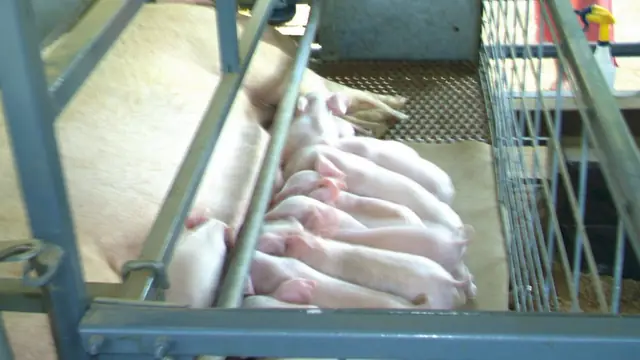
A sow earns her keep through litters. By parity 5 or 6 most of her productive curve is behind her, and each extra cycle tends to cost more than her cull cheque would pay. The decision is obvious in theory and routinely deferred in practice. Backyard farmers run sows to parity 7, 8, sometimes 9, watching litter sizes shrink while replacement cost stays fixed.
Below: the parity threshold, the cull-weight math in 2026 pesos against the PSA farmgate, and the decision framework for when to send a sow to the wet market.
Free Tool
Pig Profit Simulator
Run your current sow's last 3 cycles versus a replacement gilt. The simulator shows how many cycles it takes for the gilt to pay back her purchase price, and whether your existing sow is already losing the math.
The Productive Curve of a Sow
A commercial Filipino sow follows a predictable productivity curve across her lifetime. The pattern below tracks the parity research from pig333 and Topigs Norsvin, adjusted down for backyard conditions (Philippine backyard litters typically run a piglet or two under controlled-herd figures because of heat, feed quality, and farrowing supervision):
| Parity | Typical litter size (born alive) | Pre-weaning mortality | Weanlings to market | Notes |
|---|---|---|---|---|
| 1 (gilt) | 8-9 | 12-15% | 7-8 | First-time breeder, smaller litters |
| 2 | 10-11 | 10-12% | 9-10 | Productivity climbing |
| 3 | 11-12 | 8-10% | 10-11 | Peak |
| 4 | 11-12 | 8-10% | 10-11 | Peak |
| 5 | 10-11 | 9-11% | 9-10 | Early decline |
| 6 | 9-10 | 10-13% | 8-9 | Visible decline |
| 7 | 7-9 | 12-15% | 6-7 | Drop accelerating |
| 8+ | 6-8 | 14-18% | 5-6 | Below break-even for most farms |
Three patterns repeat across small and large Filipino piggeries:
- Parity 1 is structurally lower than parity 2-4. The research is blunt about this: one pig333 study put gilt litters at 10.9 born alive against 13.0 for multiparous sows, with lactation mortality of 18.5 percent versus 9.1 percent. A first-time gilt is not yet at her peak, so her first litter is the worst one you will get from her.
- Peak productivity is parity 2-5 in most commercial cross sows (Large White x Landrace x Duroc). After parity 5 the curve bends down.
- Parity 7 is the typical economic break point for backyard sows under 2026 conditions. The herd-structure work from Topigs Norsvin recommends keeping only 5-10 percent of sows at parity 6 or beyond, and being very critical of any sow past parity 7.
For the pre-weaning piglet care that shapes these survival numbers, see why piglets die in the first week.
Three Triggers That Mean Cull Now, Regardless of Parity
Parity is a guideline. These three triggers override it. When any one fires, cull the sow at the end of the current weaning, even if she is only parity 4 or 5.
Trigger 1: Two consecutive litters below 8 born alive
A productive sow consistently delivers 10-12 born alive. Two consecutive litters at 7 or below means something has changed: uterine wall thinning, hormone disruption, body condition decline, or persistent low-grade infection. The fix usually costs more than a replacement gilt.
The math: at parity 5, expected weanling revenue is about 10 weanlings x ₱3,000 = ₱30,000 per cycle. A sow stuck at 6 born alive delivers roughly ₱18,000. That ₱12,000 gap per cycle, repeated 2-3 cycles, exceeds the ₱18,000-₱27,000 you would pay for a replacement gilt.
Trigger 2: Conception failure on three consecutive services
A sow that takes three services to settle, or fails to take at all, is either developing reproductive disease, has a hormonal issue, or her ovaries are aging out of regular cycling. Each failed service burns roughly 21-25 days of feed and care for zero output. Three failed services means 60-75 wasted days at ₱600-₱800/month of feed, so ₱1,500-₱2,000 of pure cost on feed alone, before you count the lost cycle.
By the time three services have failed, the sow has cost the farm 2-3 months of productive cycle time. Cull and replace.
Trigger 3: Mastitis or MMA in two consecutive farrowings
Mastitis-Metritis-Agalactia (MMA) at one farrowing is a manageable problem with antibiotics and supportive care, on a vet's advice. MMA at two consecutive farrowings is a systemic issue: chronic mammary inflammation, partial functional loss of mammary glands, or persistent uterine infection. Piglets from these litters tend to grow poorly early, which pushes pre-weaning mortality up and weanling revenue down. If you suspect MMA, get a vet to confirm before you treat or cull, since the cause changes the call.
What a Cull Sow Sells For in 2026
Cull sows go to wet-market viajeros, slaughterhouses, or occasionally lechon operators (rare, since most lechon buyers prefer younger pigs). The anchor to keep in mind is the prime farmgate, and that anchor has come down. PSA had the national average at ₱191.51/kg liveweight in Q3 2025, but the monthly series fell through the second half of the year and has kept falling: ₱176.03/kg for Q1 2026, ₱172.44/kg for Q2 2026. PSA has not yet published July to September (next update 6 November 2026), but the DA said national liveweight averaged ₱150/kg in August 2026 (Manila Times, 28 Sep 2026). As of May 2026 SINAG put the working industry average at ₱180-₱190/kg, with trade quotes in the same band, which is above what the survey recorded for those months. A cull sow does not get even that. She sells at a discount because she dresses lighter (cull sows carcass out lower than the 70-73 percent typical of finished market pigs) and the meat is tougher. Anchor the discount to the right series. A backyard breeder is paid against PSA's backyard farmgate figures, not the commercial ones, and both are downloadable with the date the source was opened on every row.
One number people keep quoting at me: the ₱210/kg minimum farmgate price the DA announced on 4 November 2025. Forget it. It is an industry-agreed, DA-backed target, and the DA has no power to enforce it. The national average has not reached ₱210 in any month since it was set. Four regions have, briefly: Cordillera in five months, BARMM and Central Visayas in two each, Metro Manila in one. It is a target, not a floor, and certainly not a price a backyard seller can hold out for. Price your cull sow against what buyers in your area are paying this week. The province-level backyard table is the closest thing to that number that anybody publishes for free, and in June 2026 it spread from roughly ₱120 a kilo to roughly ₱290 depending on where you stood.
The other side of that: producer groups now put the cost of producing a kilo of liveweight at ₱180-₱190 (Daily Tribune, 2 Oct 2026; BusinessMirror, 9 Oct 2026). At PSA's ₱172.44 the average farm was already selling below its own cost; at the DA's August ₱150 it is losing ₱30-₱40 on every kilo. That is why viajeros have been grinding cull-sow offers down rather than up. Four straight quarters of decline are in the quarterly farmgate series if you want to see the shape of it rather than take my word. Expect the low end of the ranges below unless you have a buyer who wants the animal specifically.
The peso ranges below reflect what backyard sellers were getting through the first half of 2026. Treat them as field-typical and dated, not a published index; the discount to prime is the durable part, not the exact pesos. Prime itself has fallen since (₱150/kg in August, per the DA), so treat the table as the high side for an autumn 2026 sale.
| Channel | ₱/kg liveweight (first half 2026, typical) | 180 kg sow | 220 kg sow | Notes |
|---|---|---|---|---|
| Wet-market viajero | ₱150-₱170 | ₱27,000-₱30,600 | ₱33,000-₱37,400 | Most common, fastest cash |
| Direct to slaughterhouse | ₱160-₱185 | ₱28,800-₱33,300 | ₱35,200-₱40,700 | Needs logistics, better price |
| Lechon operator (rare) | ₱170-₱185 | ₱30,600-₱33,300 | ₱37,400-₱40,700 | Visayas, specific cuts only |
| Neighbour butcher | ₱165-₱185 | ₱29,700-₱33,300 | ₱36,300-₱40,700 | Small volumes, slow but premium |
Cull sows run below prime farmgate for three reasons:
- Older sows have tougher meat, so retailers discount it
- Dress percentage is lower than the 70-73 percent of a finished market pig, so usable carcass per kilo of liveweight is less
- Mammary tissue and reproductive organs cut into the saleable yield
Best practice: time the cull for the week after weaning the final litter, when body condition is lowest and she can be sold quickly without re-feeding. Holding a culled sow to fatten before sale loses money, which the FAQ at the bottom of this article spells out.
For region-by-region farmgate prices that frame cull pricing, see pig price per kg by region and crossbreed pig price.
Replacement Gilt Costs
The other side of the cull decision is what you replace her with. Listings across 2025 and 2026 put F1 gilt pricing here:
| Gilt type | Weight at purchase | Cost (2025-2026 listings) | Time to first service |
|---|---|---|---|
| F1 LW x Landrace, proven | 100-120 kg | ₱18,000-₱27,000 | 0-30 days |
| F1 LW x Landrace, young | 50-70 kg | ₱11,000-₱16,000 | 60-90 days |
| Duroc-cross gilt | 90-110 kg | ₱22,000-₱28,000 | 30-45 days |
| Native cross gilt | 60-80 kg | ₱8,000-₱14,000 | 90-120 days |
| In-house retained gilt | n/a | Cost of raising (₱10,000-₱14,000) | 90-150 days |
Most cost-effective in 2026: retaining one or two F1 gilts from your own farrowings and growing them to breeding weight. Cost is similar to the young-gilt purchase price, but the genetics are known and the gilts adapt to your conditions from day one. Since at least three farrowings are needed just to clear a sow's replacement cost, every gilt you bring in has to be planned to last, not bought in a panic.
The Cull Decision Math: A Worked Example
Take a parity-6 sow producing 9 weanlings per cycle, down from 11 at parity 3. The decision: cull her after the current litter, or keep her for one more cycle?
Scenario A: Cull now, replace with a proven F1 gilt
| Item | Amount |
|---|---|
| Cull income (200 kg x ₱160/kg) | +₱32,000 |
| Replacement gilt (proven F1) | -₱22,000 |
| Net cash position | +₱10,000 |
| First cycle from new gilt (parity 1) | 7-8 weanlings to market |
| Expected weanling revenue cycle 1 | 7-8 x ₱3,000 = ₱21,000-₱24,000 |
Scenario B: Keep current sow for one more cycle
| Item | Amount |
|---|---|
| Maintenance through next cycle | -₱4,500 (feed + meds, gestation + lactation) |
| Expected weanlings (parity 7) | 7 (declining from 9) |
| Weanling revenue | 7 x ₱3,000 = ₱21,000 |
| Net from one more cycle | +₱16,500 |
| Then cull at end (likely ~175 kg) | +₱28,000 cull |
| Replacement gilt later | -₱22,000 |
| Net from delayed cull | +₱22,500 over the extra 5-6 months |
What the math actually says
Scenario A: ₱10,000 from cull plus replacement, plus ₱21,000-₱24,000 from cycle 1 of the new gilt, so ₱31,000-₱34,000 over 6-8 months.
Scenario B: ₱22,500 net over 5-6 months, roughly two-thirds of Scenario A income for similar elapsed time.
For a sow still producing reasonably, say 7 or more weanlings, keeping her one more cycle stays competitive. For a sow down to 5-6 weanlings, or one that has hit any of the three triggers, Scenario A is the correct call, and every cycle you defer it gives up more.
The decision flips when the sow drops below 7 weanlings per cycle. Below that, each cycle costs more in feed and risk than it returns, and the cull cheque is the better outcome. Track litter size by parity. The data tells you the answer before you have to guess.
Common Mistakes Backyard Breeders Make
Three patterns are behind most "kept her too long" stories in Filipino backyard piggeries.
Mistake 1: Treating cull income as the only return
The thinking goes: "If I cull now I get ₱30,000. If I keep her I get the litter income too." That misses two things. The cull cheque is still there at the end of the cycle, and the replacement gilt's productivity starts compounding the day she farrows.
A parity-1 gilt today is a parity-3 sow in 18 months, at peak productivity. The current sow at parity 7 today is a cull at parity 7 in 18 months. One compounds, the other does not.
Mistake 2: Not tracking parity at all
Most backyard piggeries keep no formal breeding records. Sow age becomes a guess, parity is "she's been around a while," and the cull call is made on looks rather than productivity data. By the time the farmer notices output has dropped, two or three cycles of opportunity cost are already gone.
The fix is free: a notebook with one page per sow. Date of service, date of farrowing, born alive, weaned, mortality, weaning date. Three lines per cycle. You will know exactly when to cull.
For broader breeding tracking, the sow vs fattener economics piece covers how record-keeping feeds the wider herd decision.
Mistake 3: Skipping replacement planning
When a sow gets culled in a panic, an emergency cull from disease, lameness, or prolapse, there is no gilt ready. The farm sits with a 4-6 month gap while a new gilt is sourced, grown, and bred. That gap is pure lost revenue, and it is the most common way a small piggery loses a quarter of its annual output without noticing.
The fix: with 2 sows, retain 1 gilt for every 2-3 farrowings. With 4 sows, retain 1 gilt per farrowing. The retained gilts cycle through and replace culls without a gap.
Compared to Pasalo Sow Purchases
A common question in Filipino breeder circles: why not just buy an older sow on pasalo instead of a new gilt?
The honest answer is that pasalo sows are usually being sold for the exact reason you would cull them. They are past peak. A pasalo sow at ₱15,000 against a fresh gilt at ₱22,000 looks like a discount until you factor in:
- Remaining productive cycles, often only 1-2
- Unknown disease history (see pasalo piggery evaluation)
- Weaker genetics by definition, since the better animals get kept by the seller
The economics rarely work. The ₱7,000 saved on purchase gets eaten by 1-2 cycles of lower output and the risk of carrying latent disease into your herd.
Bisaya / Cebuano
Kanus-a Sigaria ang Sow: Presyo ug Replacement Math
Ang sow naa lay limited nga productive years. Sa Pilipinas, ang typical nga break point mao ang katapusan sa parity 5 o 6. Pasulod pa, mosaka ang gasto, manaog ang gidaghanon sa weanlings. Sa research sa Topigs Norsvin, 5 ngadto sa 10 porsyento lang sa panon ang angay magpabilin sa parity 6 pataas.
Tulo ka tigger nga magpasabot nga sigaria karon, bisan unsa pa ang parity:
-
Duha ka sunod-sunod nga litter nga ubos sa 8 ka buhi. Ang normal nga sow mohatag og 10 ngadto sa 12. Kung 6 o 7 lang nahimugso, naa nay problema.
-
Tulo ka services nga wala mosulod. Kung tulo ka beses nimong i-service ug dili gihapon mag-conceive, ulahi na, wala nay paglaom.
-
MMA o mastitis sa duha ka farrowings. Ang mastitis usa pa, mamanage-an. Duha ka cycle, sistemiko na ang problema. Pakitag-an sa beterinaryo una mag-desisyon.
Presyo sa cull sow sa unang tunga sa 2026, mga ₱150 ngadto sa ₱185 kada kilo nga buhi. Mas ubos kini sa prime farmgate. Sa PSA, ang national average sa Q2 2026 mao ang ₱172.44 kada kilo, ug sa Mayo 2026 gibutang sa SINAG ang industry average sa ₱180 ngadto sa ₱190. Ang cull sow mas gamay og dress ug mas gahi ang karne, mao nga ubos ang bayad. Para sa 180 ngadto sa 220 ka kilo nga sow, mga ₱27,000 ngadto sa ₱40,000 depende sa channel. Sukad niadto, miingon ang DA nga ₱150 kada kilo ang nasudnong aberids sa Agosto 2026, mao nga mas ubos pa karon ang tanyag sa cull sow.
Ayaw pagsalig sa ₱210 kada kilo. Target kini nga gikasabutan sa industriya ug gisuportahan sa DA, dili balaod. Ang nasudnong aberids wala pa makaabot niini sukad gibutang, ug walay nagpatuman niini. Target lang kana, dili garantiya sa imong bayranan.
Presyo sa replacement gilt sa 2025 ug 2026 nga listings:
- F1 Large White ug Landrace, andam na sa pag-breed (100 ngadto sa 120 ka kilo): ₱18,000 ngadto sa ₱27,000
- Bata pa nga gilt (50 ngadto sa 70 ka kilo): ₱11,000 ngadto sa ₱16,000, apan 2 ngadto sa 3 ka bulan pa ang paabuton
- Sariling pinili gikan sa kaugalingong litter: presyo lang sa pagpadako, mga ₱10,000 ngadto sa ₱14,000
Ang sayop nga gibuhat sa kasagaran nga backyard breeder, dili pag-record sa parity. Dili nimo mahibal-an kung kanus-a nahimugso ang sow nimo, dili nimo madeterminar kung kanus-a ang tamang sigaria. Libre ra ang solusyon, usa ka libro nga adunay usa ka pahina matag sow. Petsa sa service, petsa sa farrowing, gidaghanon sa nahimugso, gidaghanon sa naweaned. Tulo ka linya matag cycle.
Ayaw paghupot sa cull sow para pa-tabaon. Ang sow nga 200 ka kilo na, dili na mosaka og daghan og timbang. Mag-lahok ka, mosakit siya, magprolapse, dautan ang resulta. Ibaligya dayon human ma-wean ang katapusang litter, samtang ubos pa ang body condition.
Run Your Own Numbers
Every breeder's numbers are different. Use the calculators to check your cull decision before you commit:
- Profit Simulator models your current sow's remaining cycles against a replacement gilt's productive years
- Break-Even Calculator gives the minimum weanling price needed to justify one more cycle
- Setup Planner sizes your breeding herd and replacement gilt buffer
Related Articles
- Sow vs fattener: which earns more covers the broader sow vs fattener economics
- Why piglets die in the first week gives the pre-weaning mortality context behind these litter numbers
- Pasalo piggery evaluation covers when not to buy older sows
- Pig price per kg by region for regional farmgate context
Sources
- Philippine Statistics Authority, OpenSTAT: monthly farmgate price of pigs for slaughter. Q2 2026 average ₱172.44/kg liveweight (Apr ₱174.00, May ₱171.56, Jun ₱171.76), after ₱176.03/kg in Q1; June 2026 regional spread from ₱141.98/kg in SOCCSKSARGEN to ₱224.10/kg in Cordillera, with Central Luzon at ₱181.05/kg.
- Philippine Statistics Authority: Average Farmgate Price of Hogs for Slaughter, Q3 2025 (₱191.51/kg liveweight)
- SINAG: industry farmgate average ₱180-₱190/kg as of May 2026 (history now), against a cost of production of about ₱180/kg at the time (NatFed put it in the same place).
- DA via Manila Times (28 Sep 2026): national liveweight ₱150/kg in August 2026, a trade-reported figure, not PSA. Cost of production ₱180-₱190/kg per producer groups (Daily Tribune, 2 Oct 2026; BusinessMirror, 9 Oct 2026).
- BusinessWorld: Floor price for live hogs set at ₱210 per kilo (DA, 4 November 2025) — announced as a minimum farmgate price; an industry-agreed, DA-backed target, not enforceable. The national average has not reached it since it was set; Cordillera (5 months), BARMM (2), Central Visayas (2) and NCR (1) have.
- pig333: Relationship between sow productivity traits, pigs weaned and survival by parity
- pig333: Effects of birth weight, parity and litter size on pig performance (gilt 10.9 vs multiparous 13.0 born alive)
- Topigs Norsvin: Optimizing parity structure in pig production (target herd parity and culling guidance)
Figures are typical ranges and vary by region, breed, and management. Cull-sow peso ranges are field-typical for the first half of 2026, benchmarked against the PSA farmgate series (Q2 2026 average ₱172.44/kg) and the SINAG industry average of ₱180-₱190/kg as of May 2026. They are not a published price index. Farmgate prices last traded above ₱200/kg in mid-2025; do not plan a cull on those levels.