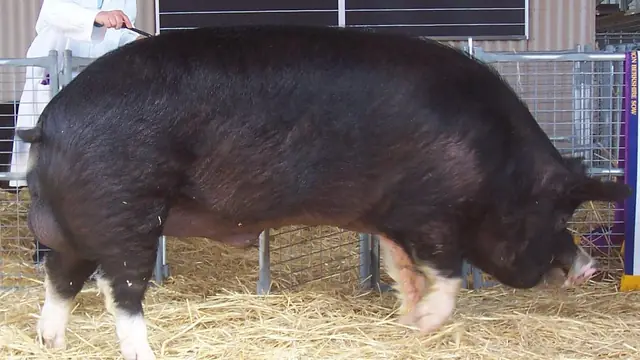
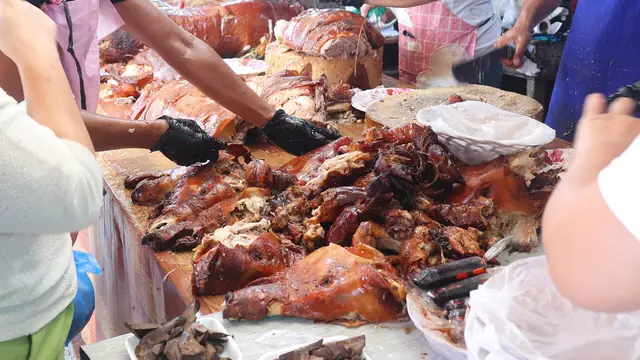
A native pig sold at 8-12 kg sounds like a terrible idea. You are slaughtering an animal that has not even hit its growth curve. So why do it?
Because a finished native lechon de leche retails for ₱8,000 at Rico's Lechon Cebu and ₱12,500 at Boarcher, and a native sow can throw 8-14 marketable piglets a year. The catch most guides hide: that retail money belongs to whoever roasts the pig. If you only sell the live piglet to a lechonero, you get roughly ₱2,000-₱3,500 per head, not the ₱5,000+ figure that floats around online.
So the real question is not "is lechon de leche profitable." It is "who captures the roasting margin, and do you have buyers?"
What lechon de leche actually is
Lechon de leche is a whole-roasted suckling pig. Rico's Lechon Cebu lists it at 3-5 kg cooked weight, which works back to roughly 10-14 kg liveweight, slaughtered before or right at weaning. The pig has only ever drunk sow's milk plus a bit of creep feed in its last week. The flesh is delicate, the skin crisps almost translucent, and the whole pig fits on a banquet platter without dominating it.
It is a fiesta product. Baptisms, debuts, corporate parties, December feasts. The buyer pays a premium for the size, the presentation, and the flavour, none of which a 40-kg lechon delivers.
The Cebu-Bohol-Iloilo fiesta circuit is the natural market. Manila has scattered demand for restaurant catering and high-end private functions, but the volume buyers are in the Visayas. That matters for what the alternative is worth to you, because the conventional price in those provinces moves separately from everywhere else. PSA's backyard farmgate by province is free to download, and in June 2026 the country spread from roughly ₱120 a kilo to roughly ₱290. Top native-only roasters like Boarcher in Cebu build their whole brand on native pig skin and flavour, which is why they pay attention to where the piglet came from.
Who actually makes the money
This is the part the breeding-business guides skip, so read it twice.
When Rico's sells a De Leche for ₱8,000 or Boarcher sells a small native lechon for ₱12,500, that price covers a live piglet plus charcoal, three to four hours of skilled roasting labour, seasoning and stuffing, the storefront, and delivery. The roaster captures most of that.
The raiser sells the live suckling piglet. Native and native-cross pigs command a premium over commercial in the lechon trade, roughly ₱350-₱500 per kg dressed versus ₱250-₱350 for commercial. Worth being clear about what the official series does and does not cover: PSA's farmgate survey does not break out native pigs at all, it prices the commercial and crossbred animal. That is still the number your premium is measured against, so the backyard farmgate series is the baseline to quote when a lechonero tells you native is not worth more. A 10-14 kg liveweight suckling piglet dresses to about 6-8 kg. Run the numbers and a live native suckling piglet to a lechonero realistically clears ₱2,000-₱3,500 per head in 2026, a bit above the ₱1,500-₱3,000 native weaner price because of the extra weeks and the lechon premium.
So there are really two businesses here:
- Sell live piglets to lechoneros. Low effort, low margin, ₱2,000-₱3,500 per head.
- Roast and sell direct. You capture the ₱6,000-₱9,000 retail per head, but you now own charcoal, a roasting setup, slaughter, and the hardest part, finding event buyers every single week.
Most backyard raisers who try this fail because they price their model on the retail number while only doing the live-piglet job.
The economics, per litter
One cycle first, so the math is easy.
A native sow that weighs 60-80 kg weans 4-7 piglets, in line with the 4-7 range Philippine native breed data shows and the 7.5 piglets-weaned median from Lanada et al.'s smallholder study. With reasonable management, decent biosec, a dewormed sow, a dry farrowing pen, pre-weaning mortality runs in the 13-19% band that same research reports, so you market 4-6 piglets per litter at suckling weight.
Revenue at piglet sale, one litter (live piglets, 5 sold):
| Channel | Price per piglet | 5 piglets sold |
|---|---|---|
| Wholesale live to lechonero (10-14 kg) | ₱2,000-₱3,500 | ₱10,000-₱17,500 |
| Roast and sell direct (you do the roasting) | ₱6,000-₱9,000 | ₱30,000-₱45,000 |
| Supplier contract with a lechon house | ₱2,500-₱3,800 | ₱12,500-₱19,000 |
The roast-and-sell-direct row is gross, before charcoal, labour, and equipment. Treat it as a different business, not a price bump. The lechon cost calculator nets those costs out against your own selling price, per head or per cooked kilo.
Cost per cycle (one sow, one litter):
| Line item | Amount |
|---|---|
| Sow feed, gestation (114d x ~2 kg/day x ₱33/kg) | ₱7,500 |
| Sow feed, lactation (35d x ~4.5 kg/day x ₱34/kg) | ₱5,400 |
| Piglet starter creep feed (week 4-5) | ₱1,200 |
| Deworming, vitamins, iron shots | ₱700 |
| Boar service or AI dose | ₱1,200 |
| Total cost per cycle | ₱16,000 |
That is full commercial-feed pricing. Many native raisers in Cebu and Bohol drop feed costs to ₱8,000-₱10,000 per cycle by using copra meal, rice bran, banana stalk, and kitchen scraps with a smaller commercial ration. The trade-off is litter weight uniformity. Piglets fed through a roughage-heavy dam wean lighter, and the lechon de leche premium starts to slip if the carcass falls below 6-7 kg dressed.
Net per litter, wholesale live piglets: roughly negative ₱6,000 to positive ₱9,500 depending on feed strategy and how many piglets survive. On full commercial feed and only four piglets sold, a single litter can lose money. That is the honest version most blogs will not print.
Annual per-sow math
A native sow farrows 1.5-2.0 times a year under backyard management. The interfarrowing interval in Philippine smallholder data sits around 6.4 months, so 1.8-2.0 only happens with tight rebreeding and early weaning at 28-35 days. Two litters a year, five marketed piglets each, gives you about 10 marketable piglets.
Annual model, wholesale-live channel, 10-12 piglets:
- 11 piglets x ₱2,800 average = ₱30,800 gross
- Two cycles of cost at ₱16,000 = ₱32,000 (or ₱18,000 on cheaper feed)
- Sow depreciation (₱12,000 acquisition / 4 years productive life) = ₱3,000/year
- Pen, water, electricity allocation = ₱2,000/year
On full commercial feed, the wholesale-only model barely breaks even. On the cheaper mixed-feed regime, net per sow per year lands around ₱8,000-₱22,000. Not nothing, but not the ₱30,000+ figure the older version of this math implied.
The model only turns into real money if you roast and sell direct. At ₱7,000 average retail per head, 11 piglets gross ₱77,000, and even after roasting costs of ₱1,500-₱2,500 per pig you can clear ₱30,000-₱45,000 per sow per year. Three sows under one roof, roasting your own, and you are at a genuine small business.
But that direct-retail money assumes every piglet sells roasted. Lose three to mortality, fail to find event buyers for four, and the model collapses faster than any fattener model because your window to sell a suckling pig is days, not weeks.
What kills the model
Three patterns show up again and again when backyard raisers try this and quit after a year:
Pricing the model on the wrong number. They read "lechon de leche sells for ₱8,000" and build a spreadsheet on it, then discover the lechonero only pays ₱2,500 for the live piglet. The whole plan was off by half before the first sow farrowed. Decide upfront: are you a piglet seller or a roaster? They are different businesses.
Buyer dependency. They line up two lechoneros for the first litter, both buy, the raiser thinks they have a market. The second litter farrows in May, both lechoneros are already booked through wedding season, and ten suckling piglets have nowhere to go. The raiser dumps them at ₱1,500 each to wet market traders. Net for that cycle: negative.
Weaning weight drift. Native sows on roughage-heavy diets can wean piglets at 4-6 kg instead of 7-9 kg liveweight. The lechon de leche customer expects a specific carcass size. Underweight piglets get rejected or discounted. The fix is more commercial feed during lactation, which pushes the cost line right back up.
Pre-weaning mortality. Native sows in dirt-floored pens can lose 25-40% of piglets to crushing, hypothermia, or scours, well above the 13-19% the model assumes. Concrete floor with a heat lamp and a creep area is non-negotiable if you want this to pencil out.
Bisaya / Cebuano
Ayaw pagtoo sa numero nga ₱8,000 kada lechon de leche. Kanang presyo, sa naga-litson na. Kung ikaw lang ang nagbaligya sa buhi nga baktin ngadto sa lechonero, mga ₱2,000 hangtod ₱3,500 ra ka kada ulo. Kung wala kay regular nga lechonero buyer, ayaw pag-sugod ani. Daghan kog kaila sa Cebu nga ni-undang human sa usa ka tuig kay walay buyer sa ikaduhang litter. Una sa tanan, pangitag 5 hangtod 7 ka lechonero o restawran nga commit nga mopalit kanunay kada bulan. Pag-confirmed na ang outlet, saka pa lang i-dugang ang sow.
How this compares to selling at 40-55 kg
Most native pig backyard raisers in the Visayas sell at 40-55 kg liveweight to local lechoneros for whole-pig regular lechon. The math looks different.
| Metric | Lechon de leche (live suckling sale) | Regular native lechon (45 kg sale) |
|---|---|---|
| Cycle from breeding to sale | ~5 months (gestation + 5 weeks lactation) | 11-13 months (gestation + 8 months grow-out) |
| Feed cost per pig sold | ₱2,500-₱3,000 | ₱10,000-₱13,000 |
| Sale price per pig (to raiser) | ₱2,000-₱3,500 live | ₱8,000-₱12,000 |
| Margin per pig | Thin: -₱500 to ₱1,500 | ₱2,000-₱3,500 |
| Per-sow annual marketed pigs | 10-14 | 5-7 (grow-out limits cycles) |
| Per-sow annual net (raiser, wholesale) | ₱8,000-₱22,000 | ₱20,000-₱35,000 |
| Buyer base | Narrow (fiesta circuit) | Broad (every wet market) |
Once you price the suckling piglet at what a lechonero actually pays, the 40-kg route wins on raiser margin unless you roast yourself. The lechon de leche advantage is turnover speed and lower capital per pig, not a higher live-animal price.
For a raiser who roasts and sells direct in metro Cebu or fiesta-heavy Bohol towns, lechon de leche wins on cash flow and total return. For a raiser who only sells live piglets, or who has no specialty lechon market, regular 40-kg sale is the safer money.
Buyer access, the make-or-break
Before you breed a sow for this, lock in buyers. Concretely:
- 5-7 lechon roasters committed to buying 2-4 piglets per month each at an agreed live-weight price. Not "interested." Committed, with a sample order placed and paid.
- Catering halls or restaurants that serve lechon de leche as a banquet item. These need consistent monthly supply at a steady carcass weight.
- Direct retail through a Facebook page or Viber group of past event customers. Highest margin, but inconsistent, and you have to roast.
Confirm 8-10 piglets a month of standing demand and you can breed two sows for staggered farrowings. If you cannot, do not start.
The fastest test costs you one piglet: roast it yourself, offer it at the price you would charge a lechonero, and see who actually pays. If five people do not say yes in your first ten conversations, the demand is not there in your area, no matter what the price lists say.
Purebred native vs F1 cross
Pure Philippine native black pigs, the Berkjala types, Q-strain natives, Markaduke, Visayan natives, are what the lechon de leche premium is built on. The skin crisps differently from a commercial pig, the meat has more flavour, and roasters know it. Boarcher's native-only positioning exists for exactly this reason.
F1 crosses, native sow x Berkshire or Duroc boar, grow faster and produce larger litters, but specialist lechon de leche roasters pay less for them, sometimes 20-30% less. The premium is for true native, not "near-native."
Run purebred if you want premium pricing. Accept that litter size will be 4-7 and mortality will need active management. If you keep a separate purebred line for the lechon trade and an F1 line for regular market sale, you hedge both, which is what the more experienced native raisers I have read about actually do.
Capital required to start
For two sows producing roughly 16-24 piglets a year:
- Two productive native sows (parity 1-2): ₱18,000-₱25,000 total
- AI program or rented boar service: ₱2,500/year
- Farrowing pen with concrete floor, heat lamp, creep area (DIY): ₱15,000-₱20,000
- One cycle of working capital (feed, vet, supplies): ₱12,000
- Marketing, a Facebook page, sample roastings: ₱5,000
Starting capital: ₱55,000-₱65,000. Backyard scale, and it can pencil out in year one only if buyers are real and you are honest about which business you are in.
Compare a commercial 10-pig fattener cycle, which needs ₱90,000-₱110,000 just for working capital. The native lechon de leche model is one of the few breeding-driven backyard models that does not need a major capital tier. That low entry cost is its real edge, more than any price premium.
Realistic year-one expectations
Honest version: most first-year operators who only sell live piglets clear ₱10,000-₱25,000 in their first 12 months on two sows. Those who roast and sell direct, and survive the buyer-finding grind, can hit ₱40,000-₱60,000. The drag factors:
- First litter has higher mortality while you learn pen management
- Buyer flow stabilises around month 4-6, not month 1
- Sow rebreeding is often delayed, so you get 1.5 cycles in year one, not 2.0
By year two, with sows in their parity 2-4 window and a stable buyer base, ₱40,000-₱70,000 from two sows is realistic if you roast. By year three, three sows with a direct-retail channel can reach ₱90,000-₱130,000. Stay a pure live-piglet seller and the ceiling is much lower, closer to ₱30,000 on three sows.
So the real decision is not whether lechon de leche beats fattening. It is whether you are willing to become a roaster and a salesperson, because that is where the money in this model actually lives.
Tools and related reading
Free Tool
Pig Profit Simulator
Run the per-cycle margin with your real feed cost and your actual live-piglet price, not the retail number. Test wholesale-only against roast-and-sell-direct to see which one is worth your time.
Related articles:
- How many piglets does a native pig usually have? covers sow productivity expectations and PCAARRD breed data
- Native vs commercial pig systems: which fits your farm? is the system-level comparison
- Sow vs fattener pig: which earns more? gives the broader breeding-vs-fattening framework
- Cull sow timing and replacement math covers when to retire a native sow
- Crossbreed pig price by region is a pricing reference across pig types
- Browse the Money topic cluster for all profitability articles
- Browse the Breed Selection cluster for breed comparisons
Sources: Rico's Lechon Cebu price list (De Leche ₱8,000, Dec 2025); Boarcher Cebu Lechon price list (native-only, small whole from ₱12,500); Lanada et al., "The reproductive performance of sows raised by smallholder farmers in the Philippines," ScienceDirect (litter and mortality data); DOST-PCAARRD PAB-IS native pig breed database (native litter and weaning benchmarks).