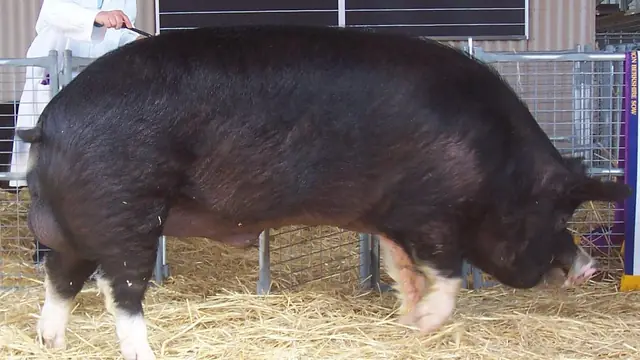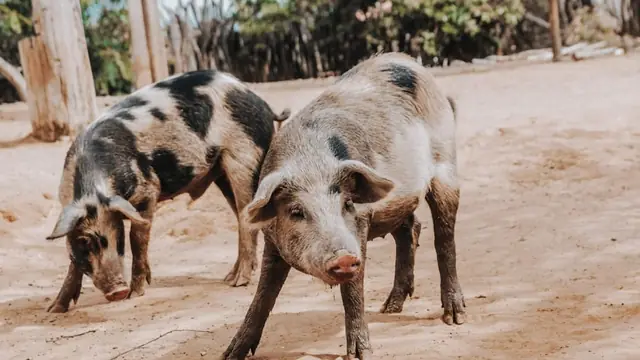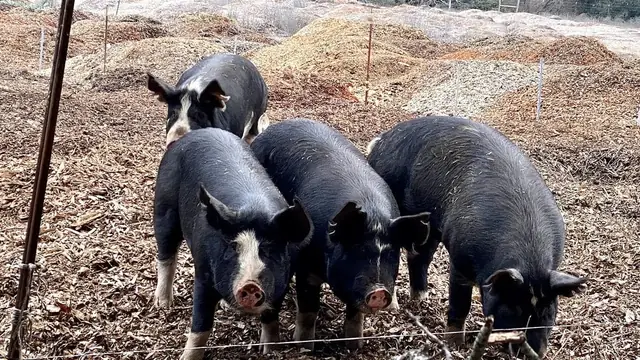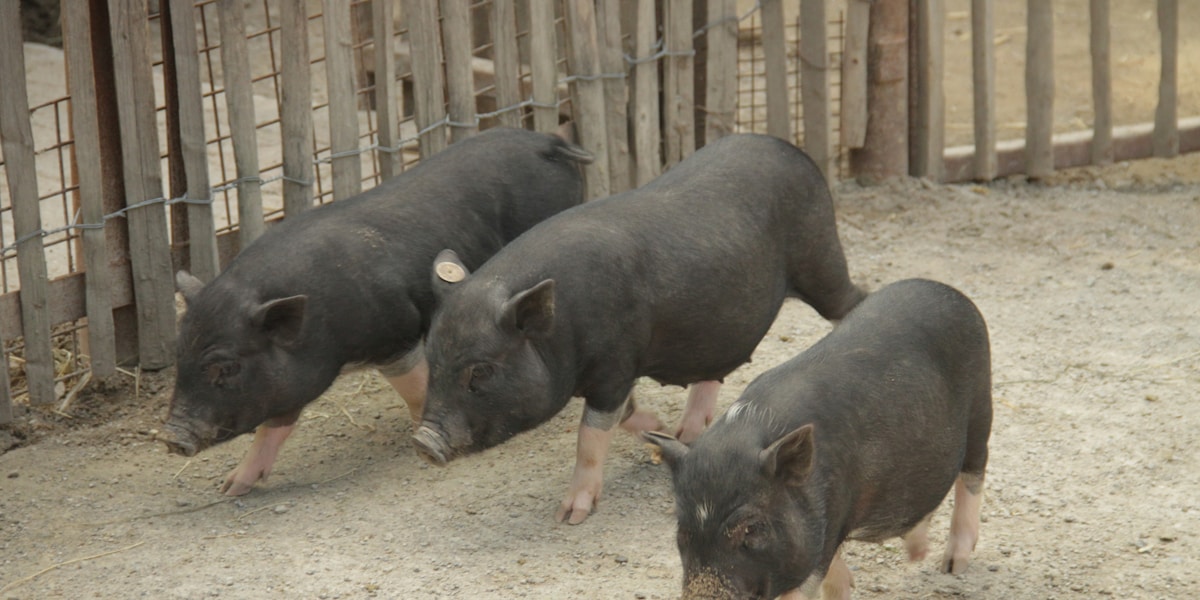
Large-scale integrators push commercial genetics for maximum throughput. But a growing number of buyers actively seek out native pork for lechon, charcuterie, and heritage cooking. For farmers deciding which system to invest in, the choice is not about preference. It is a business decision that shapes your feed costs, time to market, infrastructure needs, and buyer channels for years.
Free Tool
Pig Profit Simulator
Model both native and commercial scenarios with your actual feed prices and farmgate to see which clears more margin per sow per year.
Understanding Philippine Native Pig Breeds
The Philippines is home to several genetically distinct native pig breeds, shaped by centuries of adaptation to local climates, foraging conditions, and low-input farming systems. The most recognized include:
- Berkjala: Found in the Cordillera region, small-framed and black-coated with exceptional hardiness at elevation. Mature weight typically ranges from 40-60 kg.
- Sinirangan: Native to the Eastern Visayas, moderately sized with a strong foraging instinct. Thrives on root crops and agricultural byproducts.
- Kalinga: A Cordillera landrace closely associated with indigenous communities, culturally significant and increasingly sought after for heritage lechon.
- Visayan Warty Pig derivatives: Domesticated populations in the Visayas sharing genetic lineage with the critically endangered wild Visayan warty pig (Sus cebifrons), producing distinctively flavored pork.
- Ilocos Native: Small, slow-growing pigs traditionally raised in backyard systems and prized for bagnet (deep-fried pork belly).
Native pigs share several traits: smaller frames, higher intramuscular fat content, slower growth rates, and strong disease resistance. According to the FAO's work on indigenous livestock breeds, these animals evolved to convert low-quality, locally available feedstuffs into meat. And when commercial feed prices spike, that matters a lot.
Commercial Breeds in the Philippine Context
The commercial breeds dominating Philippine production are the same genetics used worldwide:
- Large White (Yorkshire): The backbone of most commercial operations. Fast-growing, lean carcass, good mothering ability.
- Landrace: Valued for carcass length and prolificacy. Commonly used as the maternal line in three-way crosses.
- Duroc: The terminal sire of choice for most integrators. Contributes muscling, growth rate, and reddish meat color that commands a premium in wet markets.
- Pietrain: Less common, used for extreme muscling, though heat sensitivity is a concern in tropical lowland conditions.
Most commercial farms run a three-way cross: Landrace x Large White sows bred to Duroc boars. This combination optimizes heterosis for growth, litter size, and carcass quality. How much the sire choice matters shows in a BPEX trial reported on ThePigSite (2009) that put Hampshire-, Large White- and Pietrain-type boars on three-way-cross litters: the Hampshire-type finishers grew fastest at 765 g/day, while the Large White-type finishers converted feed best at 2.40.
Head-to-Head Comparison
The metrics below represent typical ranges observed in Philippine conditions, not controlled research settings. Actual performance varies with management, nutrition, and genetics within each category.
| Metric | Native Breeds | Commercial Breeds | F1 Cross (Native x Commercial) |
|---|---|---|---|
| Days to market weight | 240-360 days (40-60 kg) | 140-170 days (90-110 kg) | 180-220 days (70-90 kg) |
| Feed conversion ratio | 4.5-6.0:1 | 2.4-3.2:1 | 3.0-4.0:1 |
| Carcass yield (dressing %) | 62-68% | 72-78% | 68-74% |
| Litter size (born alive) | 5-7 piglets | 10-14 piglets | 8-11 piglets |
| Disease resistance | High | Low to moderate | Moderate to high |
| Heat tolerance | Excellent | Poor to moderate | Moderate to good |
| Intramuscular fat | 4-7% | 1.5-3% | 3-5% |
| Farm-gate price per kg (live) | PHP 180-280 | PHP 110-150 | PHP 130-200 |
The price differential tells an important story. Native pigs sell for 50-80% more per kilogram, but they take twice as long to reach a lower market weight. The economics depend entirely on your cost of production, particularly feed.
Feed Economics and Conversion Efficiency
Commercial breeds are engineered for efficiency on formulated feeds. A Large White x Landrace x Duroc finisher converts roughly 2.8 kg of balanced feed into 1 kg of live weight gain. That efficiency collapses if you substitute with low-quality feedstuffs.
Native pigs, by contrast, evolved to extract nutrition from what commercial breeds cannot efficiently use: camote tops, banana trunks, copra meal, rice bran, kitchen waste, and foraged vegetation. Their higher FCR on commercial feed is misleading because it does not account for the dramatically lower cost per kilogram of the feeds they actually consume.
For a deeper analysis of feed cost structures, see the guide on Philippine feed economics. If you are exploring non-conventional feedstuffs, the article on alternative feeding systems covers practical formulations using locally available ingredients.
Housing and Management Differences
Commercial breeds demand controlled environments: concrete flooring with slat drainage, mechanical ventilation, farrowing crates, nursery pens, finishing barns, and strict biosecurity. Expect PHP 15,000-25,000 per sow place in capital investment.
Native pig systems require far less: bamboo or light-frame shelters with GI sheet roofing, natural ground flooring, and minimal biosecurity. Capital investment runs PHP 2,000-5,000 per sow place.
That 5-to-1 difference in infrastructure cost matters a lot when you're starting out. And honestly, most first-time farmers don't have PHP 25,000 per sow place to spend.
Crossbreeding Strategies: The F1 Advantage
For many Philippine farmers, the practical answer is neither pure native nor pure commercial. It is the F1 cross. Breeding a native sow to a commercial boar (typically Duroc or Large White) produces offspring that capture heterosis: the F1 generation outperforms the average of both parents on most production traits.
Effective crossbreeding strategies include:
- Native sow x Duroc boar: Produces a well-muscled, moderately fast-growing pig with good marbling. Ideal for the premium lechon market.
- Native sow x Large White boar: Slightly leaner offspring with better growth rates. Suitable for wet market sales at a moderate premium.
- Rotational crossing: Alternating native and commercial sires across generations to maintain heterosis without maintaining purebred herds of both types.
The critical point: always use the native breed as the dam line. Native sows are adapted to local conditions, have strong maternal instincts, and can farrow without assistance. Commercial sows bred to native boars lose the maternal and environmental advantages.
Market Channels and Buyer Preferences
Your end buyer determines which system makes sense:
- Wet markets and wholesalers: Price-sensitive, prefer commercial breeds for carcass size and leanness. Volume is king. This is where 80%+ of Philippine pork moves.
- Lechon operators: Increasingly willing to pay a premium for native or F1 pigs. Whole-roasted native pig (lechon de leche) commands PHP 8,000-15,000 per head depending on size and location. The higher fat content bastes the meat during roasting.
- Restaurants and hotels: Heritage pork programs are emerging in Metro Manila and Cebu. These buyers want consistency, traceability, and a story. Native breeds deliver on all three.
- Direct-to-consumer and online: A small but growing channel. Consumers who buy heritage pork online are typically willing to pay 2-3x supermarket prices for perceived quality and provenance.
- Processed meat producers: Need specific fat-to-lean ratios. Native pork's higher fat content is valued for longganisa, tocino, and embutido production.
Native Pricing Reality Check
The PHP 180-280/kg native premium is real, but it is not automatic. Three things have to be true for you to capture it:
- The buyer is paying for "native," not "lechon-quality." Some lechon operators happily roast F1 crosses or even pure commercial pigs at PHP 130-160/kg liveweight. They pay native premium only when they explicitly need the marbling and flavor profile. Confirm what your buyer is actually buying before assuming the higher price.
- You can deliver the size they want. Many lechon orders specify 25-40 kg liveweight (lechon de leche). A native pig sold at 50 kg might fetch a per-kilo premium but lose the order to a smaller competitor.
- You are reachable from their kitchen. A 60-minute drive in Metro Manila, a 2-hour drive in Cebu, or a single ferry hop in Bohol or Negros is the practical range. Beyond that, freight and survival risk start eating the premium.
The realistic native price band by channel, as of early 2026:
| Buyer Type | PHP/kg liveweight | Notes |
|---|---|---|
| Local lechonan (regular order) | 180-220 | Stable but capped — lechonan margins are thin |
| Restaurant heritage program | 220-260 | Requires traceability and consistency |
| Direct-to-consumer (online) | 240-300 | Small volume, high effort, premium provenance |
| Bagnet processor (Ilocos) | 200-240 | Specific weight bands; consistency matters |
| Wet market (no premium) | 130-160 | Native sells at near-commercial price if no story |
If you cannot identify which of these channels you will sell into before you breed, do not assume the premium exists. Many native pig farmers have ended up dumping pigs at wet-market price because they built the herd before they built the buyer.
A Worked Example: 50-Sow Native vs Commercial
Numbers help more than frameworks. Here is a side-by-side for a hypothetical 50-sow operation in Cebu, raising fattners to market over one year. Both scenarios are gross feed margin only; non-feed costs (labor, vet, depreciation) come off afterward.
Native (Bisaya, all-in cost-conscious setup):
- 50 sows × 1.6 litters/year × 6 piglets weaned = 480 fatteners/year
- 240 days to 50 kg market weight, FCR 4.5 on PHP 22/kg blended ration
- Feed per pig: 200 kg × PHP 22 = PHP 4,400
- Selling at PHP 200/kg liveweight × 50 kg = PHP 10,000/head
- Gross feed margin: PHP 5,600/head × 480 = PHP 2,688,000/year
Commercial cross (Landrace × Large White × Duroc):
- 50 sows × 2.2 litters/year × 11 piglets weaned = 1,210 fatteners/year
- 165 days to 95 kg market weight, FCR 2.9 on PHP 36/kg commercial feed
- Feed per pig: 250 kg × PHP 36 = PHP 9,000
- Selling at PHP 130/kg liveweight × 95 kg = PHP 12,350/head
- Gross feed margin: PHP 3,350/head × 1,210 = PHP 4,053,500/year
Honest read: the commercial setup nets PHP 1.4M more in gross feed margin annually because of higher throughput (2.5x more pigs per year per sow). But it also requires roughly 5x the housing capital, 3-4x the working capital tied up in feed at any moment, full biosecurity, and consistent feed supply. A 50-sow native operation can run with PHP 250,000 in housing capital. A 50-sow commercial setup needs PHP 1,000,000+.
The decision is rarely "which is better." It is "which one fits your capital, your time, your buyer access." Use the profit simulator with your own numbers and break-even point. For full cost breakdowns including non-feed expenses, see the real cost of raising a pig in the Philippines.
Sourcing Native Stock: PAB-IS Multipliers and PCAARRD Programs
Buying native gilts and boars from a roadside seller in 2026 is a recipe for paying premium for an undocumented crossbreed. The DOST-PCAARRD Philippine Animal Breed Information System (PAB-IS) maintains a registry of accredited native pig multiplier farms across the country. As of early 2026 it lists farms working with Bisaya, Berkjala, Sinirangan, Markaduke (Marinduque), and Q-Black native populations.
Practical sourcing rules:
- Buy from PAB-IS-listed multipliers when possible. They have documented breed lineage, basic vaccination records, and PCAARRD-supported genetic management. Expect PHP 4,500-7,000 per gilt depending on age and breed.
- Insist on visual breed traits. Pure Bisaya: black coat, small frame, straight tail. Pure Berkjala: predominantly black with white points (face, feet, tail tip). Mixed-coat pigs sold as "native" are almost always commercial crosses.
- Confirm origin within 50 km of the multiplier. Long-haul transported native gilts have higher mortality and slower acclimation. If the multiplier ships pigs nationally, ask how their stock has performed in your region's climate.
- Skip wet-market "native" pigs entirely. No documentation, no traceability, and high ASF biosecurity risk. The PHP 1,500-2,500 you save on the breeder costs more than it gains.
For breeding management once you have the stock, see native pig breeding program guide, native pig litter size data, and common breeding mistakes.
Even native pigs are at risk from ASF. The "they are hardy" reputation refers to common Philippine bacterial and parasitic diseases, not African Swine Fever. ASF kills native pigs at the same 90%+ rate as commercials. See ASF recovery era biosecurity before bringing in any new stock.
Decision Framework: Choosing Your System
Choose native breeds when:
- You have access to low-cost or free feedstuffs (farm byproducts, foraging land)
- Your target market is lechon, heritage restaurants, or direct-to-consumer premium channels
- Capital for housing infrastructure is limited
- You are farming in remote or upland areas where commercial breed support (veterinary, feed supply) is scarce
- You want to build a brand around provenance and heritage
Choose commercial breeds when:
- You have reliable access to formulated feeds at competitive prices
- Your target is volume sales to wet markets, wholesalers, or integrator contracts
- You can invest in proper housing, ventilation, and biosecurity
- Consistent throughput and predictable cash flow cycles matter most
- You are located near urban demand centers with established market channels
Choose crossbreeding (F1) when:
- You want to serve both premium and volume markets
- You have native sows available and can source commercial boar semen or service
- You need better growth rates than native breeds but cannot justify full commercial infrastructure
- You are building a mid-scale operation (20-50 sows) and want flexibility
Wala gyud universal answer. The system that works is the one that matches your resources, feed access, and market. Scale from what's already working, not from projections on paper. Use the profit simulator to model both scenarios with your actual numbers before committing.
Sources
- DOST-PCAARRD: Philippine Native Pig Breed Information System
- Banayo et al. 2023: Genetic diversity of Philippine native pigs
- FAO: Indigenous Livestock Breeds
- DOST-PCAARRD Swine Industry Strategic Plan
- Pork Information Gateway: Pig Breeding Systems for Small and Beginning Pig Farmers
Bisaya / Cebuano
Ang pagpili tali sa native ug commercial nga baboy nagdepende sa imong sitwasyon: pila ang imong puhunan, unsa ang imong target market, ug unsa ang available nga feeds sa imong lugar.
Native nga baboy:
- Mas dugay motubo (240-360 ka adlaw) hangtod sa 40-50 kg lang
- Mahimong mokaon og kamote tops, darak, copra meal, kuhaon sa palibot
- Gasto sa housing PHP 2,000-5,000 matag sow place
- Presyo PHP 180-280/kg kung naay buyer alang sa lechon o heritage market
- ASF still risk, dili "hardy" sa ASF bisan og kusgan sa ubang sakit
Commercial nga baboy (Large White, Landrace, Duroc cross):
- Paspas motubo (140-170 ka adlaw) hangtod sa 90-110 kg
- Nagkinahanglan og formulated feeds (PHP 32-38/kg)
- Gasto sa housing PHP 15,000-25,000 matag sow place (5x mas mahal)
- Presyo PHP 110-150/kg, pero mas dako ang baboy mao mas dako ang kita matag ulo
- Kinahanglan og maayong biosecurity ug consistent feed supply
F1 Cross (native sow x Duroc boar):
Maayo nga middle ground. Mas paspas kay sa native, mas barato og infrastructure kay sa full commercial. Native dapat ang sow (kay maayo nga inahan ug kaya sa local conditions), Duroc o Large White ang boar.
Pagpalit og native gilts:
Ayaw og palit sa wet market. Pangitaa ang PAB-IS accredited multiplier farms (DOST-PCAARRD nag-listahan). Presyo PHP 4,500-7,000 matag pure native gilt. Pure Bisaya: itom ang balhibo, gamay og lawas, tul-id ang ikog. Mixed coat = crossbreed na, dili pure native.
Tun-i una ang imong buyer antes magpasanay. Daghang farmer ang nakapasanay og native pero gibaligya ra sa wet market sa commercial price kay walay buyer alang sa lechon.