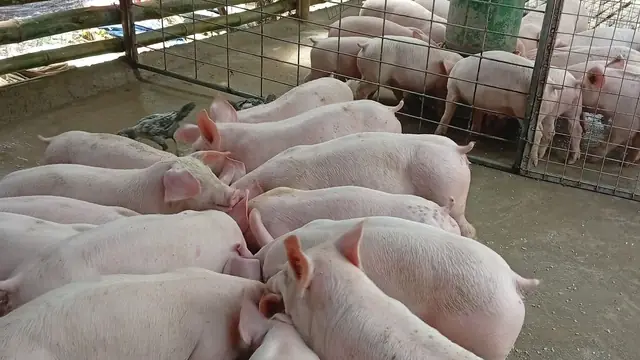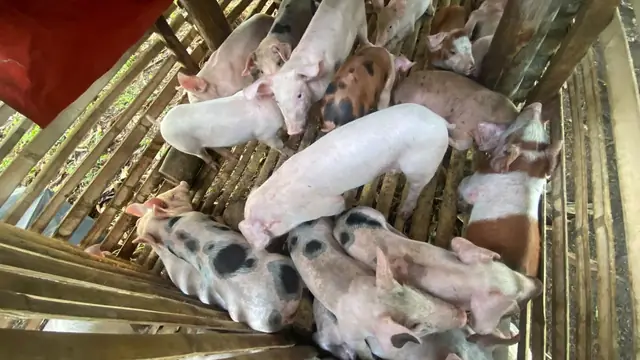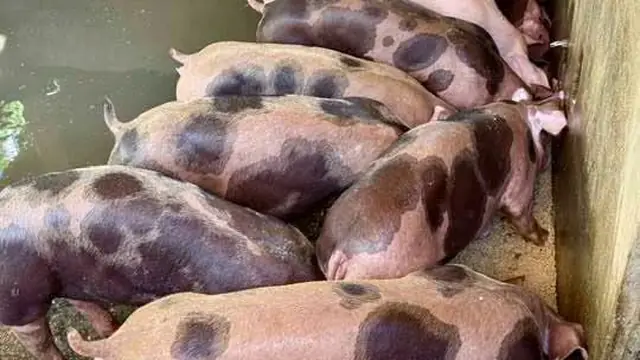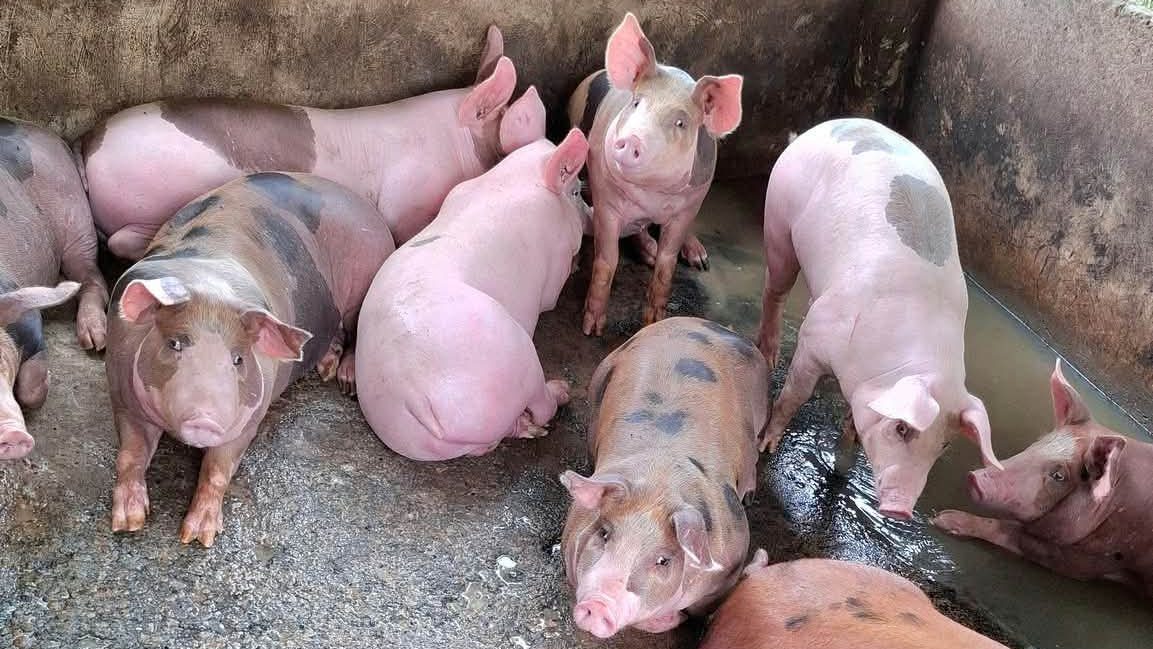
A barangay-mate offers you their piggery for ₱150,000: two sows, 12 fatteners, a 30 m² concrete pen, an existing buyer, water and power already hooked up. At a 2026 build cost near ₱240,000 for the same setup, the discount is real. So is the reason they are selling.
Most pasalo piggeries change hands because something went wrong, not because the owner is being generous. An outgoing ASF event, sows aging out of productivity, soil contamination from years of poor waste handling, or an exhausted owner pricing at half of replacement to get out fast. What you are buying is the location and the equipment, almost never the previous owner's skill or judgment.
Free Tool
Pig Profit Simulator
Plug the pasalo numbers, your acquisition cost, current sow count, expected litter size, into the simulator. See whether the deal pays back its premium over starting fresh, or whether you are buying an expensive shortcut.
What "Pasalo" Means in a Piggery Context
In Filipino business culture, pasalo means the assignment or transfer of an asset, lease, or business interest from one party to another, usually at a discount, often with the original owner involved during the handover. For piggeries, pasalo typically packages:
- The pen, water system, and biosecurity infrastructure
- The current livestock: sows, weaners, fatteners, breeder boars
- Existing feed inventory
- The buyer relationships and supplier accounts
- Sometimes the land or lease rights, sometimes not
The transaction is rarely covered by a formal sale-of-business agreement. Most pasalo piggeries change hands on a kasunduan, a written agreement between two parties witnessed by the barangay. The informality is the cultural norm. It is also where buyers lose money, because a kasunduan that does not list the livestock by tag, the parity of each sow, and the landlord's written consent is not protecting you.
The Honest Reasons Pasalo Piggeries Are Sold
Before any inspection, understand the seller's motivation. Sellers fall into roughly five categories:
-
Owner is sick or aging out. Genuine pasalo, and often the best deals. The operation was profitable, the owner is simply tired. Look for clean documentation and an operation still running at the time you inspect.
-
Family member returning abroad. OFW or migrant heading back to Saudi, Hong Kong, or Singapore. The farm was a side project that never scaled. Usually fair pricing if the assets are intact.
-
Owner is exiting after an ASF or classical swine fever scare. The honest version: a neighbour outbreak spooked them. The dishonest version: an outbreak on the property itself, with sick or asymptomatic pigs still present. This is where most pasalo losses happen.
-
Operation is structurally unprofitable. Wrong location, no buyer access, bad pen design that will not fix economically. The seller has done the math and concluded it does not work. Understand why before assuming you will do better.
-
Owner needs cash fast for unrelated reasons. Medical bills, debt, lawsuit. The piggery is collateral being liquidated. Sometimes a real opportunity, often a distressed sale where the operation has been neglected for months.
Categories 1, 2, and 5 are where pasalo can be a smart buy. Categories 3 and 4 are where most regret comes from.
A seller in a hurry is often hiding something. Take an extra two weeks of inspection time over the seller's protests. Real opportunities survive deliberate buyers. Pressure tactics ("someone else is offering tomorrow") are almost always a sign the seller knows about problems you have not found yet.
Cash Moving Is Not Profit
The single most expensive mistake pasalo buyers make is paying for "potential" or for a farm that "looks busy." A piggery can have pigs in every pen, feed in the bins, and a viajero who visits every month, and still lose money every cycle once feed, medication, mortality, and labour are netted out.
Before you value a single asset, ask the seller for the last three to four sales receipts (benta sa viajero or wet market), the matching feed purchase receipts for those same months, and the mortality count for the last batch. Reconstruct one full cycle:
- Pigs sold × liveweight × farmgate price = gross
- Minus weaner cost, total feed, medication, and any rent or labour paid out
- What is left is the real margin per cycle
If the seller cannot or will not produce receipts, treat the operation as break-even at best and price it as assets only. Most distressed sellers describe a profitable farm from memory. Memory is not a receipt. For the underlying per-head economics to sanity-check their numbers against, see cost to raise a pig in the Philippines and liveweight pig price per kg by region. Then look up the seller's own province in PSA's backyard farmgate table by province, which this site republishes row by row with the date the source was opened. In June 2026 that table ran from about ₱120 a kilo at the bottom to about ₱290 at the top. A margin claim built on the national average is a margin claim built on a price nobody was actually paid.
The 12-Point Inspection Checklist
These are the inspection points that separate a viable pasalo from a costly mistake. Walk through every one before signing anything.
| # | Inspection point | What to check | Red flag |
|---|---|---|---|
| 1 | Pen structure | Concrete cracks, drainage slope, ventilation, footbath at entry | Soft floors, pooled water, no biosec entry control |
| 2 | Sow age + parity | Documented breeding records, parity number for each sow | No records, or sows past parity 6 priced as productive |
| 3 | Sow health | Body condition score (3-3.5 ideal), heat cycle regularity, mammary system | Thin or emaciated sows, irregular cycles, mastitis history |
| 4 | Disease history | LGU vet records, neighbour reports, owner medication logs | Owner cannot produce 18+ months of records |
| 5 | Boar fertility | If buying with boar, semen quality history or recent litter sizes | Average litter under 8 per cycle |
| 6 | Weaner mortality rate | Last 12 months mortality % by age group | Mortality above 8% from weaning to market |
| 7 | Feed storage | Sealed bins, no rodent activity, no mold, recent purchase dates | Open sacks, rodent droppings, mold smell |
| 8 | Water source | Quality test (TDS, coliform), reliability, backup option | Untested water from open well, no backup |
| 9 | LGU permits | Current barangay clearance, sanitary permit, BAI registration | Expired or never issued |
| 10 | Buyer base | Verifiable viajero or wet-market contact, terms in writing | Only verbal buyer relationship, owner introduces but no commitment |
| 11 | Soil + groundwater | Visual check of waste handling, ammonia odour, runoff to neighbours | Strong odours, complaints from neighbours, no septic or biogas |
| 12 | Lease or land title | If leased, written landlord consent to transfer; if owned, clean title | Untransferable lease, no landlord sign-off, disputed title |
A piggery with 10+ clean inspection points is a strong candidate. 7-9 means negotiate hard. Under 7 means walk away, because the discount you would need to justify the risk usually does not exist.
For pen-specific inspection details, see how to build a backyard piggery and use the construction-cost figures there as your reference for what a comparable new pen would cost.
How to Value a Pasalo Piggery
The right framework is depreciated replacement cost minus risk adjustments. Do not accept the seller's price. Build your own number.
Step 1: Replacement Cost of Assets
What would it cost to build the same setup new, in 2026 prices?
| Asset | New build cost (PHP) | Useful life | Per-year depreciation |
|---|---|---|---|
| 30 m² semi-permanent concrete pen | ₱75,000 | 10 years | ₱7,500 |
| Water system (deep well + tank + lines) | ₱28,000 | 8 years | ₱3,500 |
| Electrical hookup | ₱9,000 | 10 years | ₱900 |
| Footbath + biosec entry | ₱4,000 | 5 years | ₱800 |
| Feed storage drums + scale | ₱6,000 | 5 years | ₱1,200 |
| Compost or biogas system (if present) | ₱22,000 | 10 years | ₱2,200 |
| Total infrastructure | ₱144,000 | n/a | ₱16,100/year |
These are typical 2026 backyard build costs and move with cement, GI sheet, and labour rates in your area. Treat them as a working estimate, not a quote. Price your own materials list locally before you finalise an offer.
Step 2: Adjust for Age
If the pen is 4 years old, depreciate by 4 × ₱16,100 = ₱64,400. Adjusted infrastructure value: ₱144,000 − ₱64,400 = ₱79,600.
Step 3: Add Livestock at Current Market Value
Anchor livestock values to what the market is actually paying, not to what the DA wishes it paid. PSA put the average pig farmgate price at ₱191.51/kg liveweight in Q3 2025, but it has slid every quarter since: ₱182.83 for Q4 2025, ₱176.03 for Q1 2026 and ₱172.44 for Q2 2026 (Apr ₱174.00, May ₱171.56, Jun ₱171.76). As of May 2026 SINAG put the industry average at ₱180-₱190/kg, with trade quotes ₱183-₱193. That is history now. PSA has not yet published July to September, and the DA said the national average fell to ₱150/kg in August 2026 (Manila Times, 28 Sep 2026). Value the herd at PSA's ₱172 at most, and at the DA's ₱150 if the sale is happening now, never at the trade's old ₱185. If the seller wants the trade number, ask which of his last three batches actually got it. This site publishes both cuts of that PSA survey as downloadable series: all-farms farmgate, and backyard-only farmgate, which is the closer comparison for a pasalo backyard pen with a dozen pigs in it.
The ₱210/kg "floor" agreed by the industry with DA backing on 4 November 2025 is a target, not enforceable. The national average has not reached it since it was set; four regions have for a few months (Cordillera 5, BARMM 2, Central Visayas 2, NCR 1). It is not a floor you will be paid, and you must not value a pasalo's livestock off it. Producer groups now put cost of production at ₱180-₱190/kg (Daily Tribune, 2 Oct 2026; BusinessMirror, 9 Oct 2026), so the average farm today is selling below its own cost: ₱8-₱18 a kilo under at PSA's Q2 price, ₱30-₱40 under at the DA's August ₱150. That is the margin you are buying into. Breeder stock still trades at a premium to slaughter value, about ₱20,000-₱33,000 per head depending on weight and proven productivity.
| Livestock | Per head (mid-2026) | Adjustment |
|---|---|---|
| Sow, parity 1-3, proven breeder | ₱22,000 - ₱33,000 | Full value |
| Sow, parity 4-5 | ₱15,000 - ₱22,000 | 60-75% of new |
| Sow, parity 6+ | ₱14,900 - ₱22,400 (cull liveweight at ₱172.44/kg) | Cull value only |
| Boar (active, fertile) | ₱24,000 - ₱35,000 | Document semen quality |
| Weaner (10-12 kg) | ₱3,000 - ₱4,500 | Market price by breed |
| Grower (25-60 kg) | ₱3,750 - ₱10,350 | Liveweight × ₱150 (DA, Aug 2026) to ₱172.44/kg (PSA, Q2 2026) |
| Finisher (60-100 kg) | ₱9,000 - ₱17,250 | Liveweight × ₱150 (DA, Aug 2026) to ₱172.44/kg (PSA, Q2 2026) |
Note the trap in row three: a cull-weight parity 6+ sow can actually fetch more raw pesos than a young breeder if she is heavy, because she sells by the kilo for slaughter. That does not make her a breeding asset. Value her as meat, not as a producer of future litters.
For 2 parity-2 sows + 12 weaners + 1 boar at mid-range: roughly ₱55,000 + ₱45,000 + ₱29,000 = ₱129,000.
Step 4: Subtract Risk Discounts
Apply discounts for everything that increases your risk:
| Risk factor | Discount |
|---|---|
| Pen older than expected life (>10 years) | -15% to -30% on infrastructure |
| Any disease history in last 24 months | -10% to -25% on livestock |
| Sow records missing or incomplete | -₱5,000 to -₱10,000 per sow |
| LGU permits expired or never issued | -₱8,000 to -₱15,000 |
| Buyer relationship not transferable | -₱10,000 to -₱25,000 |
| Soil or water concerns | -₱20,000 to -₱50,000 |
| No written landlord consent (leased land) | Walk away, not a discount |
Step 5: Calculate Your Maximum Offer
Combine: depreciated infrastructure + livestock at market value − risk discounts = your maximum offer. If the seller's price is higher, negotiate down or walk away.
Worked example: 4-year-old 30 m² pen with 2 parity-2 sows, 12 weaners, 1 boar, complete records, no disease, transferable buyer, owned land = ₱79,600 + ₱129,000 − ₱0 = roughly ₱208,000 fair price. If asking is ₱240,000, counter near ₱210,000. If asking is ₱150,000 with no disclosed problems, ask why, because there is almost certainly an undisclosed issue. A 30% discount with zero red flags does not exist in a normal market.
For a broader breakdown of build-from-scratch capital at different scales, see magkano puhunan sa baboyan: capital tiers.
Pasalo vs Build New: The Real Comparison
Many buyers fixate on "saving" 30-40% versus building new. The full picture has more moving parts:
| Factor | Pasalo (typical) | Build new |
|---|---|---|
| Initial cost (operation comparable to ₱208K asset) | ₱160,000-₱220,000 | ₱240,000-₱280,000 |
| Time to first revenue | 2-4 months (existing pigs) | 6-9 months (build + first cycle) |
| Disease risk premium | High (assume some) | Low (clean start) |
| Sow age at purchase | Variable, often parity 3-5 | Parity 0-1 (fresh stock) |
| Buyer relationships | Inherited (transfer risk) | Built from zero |
| Customisation | Locked into existing design | Optimised to your goals |
| Loan eligibility | Lower (asset condition) | Higher (clean new build) |
Pasalo wins when:
- The price is 40-55% below true replacement, not 20-30%
- Disease history is verifiably clean for 18+ months
- Sows are parity 1-3 with breeding records
- You need revenue fast (returning OFW with family expenses)
- The buyer base is locally established and likely to stick
- The land is owned, or the landlord has signed off on the transfer in writing
Build new wins when:
- You have time (6-9 month patience for first revenue)
- You have specific design preferences (farrow-to-finish layout, biogas integration, future expansion)
- The local pasalo market is thin or distressed (deals look suspicious)
- You qualify for a LandBank or DBP construction loan
For a model decision once you take over, see sow vs fattener: which earns more. If the buyer base looks shaky, contract growing can replace the inherited viajero relationship with an integrator offtake.
Free Tool
Break-Even Price Calculator
Run your post-pasalo break-even. Given the price you actually paid, what farmgate price covers your acquisition cost amortised over 5 batches? If that number is above current market, your pasalo math is upside down.
Five Red Flags That Mean Walk Away
These signals override price. If you see any of them, the deal is bad regardless of how attractive the asking number is.
1. Seller cannot produce 18+ months of veterinary records
There is exactly one defensible reason for missing records: they were lost in a fire or flood. Every other explanation ("the vet did not write it down," "I lost the notebook," "they are with my cousin") is a euphemism for active disease exposure or undocumented treatment. The records gap is what lets the seller mask history. Without records, you are buying an unknown. Cross-check against the LGU veterinary office, which keeps barangay-level outbreak logs.
2. Strong ammonia odour or visible runoff to neighbouring properties
Ammonia above the usual piggery baseline means the waste handling system has failed or was never adequate. The infrastructure to fix it, septic redesign, biogas digester, drainage rebuild, runs ₱25,000-₱80,000. Add that to your price and the discount usually disappears. The next LGU sanitary inspection might also shut the operation down for compliance. See biogas digester ROI for what proper waste handling costs.
3. Sows priced as productive when they are parity 6+
A parity-6 sow has roughly one final productive cycle in her, possibly two. Her value is cull liveweight, around ₱14,900-₱22,400 at PSA's official ₱172.44/kg for Q2 2026, not breeder value of ₱22,000-₱33,000. If a seller quotes her against the DA's ₱210/kg minimum price, he is quoting a number nobody in the country has actually received. Sellers routinely list older sows at breeder pricing because most pasalo buyers cannot verify parity. Ask for the breeding records. If the seller refuses or claims none exist, treat all sows as cull weight regardless of how good they look.
4. Buyer or viajero relationship "transfers" only verbally
A piggery's market access is half its value. If the seller cannot connect you to the viajero, lechon operator, or wet-market vendor with a written introduction and a follow-up call from the buyer confirming they will keep working with you, that asset does not transfer. The fix: insist on a meeting with the actual buyer before closing. If the buyer says "I will see when the time comes" or will not commit to terms, the relationship is not transferable. Adjust your offer down by ₱15,000-₱30,000, or plan to replace the channel entirely.
5. Leased land with no written landlord consent
This one sinks more pasalo deals than disease does, and most buyers never see it coming. If the land is rented, the seller does not own the right to transfer it to you. Some landlords refuse the transfer. Others raise the rent the moment a new name appears. Some leases are months from expiry, so you pay a large pasalo amount and lose the site shortly after. Get the landlord's written consent, the remaining lease term, and the renewal rate in the kasunduan before any money moves. No signed consent means no deal, not a negotiated discount.
Financing a Pasalo Purchase
Most pasalo purchases are cash because the informal nature of the sale does not fit traditional lending. Several formal options exist for buyers who structure the transaction properly:
| Lender / Program | Pasalo eligibility | Equity required | Notes |
|---|---|---|---|
| LandBank SWINE Lending | Yes, with appraisal | 25-30% | Requires registered SP-DTI and property documentation |
| DBP Sustainable Agriculture | Yes | 25% | Slower processing, more flexible on smaller transactions |
| DA-ACPC Agri-Negosyo | Yes up to ₱300K | 20% | RSBSA registration required |
| OWWA EDLP | Working capital only | 15-20% | Cannot fund acquisition directly |
| Cash / personal savings | Always | 100% | Most common pasalo route |
Lender terms and equity requirements change, so confirm current figures with the branch before you plan around them. Formal financing forces the seller to provide documentation that informal pasalo usually skips: a properly witnessed kasunduan, an inventory of livestock with valuation, tax clearance, LGU permits, and property or lease papers. Those documents protect you regardless of financing. Even cash buyers should require all of them.
Pasalo and the 2026 ASF Picture
ASF risk is the part of pasalo valuation that moves the most, so check the current map before you anchor any disease discount. Do not let a seller quote you the good headline. The good headline is the May low: the Bureau of Animal Industry's count fell from 98 active barangays on 31 December 2025 to 6 barangays in 4 provinces on 22 May 2026. It then rose with every bulletin to a peak of 293 barangays in 31 provinces on 24 September, and BAI's latest national bulletin, dated 9 October 2026, counts 226 active barangays across 24 provinces.
Since late June 2026 ASF has come back in the Visayas. San Enrique, Negros Occidental was confirmed on 23 June, with about 1,902 pig deaths province-wide by 25 June, not all of them from ASF. Barotac Viejo, Iloilo followed on 29 June, the province's first case in four years. Bacolod and La Libertad in Negros Oriental were confirmed on 1 July. Cebu banned Negros pigs and pork on 7 July under EO 39 (and in September 2026 ASF was confirmed inside Cebu province, in Ginatilan and in Pamutan, Toong and Buhisan in Cebu City, per the Daily Tribune), and Capiz red-zoned five LGUs then shut its border to pork on 24 June. The DA's ASF regionalization guidelines of 11 November 2025, which recognise ASF-free zones and restrict pig movement between regions, are exactly the rules being invoked in those bans.
What this means for a buyer:
- A pasalo anywhere in Western or Central Visayas right now is a live disease bet, not a discount. Verify the barangay and its neighbours with the LGU vet office directly. The national BAI count lags the outbreaks by weeks, and a seller quoting the May figure is quoting a dead number.
- A clean disease history still needs the standard sentinel-pig step before a full restock if the farm was ever depopulated. Budget 30-90 days of empty-pen decontamination time into your cash flow, not just the purchase price.
- "ASF-free zone" status affects whether you can legally move breeding stock or weaners in and out. A piggery whose buyers are in another region may be worth less if movement is restricted, and as Capiz and Cebu just showed, a provincial ban can land with no notice.
- Do not price a farm on the assumption you can vaccinate your way out of ASF. BAI cleared the AVAC ASF LIVE vaccine for commercial sale on 2 September 2026, for fatteners only, sold through accredited veterinary outlets. It does not cover the sows and boars that carry most of a pasalo farm's value, and it does not replace biosecurity.
For the full biosecurity verification routine on a farm with any disease history, see ASF recovery-era pig farming.
Bisaya / Cebuano
Giya sa Pasalo Piggery: Unsaon Pag-Inspeksyon Una Mopalit
Ang pasalo sa baboyan kasagaran murag pamilyahay nga deal. Moingon ang imong silingan, "ibaligya na nako sa imo akong baboyan, ₱150,000 lang." Mura og oportunidad. Pero dili tanan pasalo maayo. Kasagaran ang imong gipalit kay ang lokasyon ug ang kagamitan, dili ang abilidad sa tag-iya nga magpadagan og kita.
Lima ka rason nganong ibaligya ang piggery:
-
Tigulang na o nasakit ang tag-iya. Mao ni ang pinakamaayo nga deal. Limpyo ang operasyon, gikapoy na lang siya.
-
Returning OFW nga dili na mosulod og baboyan. Kasagaran sakto ra ang presyo.
-
Naa nay ASF scare sa palibot, o sa balay mismo. Mao ni ang kasagaran nga rason nganong daghang pasalo buyer ang nawad-an og kwarta. Importanteng ipasusi ang record sa vet ug pangutana sa silingan.
-
Dili profitable ang operasyon. Sayop nga lokasyon, walay buyer, daot nga pen design. Nakaaminon na ang tag-iya nga dili mokita. Ayaw paghuna-huna nga ikaw ang kalainan.
-
Nanginahanglan ang tag-iya og kwarta tungod sa medical bill o utang. Pwede oportunidad, pwede sad nga distressed nga negosyo nga gipasagdan og pila ka bulan.
Importante: ang lihok sa kwarta dili pareho sa kita. Pangayoa ang resibo sa benta ug sa pagpalit og feed sa miaging tulo ka bulan. Kung dili makahatag og resibo ang tag-iya, isipa nga walay kita ug bayri lang ang asset.
Ang 12-point inspection: susiha ang pen (concrete crack, drainage), edad ug parity sa sow (kung parity 6 na, dili na productive), record sa vet sa katapusan nga 18 ka bulan, fertility sa boar, mortality rate sa weaner, feed storage, kalidad sa tubig, LGU permit, buyer relationship, soil ug groundwater contamination, ug ang lease o titulo sa yuta.
Ang husto nga presyo:
Para sa 4-year-old nga 30 m² nga pen, 2 parity-2 sow, 12 weaner, ug 1 boar nga walay sakit ug naa nay record, ang fair value mga ₱208,000 base sa presyo karong 2026. Kung mosingil ang seller og ₱240,000, bargain ngadto sa mga ₱210,000. Kung mosingil og ₱150,000 nga walay nailisting nga problema, pangutana, kay naa siguroy gitago.
Lima ka red flag nga magpasabot nga kalit lakaw:
- Walay record sa vet sa katapusan nga 18 ka bulan.
- Lawom kaayo ang baho sa ammonia, naghulog ngadto sa silingan.
- Sow nga parity 6+ apan gibaligya sama sa productive nga breeder.
- Wala mahimo ang buyer o viajero nga moingon "padayonon nako ang trabaho uban kanimo."
- Renta ang yuta apan walay sinulat nga pagtugot sa tag-iya sa yuta.
Bisan unsa pa ka barato ang presyo, kung naa niini, lakaw. Mas maayo nga magtukod ka og bag-o kaysa magpalit og pasalo nga mawad-an ka og baboy sa ika-3 nga bulan tungod sa ASF nga gitago.
Pasalo o magtukod og bag-o? Pasalo kung (a) klaro ang disease history sa katapusan 18 ka bulan, (b) parity 1-3 ang mga sow, (c) bag-o pa ang pen, (d) naa nay buyer, ug (e) 40-55% mas barato sa replacement cost. Kung tulo niini, pasalo. Kung duha o ubos pa, magtukod og bag-o.
Run Your Own Numbers
Every pasalo deal is different. Use the calculators to verify your acquisition math before you commit:
- Profit Simulator for full batch economics from your pasalo starting position
- Break-Even Calculator for the minimum farmgate price needed to amortise acquisition cost
- Setup Planner for the farm model that best matches the pasalo's existing assets
Related Articles
- How much capital do you need for a piggery? for the pasalo vs build capital comparison
- How to build a backyard piggery for the replacement-cost reference on new builds
- Cost to raise a pig in the Philippines for per-head economics after acquisition
- Liveweight pig price per kg by region to sanity-check the seller's claimed margins
- Sow vs Fattener: which earns more for the model decision once you take over
- Contract growing vs independent piggery if the inherited buyer base looks shaky
- OWWA EDLP loan for OFW piggery for financing options that fit pasalo
- ASF recovery-era pig farming for biosecurity verification on disease-history farms
- Money & Profitability topic cluster for every money-side guide on Baboy PH
Sources
- PSA OpenSTAT: Average farmgate price of hogs for slaughter: the only official liveweight series. Q3 2025 ₱191.51/kg, Q4 2025 ₱182.83, Q1 2026 ₱176.03, Q2 2026 ₱172.44 (Apr ₱174.00, May ₱171.56, Jun ₱171.76)
- SINAG and NatFed statements, May 2026 (history now): industry average farmgate ₱180-₱190/kg against a cost of production near ₱180/kg
- DA via Manila Times, 28 Sep 2026: national liveweight ₱150/kg, August 2026 (trade-reported, not PSA). Cost of production ₱180-₱190/kg per producer groups (Daily Tribune, 2 Oct 2026; BusinessMirror, 9 Oct 2026)
- Philippine News Agency: DA, stakeholders set ₱210/kg minimum farmgate price for pork: the 4 November 2025 agreement. The ₱210 target is industry-agreed and DA-backed, not enforceable; the national average has not reached it since it was set, though Cordillera (5 months), BARMM (2), Central Visayas (2) and NCR (1) have.
- Pig Progress: ASF Philippines, decline in ASF cases in 2026: the early-2026 decline (98 barangays at end-2025 to 8 in 6 provinces on 8 May 2026), since reversed
- BAI ASF bulletins: 226 active barangays in 24 provinces, 9 October 2026 (Id 805); low of 6 in 4 provinces, 22 May 2026 (Id 706); peak of 293 in 31 provinces, 24 September 2026 (Id 798)
- DA (2 Sep 2026): AVAC ASF LIVE cleared for commercial sale, fatteners only
- Provincial and LGU announcements, 23 June to 7 July 2026: Negros Occidental, Iloilo, Negros Oriental, Bacolod, Cebu EO 39, Capiz border closure (signed 24 June, reported 10 July)
- FAO: African swine fever situation update, Asia & Pacific: regional ASF monitoring
- DA Price Monitoring portal: current livestock and pork price tracking
Livestock and build figures are typical ranges as of July 2026 and vary by location, asset condition, sow productivity, and ASF pressure. Farmgate prices move monthly. Confirm the current PSA figure and your lender's terms locally before finalising any offer.