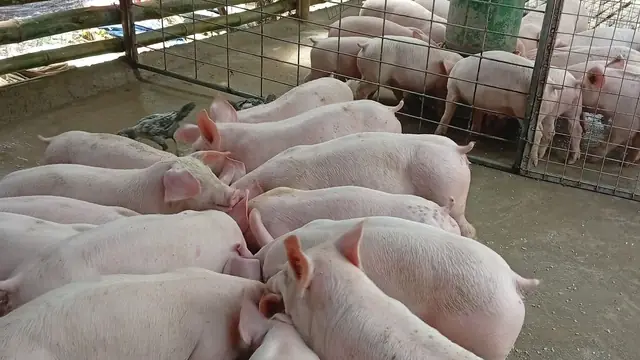
OWWA OFW-EDLP lets an OFW or OFW family borrow ₱100,000 up to ₱2 million for an individual piggery, or up to ₱5 million for a group, at 7.5% per annum fixed. It runs through OWWA with LandBank or DBP. Most families never use it because the paperwork scares them off, or they never hear about it.
The build is the hard part, not the pigs. You have remittance savings, you want to come home and stop the cycle, and you need the rest of the capital somewhere that does not eat the margin. What follows is what the program actually requires in 2026, the realistic timeline, and how to size the loan to a pig farm that can actually pay it back.
Free Tool
Pig Profit Simulator
Run your OWWA-funded piggery through the profit simulator: loan principal, monthly payment, and expected income from 5 or 10 sows. The math shows whether the cycle covers debt service or not.
What OWWA OFW-EDLP Actually Is
EDLP stands for Enterprise Development and Loan Program, formerly the P2B OFW Reintegration Program. It is a joint program of the Overseas Workers Welfare Administration (OWWA) with Land Bank of the Philippines and the Development Bank of the Philippines (DBP). OWWA verifies OFW eligibility and runs the training and endorsement. LandBank or DBP does the credit investigation and funds the loan.
The terms below are from the OWWA program page and the legal summaries that track it, as of 2026. Government lending terms change, so confirm the current numbers at your OWWA Regional Welfare Office before you plan around them.
| Loan Component | Detail |
|---|---|
| Loan range | ₱100,000 up to ₱2,000,000 (individual borrower) |
| ₱100,000 up to ₱5,000,000 (group loan) | |
| Interest rate | 7.5% per annum, fixed for the duration of the loan |
| Term | Up to 1 year (short-term) / up to 7 years (term loan) |
| Grace period | Up to 2 years on principal for term loans |
| Project-cost sharing | Loan up to 80% of total project cost; borrower equity at least 20% |
| Collateral | Acceptable to the bank: real estate (TCT/OCT) or chattel mortgage |
| Loan purpose | Working capital and fixed-asset acquisition only |
To put 7.5% in context: a typical commercial bank loan to a small farmer runs roughly 12-18% per annum. Pawnshop and 5-6 Bombay loans, still the most common pig-farming capital for backyard farmers, charge 5-10% per month. So OWWA OFW-EDLP runs at maybe half a commercial agri loan and a tiny fraction of informal credit. That gap is the whole reason to put up with the paperwork.
Who Qualifies
OFW-EDLP is restricted to OFWs and OFW families. The eligibility rules per the OWWA program page and the legal summaries tracking it, as of 2026:
Certified OWWA member, active or inactive. You do not have to still be working abroad. An inactive member with documented overseas employment history qualifies. Membership is the $25/year contribution, and most OFWs are enrolled when they file their first OEC (Overseas Employment Certificate).
Completed the Entrepreneurship Development Training (EDT). This is mandatory, not optional. OWWA runs the training, sometimes called Enhanced Entrepreneurial Development Training in older guides. No EDT certificate, no endorsement, no loan.
Within 3 years of last arrival. The application should generally be filed within three years of your last arrival in the Philippines. The exception: if you already run a business at the time of application, that window does not box you out.
Family representation is allowed. A spouse can represent a married OFW through a Special Power of Attorney validated at the Philippine embassy or consulate. A parent or an adult child can represent a single, widowed, or separated OFW. This is the usual path for piggeries: the OFW keeps earning abroad while family at home runs the farm.
If you do not qualify for OFW-EDLP but want comparable terms, look at the DA-ACPC Agri-Negosyo (ANYO) Program (RSBSA-registered farmers, ₱300,000 cap for individuals as of 2026) or the LandBank SWINE lending window for commercial-scale operators. The DOLE-DSWD Sustainable Livelihood Program runs small livelihood grants rather than loans for the smallest startups. The small backyard pig-raising guide covers the low-capital route.
How Much to Borrow for a Piggery
The loan amount should match the operation you want to run, not the maximum the bank will lend. Borrow for the farm you can actually manage.
Two things before the numbers. Every income figure below is run at ₱172.44/kg farmgate liveweight, PSA's official Q2 2026 national average (PSA has not published July-September yet; next update 6 November), and again at ₱150/kg, the national figure the DA gave for August 2026 (Manila Times, 28 Sep 2026). SINAG's ₱180-₱190/kg (May 2026) and eFeedLink's ₱183-₱193 are history now. Producer groups put cost of production at ₱180-₱190/kg (October 2026), so the average farm today is selling for less than it spends. The margins on this page are thin because the margins in the barn are thin, and your business plan should say so.
Second: if anyone tells you to plan at ₱210/kg because that is the "DA floor", don't. It is a target the industry agreed with DA backing on 4 November 2025, the DA has no power to enforce it, and the national average has not reached it since it was set. Four regions have, for a few months each: Cordillera five (most recently April-June 2026), BARMM and Central Visayas two each, NCR one. It is not money you will receive. Both halves of that claim are checkable: the monthly national farmgate series and the province-level table are downloadable with the retrieval date on every row, so a loan officer who doubts your projection can verify it in one click instead of taking your word.
Realistic OWWA OFW-EDLP piggery scenarios, with payment math at the program 7.5% rate:
₱100,000: Small Fattener Cycle Backup
A ₱100,000 loan supports a 10-pig fattener cycle only if you already own the pen and can carry part of the feed yourself. Ten weaners run ₱30,000-₱40,000 (₱3,000-₱4,000 each). Feed is the line that moved: premium grower/finisher sat at ₱34.90-₱38.20/kg as of 12 July 2026 (₱1,747-₱1,910 a 50kg bag, mean ₱36.69), and a pig eats 250-300 kg of it to market, so budget ₱9,200-₱11,000 of feed per pig, ₱92,000-₱110,000 for ten. Vaccines and vet, another ₱3,000-₱5,000. That is ₱125,000-₱155,000 of cash through the cycle, not ₱100,000.
Realistic income per cycle: thin to negative. A 95kg pig grosses about ₱16,382 at ₱172.44/kg. With utilities and pen wear added, a backyard pig costs ₱13,000-₱16,500 all-in, before you count your family's labour. That is -₱100 to +₱3,400 net per head, so -₱1,000 to ₱34,000 a cycle on ten pigs and -₱2,000 to ₱68,000 across two cycles a year. At the DA's ₱150/kg August figure the pig grosses ₱14,250 and nets -₱2,300 to +₱1,300: -₱23,000 to ₱13,000 a cycle, -₱46,000 to ₱26,000 a year. The monthly payment at 7.5% over 3 years is about ₱3,113, which is ₱37,356 a year. At ₱172.44 only the cheaper half of that cost band covers the loan; at ₱150 none of it does. That is the honest version, and it is why you do not sign for this without off-farm income to carry a bad quarter.
When this size makes sense: First-time piggery, existing pen, some feed money of your own, and an OFW family that wants to test the model before scaling up.
₱300,000: 5-Sow Farrow-to-Finish Starter
A ₱300,000 loan supports a 5-sow farrow-to-finish base. Covers: 5 F1 gilts (₱100,000), AI program for 2 years (₱25,000), sow + piglet + grower feed for year 1 (₱100,000), vaccines and vet (₱15,000), basic pen build or upgrade (₱40,000), 6-month operating reserve (₱20,000).
At 2026 feed prices that ₱100,000 feed line does not stretch across a full twelve months once the first litters are on grower ration. If you want a real year of feed inside the budget, fund four sows instead of five and keep the reserve untouched.
Realistic income year 2 onwards: Five sows finishing 16-18 pigs each is 80-90 head a year. You save the ₱3,000-₱4,000 weaner purchase on every pig, but the sow herd takes that saving straight back: gestation and lactation feed, gilt replacement, AI, and the piglets you lose before weaning. Spread across the whole herd at ₱172.44/kg (PSA Q2 2026) you are clearing roughly -₱200 to +₱800 a head. Call it -₱17,000 to +₱73,000 a year. At the DA's ₱150/kg August figure it is -₱1,300 to -₱2,300 a head, a loss of ₱106,000-₱209,000 a year. Monthly loan payment over 5 years: ₱6,007, so ₱72,084 a year. At ₱172.44 it barely covers at the very top of the range; at ₱150 it does not cover at all. A ₱10/kg move in farmgate swings the whole year by about ₱85,000, in either direction. A five-sow build is paid the backyard price, not the commercial one, and PSA separates them: backyard against commercial. Put the backyard line in the loan application. It is the one your farm will live on.
When this size makes sense: Returning OFW with some pig farming experience, family ready to commit to year-round operation, existing rural property with water and electricity available.
₱500,000: Full Backyard-to-Semi-Commercial Setup
A ₱500,000 loan funds a 10-sow farrow-to-finish operation. See the full ₱500K capital tier breakdown for the line items.
Realistic income year 2 onwards: ten sows finishing 16-18 pigs each is 160-180 head, so ₱125,000-₱280,000 net at ₱172.44/kg (PSA Q2 2026). Monthly payment over 5 years runs about ₱10,012, or ₱120,144 a year. At ₱172.44 it clears the payment without a cushion. At the DA's ₱150/kg August figure the same 160-180 head sell for ₱341,000-₱384,000 less, which on this page's model is a loss of roughly ₱60,000-₱260,000 a year and no payment covered. Plan on the low end of that range and be pleasantly surprised.
When this size makes sense: OFW family with enough on hand for the 20% equity share (roughly ₱100,000 against a ₱500,000 project), a returning OFW ready to manage full-time, and a location with road access and stable utilities.
₱1,000,000 to ₱5,000,000: Commercial Group Application
Group loans run up to ₱5 million and fund 20-30 sow operations or contract-grower facilities for the big integrators. See the contract growing comparison for which integrators are taking growers in 2026.
Realistic income year 2: 20-30 sows finishing 320-540 head a year is roughly ₱350,000-₱900,000 net at ₱172.44/kg (PSA Q2 2026), and a loss of roughly ₱250,000-₱330,000 at the DA's ₱150/kg August figure; or ₱260,000-₱400,000 a year on contract-grower fees alone, which at least do not move with farmgate. Now the payments. A ₱2M loan over 7 years runs about ₱30,565 a month, ₱366,780 a year. A ₱5M loan runs roughly ₱76,400 a month, ₱916,800 a year. Read those next to the income range. At today's margins an independent 20-30 sow farm does not service ₱5 million. The top of the band belongs to contract-grower facilities with a signed integrator contract, or to a group pooling several separate income streams.
When this size makes sense: A returning OFW with a management background, an organized OFW cooperative or homecoming group, and land in a zoned agricultural area where environmental compliance is feasible.
Application Process: Step by Step
The application moves through OWWA first, then LandBank or DBP. OWWA does not publish a fixed timeline, but in practice it runs roughly 4 to 12 weeks depending on the branch and how complete your business plan is.
Phase 1: OWWA Pre-Qualification (about 2-4 weeks)
- Visit your OWWA Regional Welfare Office to verify membership and get an initial read on the business concept. Bring your OFW Information Sheet, valid ID, proof of OWWA membership, and a one-page business concept note.
- Complete the Entrepreneurship Development Training (EDT). This is the mandatory training step, run by OWWA or an accredited provider, covering bookkeeping, financial management, and running a business in the Philippine setting. No EDT, no endorsement. Some older guides call it the Enhanced Entrepreneurial Development Training, same requirement.
- Submit the business plan and get the OWWA endorsement. After OWWA assesses the plan as viable, it issues a Certificate of Endorsement to LandBank or DBP. That endorsement is what unlocks the bank stage.
Phase 2: Document Preparation (parallel, 2-3 weeks)
The documents LandBank requires:
- OWWA endorsement letter
- Photocopy of OWWA membership card and OFW Information Sheet
- 2 valid government IDs (passport, driver's license, UMID)
- Barangay clearance for the piggery site
- Tax declaration of the property or lease contract (if leased land)
- Business plan (OWWA provides a template; use it)
- Building permit or sketch plan for the piggery
- Vicinity map and farm photos
- Statement of personal/family assets and liabilities
- Latest bank statements (last 3-6 months)
- Proof of equity contribution (cash, land valuation, or existing assets)
The business plan is the most-rejected component. It needs to show realistic revenue projections, expense breakdowns, cashflow forecasts for the loan term, and a clear use-of-funds tied to the loan request. LandBank credit officers look for plans where the projected cashflow covers the monthly loan payment by at least 1.5x. Plans that show 90% utilization or barely-break-even projections get rejected.
Phase 3: LandBank or DBP Credit Evaluation (3-6 weeks)
- Submit the complete application to your chosen LandBank or DBP branch (most OFWs use LandBank).
- Site verification. A LandBank field officer visits the proposed piggery location, photographs the site, and verifies it matches the documents.
- Background check. LandBank pulls your credit history through CIC (Credit Information Corporation). Existing bad debt, including unpaid CC bills, can disqualify you.
- Loan approval committee. The branch credit committee reviews the application. Approval, conditional approval, or rejection.
- Loan signing and release. If approved, you sign the documents. Banks commonly release fixed-asset loans against milestones rather than in one lump, so expect funds tied to documented progress like the pen build and gilt purchase. Confirm the exact release schedule with your branch.
Phase 4: Disbursement and Use of Funds (post-approval)
After loan release, LandBank or DBP monitors use of funds. They may request receipts for major purchases (sows, housing materials, equipment). Funds spent outside the approved business plan can trigger loan recall.
Keep clean records from day one. Itemized receipts. Photo evidence of completed work (pen build, sow purchase, feed storage). Quarterly progress reports to LandBank's field officer.
Real Costs Beyond the Headline Interest
The "7.5% per annum" headline doesn't include several costs that come up during processing and operation:
- Loan processing fee: ₱500-₱2,500 depending on loan size
- Mortgage registration fee (if land is collateral): 0.5-1% of loan amount
- Documentary stamps tax: ₱1.50 per ₱200 of loan
- Insurance: Mandatory livestock insurance (PCIC) and fire insurance on housing. Roughly 1-2% of insured value per year
- Site preparation costs: Tree clearing, leveling, drainage. Often forgotten in budgeting
For a ₱500,000 loan, plan for ₱8,000-₱15,000 in upfront processing costs and ₱5,000-₱10,000 per year in mandatory insurance. Build these into the budget before applying.
Common Pitfalls That Kill OFW Piggery Loans
OFW families who've gone through this process report the same mistakes over and over:
1. Buying Sows Before the Pen Is Ready
OWWA approval comes through, ₱500,000 hits your LandBank account, and you immediately drive to a multiplier farm and buy 10 gilts. The pen isn't finished, the water system isn't installed, you don't have starter feed lined up. Three of your sows are at risk of disease in temporary housing.
Fix: Spend the first 60-90 days on infrastructure. Pens, water, feed storage, biosecurity. Then buy sows. Term loans under this program can carry up to a 2-year grace period on principal, which exists precisely so the project can get to cashflow before repayment bites. Use it.
2. Underestimating the Cashflow Gap
A 10-sow farrow-to-finish has zero revenue for the first 8 months. Gilts need to be acclimated, bred, gestate 114 days, farrow, nurse piglets, then those piglets need to grow. Many OFW borrowers run out of operating capital in month 5-7, panic, and start cutting feed quality.
Fix: Include 6-8 months of operating capital in your loan request. If LandBank approves a smaller amount, scale down to 5-7 sows instead of 10.
3. Family Disputes Over Management
The OFW is in Saudi Arabia or Dubai. The spouse, parents, or siblings are running the farm at home. After 6 months, disputes start: "Who's getting paid for managing?" "Where did the feed money go?" "Why don't we just sell the sows?"
Fix: Put roles, salaries, and decision authority in writing before the OFW leaves again or before the operation starts. The EDT session touches on this. Pay attention to that part, it is not just a box to tick.
4. Ignoring the LandBank Field Officer
The field officer is the person who can flag problems before they become loan-recall issues. Most OFW borrowers treat them as a bureaucratic annoyance. The ones who maintain regular contact, send progress photos, and ask questions get more flexibility when problems arise.
Fix: Schedule a monthly check-in call with the field officer. Email progress photos. Treat them as a partner, not a regulator.
OWWA OFW-EDLP vs Alternatives
For OFW families specifically, OFW-EDLP is usually the best option. It is not the only one. Interest and equity figures below are as of 2026 and move year to year, so treat the table as a starting comparison, not a quote:
| Program | Loan Size | Interest (2026) | Equity / Sharing | Best For |
|---|---|---|---|---|
| OWWA OFW-EDLP | ₱100K-₱2M (₱5M grp) | 7.5%/yr fixed | 20% of project | OFWs and OFW families |
| DA-ACPC Agri-Negosyo (ANYO) | up to ₱300K (indiv) | 2%/yr + up to 3.5% fee | none stated | RSBSA-registered small farmers |
| LandBank commercial swine | ₱500K and up | market rate | bank-set | Established commercial farms |
| DBP agribusiness window | ₱500K and up | market rate | bank-set | Mid-size commercial operations |
| DOLE-DSWD livelihood grants | small grant | 0% (grant) | none | Ultra-small, vulnerable startups |
| Cooperative loans | ₱50K-₱200K | 12-18%/yr typical | varies | Co-op members in good standing |
| 5-6 (informal Bombay loan) | any | 5-10% per month | none | Never for piggery startup |
OFW-EDLP wins on interest rate and term length for OFW families. The catch is the wait, roughly 4 to 12 weeks, plus the EDT and endorsement steps before a bank even looks at you. DA-ACPC ANYO is cheaper on paper at 2% but caps individual farmers at ₱300,000, which is below a real 10-sow build. For anything bigger than a backyard-to-semi-commercial farm, you are into ordinary commercial bank rates, where 7.5% fixed looks very good.
Bisaya / Cebuano
Para sa mga OFW
Asa ko makakuha og pang-puhunan para sa baboyan?
Ang OWWA OFW-EDLP (Enterprise Development and Loan Program) mao ang pinakamaayo nga loan para sa mga OFW ug pamilya sa OFW. Mga detalye base sa OWWA program page karong 2026 (kumpirmaha gihapon sa inyong OWWA Regional Welfare Office kay mabag-o ni):
- Halaga: ₱100,000 hangtod ₱2 million para sa usa ka tawo. Hangtod ₱5 million kung grupo.
- Interes: 7.5% kada tuig, fixed. Mubo kaayo kumpara sa ubang loan.
- Equity: Sagdan sa 80/20. Ang loan mokubri og hangtod 80% sa total project cost, mao nga kinahanglan naa kay labing menos 20% nga kaugalingon nga puhunan.
- Termino: Hangtod 1 ka tuig (short-term) o hangtod 7 ka tuig (term loan), naay grace period hangtod 2 ka tuig sa principal.
Kinsa ang qualified:
- Certified OWWA member, active o inactive, basta naa kay record nga nakatrabaho sa abroad.
- Nahuman na ang Entrepreneurship Development Training (EDT) sa OWWA. Mandatory ni.
- Mag-apply sulod sa 3 ka tuig human sa imong pagpauli, gawas kung naa nay nagdagan nga negosyo.
- Pwede magrepresentar ang asawa pinaagi sa SPA, o ang ginikanan o anak kung single, balo, o bulag.
Unsa ang proseso:
- Adto sa OWWA Regional Welfare Office. Pa-verify sa membership.
- Tambongi ang Entrepreneurship Development Training (EDT). Mandatory ni nga seminar.
- Isumiter ang business plan. Kung approved, hatagan ka og Certificate of Endorsement.
- Dad-a ang endorsement sa LandBank o DBP. Magsumiter og documents, collateral, ug equity proof.
- Maghulat. Kasagaran mga 4 hangtod 12 ka semana, depende sa branch.
Kasagaran nga sayop:
- Pagpalit og sow usa pa nahuman ang kulungan. Humana una ang infrastructure, dayon palit og baboy.
- Kulang nga cashflow plan. Sa 10-sow farm, walay income sulod sa unang 8 ka bulan. Kinahanglan naa kay operating reserve.
- Way komunikasyon sa LandBank field officer. Sila ang makatabang nimo kung naay problema. Kontaka sila kada bulan.
Kanus-a dili angay ang OFW-EDLP:
- Kung dako kaayo ang plano (50+ sows): commercial bank loan na, dako ang amount apan mas taas ang interes.
- Kung gamay ra (5 ka baboy fattener): DA-ACPC Agri-Negosyo (hangtod ₱300K, 2% interes karong 2026).
- Kung wala gyuy puhunan: DOLE-DSWD livelihood grant (gamay nga grant, dili loan).
Before you size the loan, run the cycle through the break-even calculator so the monthly payment in your business plan is grounded in real numbers, not hope.
Related Reading
- Magkano Puhunan sa Baboyan, Capital Tiers Philippines: match your loan size to a realistic farm scale
- Contract Growing ng Baboy: alternative to independent farming with steadier income
- Cost to Raise a Pig in the Philippines: full per-pig cost breakdown
- Pig Farming Profit on 10 Pigs: projected income math for a small farm
- Profit Simulator: model the cycle through 5 years with loan payment included
Sources
- OWWA, OFW Enterprise Development and Loan Program (formerly P2B OFW Reintegration Program), loan amounts, 7.5% rate, term, eligibility (accessed 2026).
- Respicio & Co., How to Apply for the OWWA Enterprise Development and Loan Program, individual vs group ceilings, EDT requirement, collateral, partner banks (accessed 2026).
- DA-ACPC, Agri-Negosyo Loan Program (ANYO), 2% interest, up to 3.5% service fee, ₱300K individual cap, 5-year term (accessed 2026).
- DOLE, National Reintegration Program for OFWs press release, program scale and job-generation context.
Loan terms, interest rates, and equity rules change. Always confirm the current figures at your OWWA Regional Welfare Office or with LandBank or DBP before committing.