A 10-pig backyard batch runs anywhere from a ₱20,500 loss to a ₱75,700 profit per cycle on PSA's June 2026 regional prices, taking about 4.5 to 5 months. That is not a typo and it is not a range of opinions: it is the same ten pigs sold in Cebu instead of General Santos, on home mix instead of commercial pellets. The national average is ₱172.44/kg against about ₱180/kg to produce, so the average farm is selling under cost, and where you sell plus what you feed is the entire business.
Every week, someone asks in a Facebook farming group: pila ang kita kung mag-alaga ko ug 10 ka baboy? (how much can I earn from 10 pigs?) The FAO's smallholder pig production resources show small-scale operations like these are the backbone of tropical pig farming worldwide.
The answer depends on where you are, when you sell, what you paid for weaners, and how well your pigs convert feed. A Davao del Norte farmer buying crossbreed weaners from a local multiplier at ₱3,200 each, mixing their own feed with Bukidnon corn, and selling during fiesta season lives in a different economic reality from a Cebu City backyard operation paying ₱3,800 for commercial weaners and buying B-MEG pellets delivered.
Both are the Philippines. Both are "raising 10 pigs."
Below are the actual numbers for each scenario. Not optimistic projections.
Free Tool
Pig Profit Simulator
Plug in your weaner cost, feed strategy, and farmgate price to see real margins.
The 2026 Price Picture: What You Must Know Before Starting
Read this before the rest of the guide. The squeeze that started in late 2025 has not lifted.
The PSA pegged the Q3 2025 average farmgate price for slaughter pigs at ₱191.51/kg liveweight. It went down from there and has not stopped: Q4 2025 averaged ₱182.83, Q1 2026 ₱176.03, and Q2 2026 ₱172.44/kg (April ₱174.00, May ₱171.56, June ₱171.76). As of May 2026, SINAG put the industry average at ₱180–₱190/kg and eFeedLink trade quotes run ₱183–₱193. Call it ₱185, SINAG's number rather than PSA's.
Now the number that matters: SINAG and NatFed separately put cost of production at about ₱180/kg. The average Philippine hog farm is selling at roughly what it costs to produce. Anybody telling you farmgate is comfortably profitable at the national average is selling you something. The pressure comes from imports: 851,760 MT of pork landed in 2025, and EO 116 (19 May 2026) raised the tariff-quota volume from 54,210 MT to 204,210 MT. Where the money goes after your pig leaves the gate is its own piece, and the answer is less flattering to the popular villain than most people expect.
The DA's floor price, announced 4 November 2025, is a minimum farmgate of ₱210/kg liveweight, agreed with SINAG and the major pork-producer federations. The national average has never reached it. Eight months have been published since it was set and the best was ₱187.06. One region has been paid it, the Cordillera, in April, May and June 2026. Treat it as an unenforced target, not as money you will receive. Floors are easy to announce and hard to enforce when biyaheros control the buying.
What this means for a 10-pig batch:
- At the official Q2 2026 average of ₱172.44/kg × 100 kg = ₱17,244 revenue per pig
- At the ₱185/kg SINAG quoted in May, ₱18,500. That is ₱1,256 more per pig on a number PSA's own months do not corroborate, so know which one you are using
- In Cebu (Central Visayas, ₱208.73/kg in June) × 100 kg = ₱20,873
- In General Santos (SOCCSKSARGEN, ₱141.98/kg) × 95 kg = ₱13,488
- All-in cost per pig at 2026 commercial feed prices: ₱11,900–₱16,100
- At the national average with 100% commercial feed, the margin is gone. Not thin. Gone.
- Home-mixed feed and where you sell are no longer optimisations. They are the difference between a profit and a loss
The scenarios below each use their own region's June 2026 PSA figure, not a national average and not a trade quote. That is the point of them: a national number describes nobody's actual sale. Do not add the ₱210 floor to your projections. Today's farmgate spread, regional prices, and ASF status live on the state of the industry dashboard; plug your actual local farmgate into the Profit Simulator rather than trusting any single national figure. The farmgate series these scenarios lean on is published in full as household farmgate, monthly, back to 2013.
What the herd numbers actually say: the national inventory was 8.93 million head on 1 July 2026 (PSA), about 30% below the 12.70 million of 1 July 2019, the last count before ASF, and about 1% below the same morning a year earlier. It rose 2.6% over the quarter, the biggest April-to-July gain in the quarterly series PSA has published since 2010, so this quarter is a rebuild and not the faster offtake Q1 was. The part that is shrinking is the commercial sector, down 24% year on year; smallholders now hold 79.3% of the national herd, up from 71.6%, and every head of last quarter's build sat on their farms. The "backyard raisers are quitting" story you hear is backwards. And a tight herd has not translated into pricing power, because imports fill the gap. The Animal Industry Development and Competitiveness Act (RA 12257, signed 2025) sets up a multi-year livestock fund with a portion earmarked for swine repopulation, and the bigger integrators keep expanding capacity here, which feeds the contract-growing networks backyard farmers can plug into. Treat the headline investment figures you see in the news as direction, not a number to bank on.
Bottom line: this is a thin-margin market and it will stay thin while imports are cheap. Farmers who control feed costs, keep mortality down, and sell into a strong local market can still clear a real profit. Those who start with borrowed money and 100% commercial feed at the national average are working for free, or worse.
₱180/kg is roughly the national cost of production. If your local farmgate is below that, do the math before buying weaners. At 2026 all-commercial feed prices, a 10-pig batch selling at ₱160/kg can lose ₱20,000–₱40,000. Plug your actual local price into the Profit Simulator first.
The One Equation That Matters
Profit per pig = (Market weight × Farmgate price/kg) − Total cost per pig
That is the whole model. Everything else is filling in those variables correctly.
The three inputs that vary most:
- Weaner cost: ₱2,500–₱4,500 per head depending on genetics, source, and region. A crossbreed weaner runs about ₱3,500. Choosing the right age to buy piglets affects both price and survival rate
- Feed cost per pig: ₱7,000–₱12,000 depending on commercial vs. home-mixed, and ingredient prices in your area
- Farmgate market price: ₱142–₱224/kg liveweight by region (PSA, June 2026). The national average was ₱172.44/kg in Q2 2026, against ₱180–₱190/kg quoted by SINAG in May. Your region matters more than the national number, and by ₱82/kg it is not close
Regional Market Prices: Visayas, Davao, and the Rest of the Philippines
Forget the old rule of thumb that Luzon commands a premium and Mindanao trails everyone. The PSA's own regional farmgate series for June 2026 says otherwise:
| Region (PSA, June 2026) | Farmgate, ₱/kg liveweight |
|---|---|
| Cordillera | ₱224.10 (highest) |
| Central Visayas | ₱208.73 |
| Central Luzon | ₱181.05 |
| National average, Q2 2026 | ₱172.44 |
| Negros Island Region | ₱166.29 |
| Western Visayas | ₱152.75 |
| SOCCSKSARGEN | ₱141.98 (lowest) |
Key observations:
- The premium markets right now are Cordillera and Central Visayas, both above ₱208/kg. Central Luzon, the region everyone assumes is the price setter, is sixth at ₱181.05
- The weak markets are Western Visayas (₱152.75) and SOCCSKSARGEN (₱141.98). A SOCCSKSARGEN raiser is selling ₱38/kg below the national cost of production. That is not a margin problem, that is a losing trade
- The spread between the best and worst region is ₱82.12/kg, or ₱8,212 on a 100 kg pig, and it has widened from ₱56 in March. Where you sell matters more than anything else you control, including what you feed
- The DA's ₱210/kg floor has been reached in exactly one region this year: the Cordillera, in April, May and June 2026. If you are not selling there, do not price your batch off it
- Seasonality is real but it did not save anyone in 2025: Q4, the Christmas quarter, averaged ₱182.83, below Q3's ₱191.51. The 2025 high was June, at ₱214.52. Import volume can swamp a fiesta. pig333's production economics data tracks similar margin pressures globally.
- These are point-in-time figures. Ask three buyers in your own municipality what they are paying this week before you buy weaners.
Full Cost Breakdown: What Goes Into a 10-Pig Backyard Batch
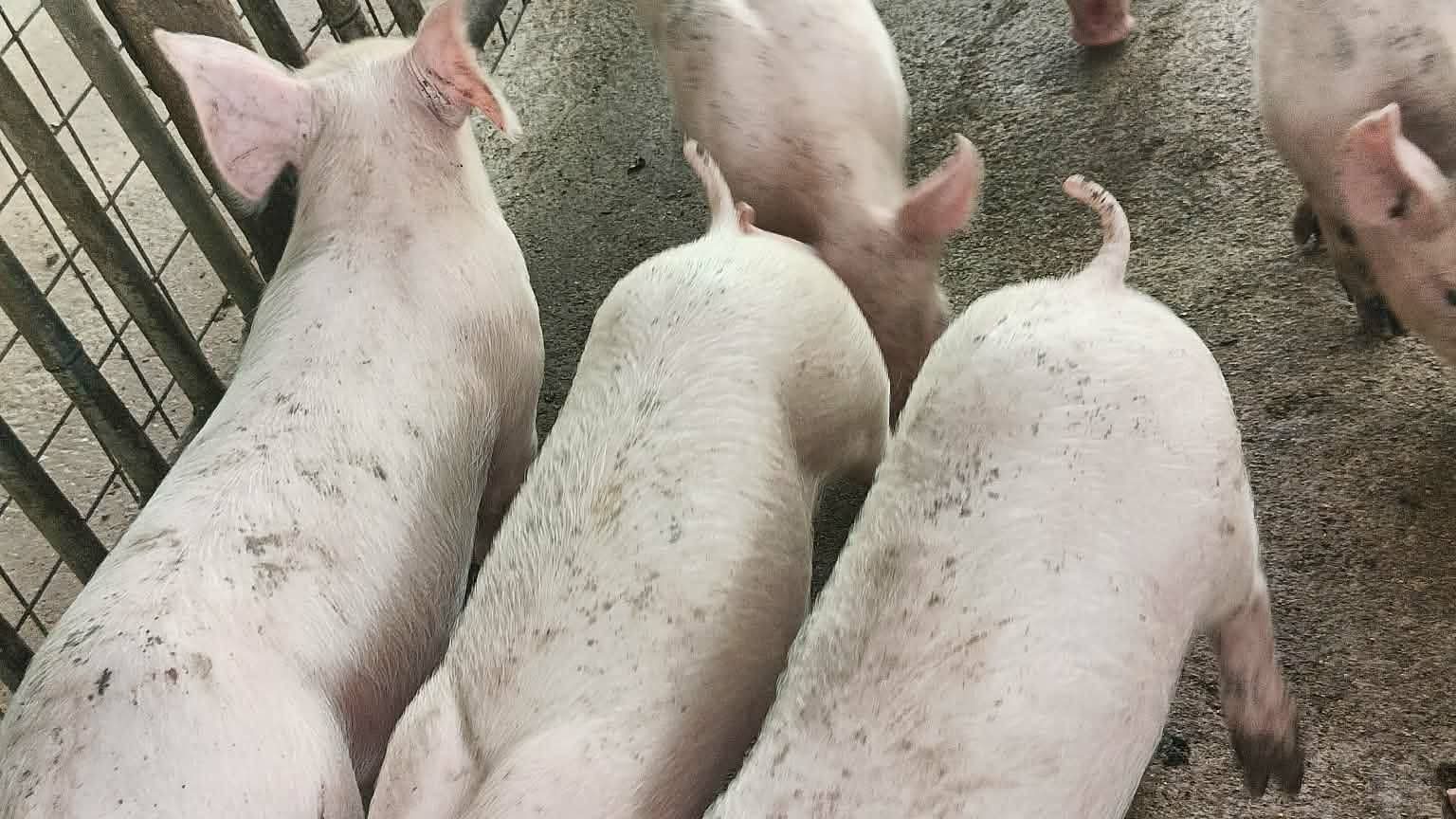
This covers a weaner-to-market batch: purchase 8–12 kg weaners, raise to 90–100 kg, sell liveweight.
The Costs Everyone Counts
| Cost Item | Per pig (range) | 10-pig batch | Notes |
|---|---|---|---|
| Weaner (8–12 kg) | ₱2,500–₱4,500 | ₱25,000–₱45,000 | Local Visayas/Davao source vs commercial multiplier |
| Pre-starter/Starter feed | ₱1,300–₱1,700 | ₱13,000–₱17,000 | 35–40 kg total; commercial feed at ₱40–₱46/kg |
| Grower feed | ₱2,500–₱4,000 | ₱25,000–₱40,000 | 100–110 kg; commercial ₱34.90–₱38.20/kg (July 2026), home mix at ₱24/kg cuts this hard |
| Finisher feed | ₱3,100–₱4,800 | ₱31,000–₱48,000 | 120–135 kg; biggest savings opportunity |
| Vaccines + deworming | ₱300–₱500 | ₱3,000–₱5,000 | Classical swine fever minimum; full program advised |
The Costs Almost Nobody Counts
| Cost Item | Per pig (range) | 10-pig batch | Why it matters |
|---|---|---|---|
| Mortality allowance (5–8%) | ₱600–₱1,100 | ₱6,000–₱11,000 | 1 dead pig = entire cost of that pig borne by survivors |
| Medications (illness episodes) | ₱100–₱300 | ₱1,000–₱3,000 | Antibiotics, vitamins, emergency treatments |
| Pen repair/depreciation | ₱300–₱800 | ₱3,000–₱8,000 | Per batch, based on 5-year depreciation |
| Disinfection between batches | ₱50–₱150 | ₱500–₱1,500 | Lime, bleach, Virkon. Most farmers skip this entirely |
| Water + electricity | ₱100–₱300 | ₱1,000–₱3,000 | Higher in dry season (pump costs) |
| Transportation (selling) | ₱100–₱300 | ₱1,000–₱3,000 | Hauling cost to buyer or slaughter |
| Interest on capital (if borrowed) | ₱300–₱800 | ₱3,000–₱8,000 | Most farmers borrow at least partly |
| Miscellaneous | ₱100–₱200 | ₱1,000–₱2,000 | Disinfectants, bags, repairs |
| Total per pig (ALL costs) | ₱11,900–₱16,100 | ₱119,000–₱161,000 |
The Invisible Cost: Your Labor
This is the cost most guides pretend doesn't exist.
| Task | Time per day (10 pigs) |
|---|---|
| Feeding (2× daily, mixing) | 60–90 minutes |
| Water refilling/trough cleaning | 15–20 minutes |
| Pen cleaning/waste management | 30–45 minutes |
| Health inspection/observation | 15–20 minutes |
| Feed procurement trips (amortized) | 10–15 minutes |
| Total | 2.5–3.5 hours/day |
Over a 4-month fattening cycle (120 days) at 3 hours/day = 360 hours of labor.
Regional minimum wage in Visayas: ~₱370–₱430/day. At ₱50/hour equivalent: ₱18,000 per batch in imputed labor cost, or ₱1,800 per pig.
Most backyard farmers never include this. When labor is properly costed, many "profitable" operations break even or lose money. The only scenario where it's economically rational to ignore labor cost is when the farmer has no alternative income source, which is unfortunately common in rural Visayas and Mindanao.
Local farmer tip:
"Kung kwentahon nimo ang imong oras, gamay ra diay ang kita. Pero kung wala naman ko'y laing trabaho, mas maayo pa ug mag-alaga ko og baboy kaysa magtunganga."
If you count your hours, the profit is small. But if I don't have other work anyway, better to raise pigs than sit idle.
Three Realistic Scenarios
Scenario A: Davao/Mindanao, home-mixed feed, local weaners
Context: Farmer in Davao del Norte or Cotabato buys crossbreed weaners locally, mixes grower/finisher feed using Bukidnon corn and local copra meal, sells at Davao farmgate prices during Kadayawan or Christmas.
| Item | Per pig |
|---|---|
| Weaner (local crossbreed, LW×L) | ₱3,200 |
| Pre-starter/Starter (bought commercial) | ₱1,500 |
| Grower (home mix @ ₱24/kg, 105 kg) | ₱2,520 |
| Finisher (home mix @ ₱24/kg, 130 kg) | ₱3,120 |
| Vaccines + meds | ₱400 |
| Housing + utilities + transport | ₱650 |
| Total cost | ₱11,390 |
| Revenue: 100 kg × ₱154.49/kg (Davao Region, PSA June 2026) | ₱15,449 |
| Profit per pig | ₱4,059 |
10-pig batch profit (5% mortality adj.): ₱4,059 × 9.5 pigs = ₱38,561
This scenario used to run at ₱180/kg, and that number is gone. PSA has the Davao Region at ₱154.49/kg for June 2026, down ₱19.71 since March. Home mix at ₱113.90/kg of liveweight produced is the only reason this batch still clears anything at all. Run the identical pens on commercial feed at this price and you are in Scenario C.
Scenario B: Cebu/Central Visayas, mix of commercial and local ingredients
Context: Cebu backyard farmer buys from commercial multiplier, uses commercial starter then switches to home mix for grower/finisher, sells to Cebu City buyers at typical Central Visayas prices.
| Item | Per pig |
|---|---|
| Weaner (commercial LW×L cross) | ₱3,800 |
| Pre-starter/Starter (commercial) | ₱1,600 |
| Grower (blend: 50% commercial @ ₱38, 50% home mix @ ₱24, 105 kg) | ₱3,255 |
| Finisher (home mix @ ₱24/kg, 130 kg) | ₱3,120 |
| Vaccines + meds | ₱430 |
| Housing + utilities + transport | ₱700 |
| Total cost | ₱12,905 |
| Revenue: 100 kg × ₱208.73/kg (Central Visayas, PSA June 2026) | ₱20,873 |
| Profit per pig | ₱7,968 |
10-pig batch profit (5% mortality adj.): ₱7,968 × 9.5 = ₱75,696
That is not a trade quote, it is the official regional figure: Central Visayas printed ₱208.73/kg in June 2026, second only to the Cordillera, and it rose ₱17.81 since March while most of the country fell. Cebu's lechon trade is why. If your buyer is quoting the national ₱172.44 instead, the same batch clears ₱4,339 per pig, about ₱41,200 across the ten. Same pigs, same feed, ₱34,500 of difference in who you sell to.
Scenario C: Conservative, all commercial feed, Mindanao market
Context: First-time farmer, everything bought commercial, sells at typical low-season Mindanao price. This is the floor case.
| Item | Per pig |
|---|---|
| Weaner | ₱4,200 |
| Pre-starter/Starter (commercial) | ₱1,650 |
| Grower (commercial pellets @ ₱38/kg, 105 kg) | ₱3,990 |
| Finisher (commercial pellets @ ₱36/kg, 130 kg) | ₱4,680 |
| Vaccines + meds | ₱450 |
| Housing + utilities + transport | ₱750 |
| Total cost | ₱15,720 |
| Revenue: 95 kg × ₱141.98/kg (SOCCSKSARGEN, PSA June 2026) | ₱13,488 |
| Profit per pig | −₱2,232 |
10-pig batch result (8% mortality adj.): −₱2,232 × 9.2 = −₱20,534
Read that line again. Five months of daily work and you are ₱20,500 down. This scenario used to show a ₱3,956 profit because it ran at ₱170/kg, a number nobody in SOCCSKSARGEN has been offered this year. The region printed ₱141.98/kg in June 2026, the lowest in the country, and the arithmetic does what arithmetic does.
It is not the feed conversion and it is not the mortality. ₱15,720 all-in on a 95 kg pig is ₱165.47/kg to produce, which is a perfectly ordinary all-commercial cost. The problem is that ₱165 to produce and ₱142 to sell is a ₱23/kg hole with nothing in the pen to fill it. Do not "fix" this by penciling in the DA's ₱210 floor. Unless you are selling in the Cordillera, nobody has been paid it.
The gap between Scenario B and Scenario C is ₱96,000 on the same 10 pigs. Feed strategy is about ₱4,500/pig of that. The rest is where you sell. If you take one thing from this page, take that.
Batch Timing: When to Start, When to Sell
Fattening cycle: 3.5–4.5 months (weaner at ~20 kg to market at ~90–100 kg).
| Target selling month | Start batch (buy weaners) | Price level | Reason |
|---|---|---|---|
| November–December | July–August | Highest | Christmas/Noche Buena demand |
| March–April | November–December | High | Fiestas, Holy Week |
| May | January | Moderate-High | Graduations, town fiestas |
| July–September | March–May | Lowest | Rainy season slump |
One caution on that table: the seasonal pattern is demand-side, and cheap imports can flatten it. In 2025 the Christmas quarter did not deliver. PSA had Q4 2025 at ₱182.83/kg, below Q3's ₱191.51, while the year's actual high came in June at ₱214.52. Timing still helps at the margin. It is no longer a plan on its own.
For guidance on cutting feed cost without slowing growth in the grow-out phase, see the cheapest way to feed pigs in the Philippines.
Strategy for 2–3 Batches Per Year
- Batch 1: Start July → Sell November–December (peak)
- Batch 2: Start December → Sell March–April (fiesta/Holy Week)
- Batch 3 (optional): Start April → Sell July–August (accept lower prices or hold to September fiestas)
Never start pigs in September–October for sale in January. Feeds are expensive during wet season, weather conditions are bad, and competition is heavy from others who started earlier.
Local calendar opportunities:
- Cebu: Sinulog (January), town fiestas
- Iloilo: Dinagyang (January)
- Davao: Kadayawan (August), pushes demand and prices up
- Tacloban: Pintados (June)
- South Cotabato: T'nalak Festival (July)
Stagger sales: Don't sell all 10 pigs on the same day. Spread sales over 2–3 weeks to catch the best offers from different buyers.
FCR: The Hidden Profit Variable
FCR (Feed Conversion Ratio) = total kg of feed ÷ kg of live weight gained.
A pig growing from 10 kg to 100 kg gains 90 kg. If it eats 270 kg of feed total, FCR = 3.0.
| FCR | Total feed consumed (10→100 kg) | Feed cost @ ₱24/kg (home mix) | Feed cost @ ₱38/kg (commercial) |
|---|---|---|---|
| 2.5 | 225 kg | ₱5,400 | ₱8,550 |
| 2.8 | 252 kg | ₱6,048 | ₱9,576 |
| 3.0 | 270 kg | ₱6,480 | ₱10,260 |
| 3.3 | 297 kg | ₱7,128 | ₱11,286 |
| 3.6 | 324 kg | ₱7,776 | ₱12,312 |
A reality check on those FCR rows: feed mills and breed brochures quote 2.4 to 2.7 for improved genetics in controlled trials. Backyard pens in Cebu and Davao, with variable feed quality, heat stress, and no individual weighing, more commonly land at 3.0 to 3.6. Plan around 3.2 to 3.4 unless your own records say otherwise. Most published FCR figures are 20–40% better than what an open backyard pen actually delivers.
Moving from FCR 3.3 to 2.8 saves about ₱1,080 per pig at home-mix prices, or ₱1,710 at commercial prices. Across 10 pigs that is ₱10,800 to ₱17,100. This single number often matters more than how hard you haggle on the weaner price.
What determines FCR:
- Genetics. Duroc-cross and hybrid breeds have naturally better FCR than pure native
- Feed quality. Balanced amino acid profile (especially lysine) vs. raw energy
- Water access. Water restriction raises FCR dramatically; ensure clean water always available
- Stocking density. Overcrowded pigs spend more energy on stress and competition
- Disease. Subclinical respiratory or enteric disease raises FCR by 0.3–0.8 points
- Heat stress. Pigs in hot, poorly ventilated pens eat less and convert worse
Use the FCR Calculator to calculate your actual FCR from records and see its profit impact.
The Risks That Wipe Batches
African Swine Fever
ASF still has no treatment, and depopulation is mandatory on confirmed diagnosis. The Bureau of Animal Industry (BAI) provides compensation in some cases under local programs, but reimbursement is typically ₱3,000–₱5,000 per pig, well below market value.
On the vaccine: the AVAC live vaccine is in monitored release (CPR-MR), not on the open market, and the rollout has been Luzon-centred since it began in August 2024. The DA is targeting Q3 2026 for commercial sale, after missing Q1. The dose totals people quote for it could not be sourced when we checked in August 2026, so we do not repeat them. You cannot buy it, and you should plan as if it does not exist.
ASF status, and be careful with this section:
The last national count BAI published was 8 active barangays across 7 provinces, on 8 May 2026, down 92% from the 98 barangays of 31 December 2025. BAI has published nothing national since, so that figure is stale. Do not read it as an all-clear.
Because the disease came back. Since late June 2026 the Visayas has been the hot zone:
- Negros Occidental: San Enrique confirmed 23 June, with 1,902 hog deaths province-wide by 25 June, not all of them from ASF
- Iloilo: Barotac Viejo confirmed 29 June, the province's first case in four years
- Bacolod and La Libertad (Negros Oriental): confirmed 1 July
- Capiz: red-zoned five LGUs, then shut its border to pork on 24 June
- Cebu: banned Negros hogs and pork on 7 July under EO 39
A batch in a high-risk zone is a different bet than the same batch in a well-controlled province. If you are anywhere in Panay, Negros or Cebu right now, check with your Municipal Agriculture Office before you buy weaners. Factor that into your decision to expand.
Feed Price Spikes
Corn prices follow international commodity markets and local harvest conditions. The 2022–2023 global grain supply disruption pushed Philippine corn prices 25–40% above trend, adding ₱1,000–₱2,000 per pig to feed cost.
This is not a hypothetical for 2026 either. Commercial feed has drifted up ₱1–₱2/kg through the year and no miller has announced a rollback. Corn is 50–65% of the formulation and its tariff was not cut, so nothing structural is pushing feed cost back down. Feed is around 57% of hog operating cost (PIDS), so a ₱2/kg move is real money on a 270 kg-of-feed pig.
Mitigation: Buy corn in bulk during harvest (October–December in Bukidnon) and store in dry, elevated conditions with proper moisture management. Buying 3 months of corn supply at harvest prices vs. off-season can save ₱3–₱5/kg on corn, or ₱450–₱750 per pig across a grow-out cycle.
Wet Season Disease Pressure
Respiratory disease and diarrhea outbreaks spike during the wet season (June–November in Visayas, less predictable in Mindanao). Mortality rates 2–3× higher during poorly managed wet seasons. A 10-pig batch started in July in Leyte without proper pen drainage and ventilation is a materially riskier batch than the same genetics started in February.
Market Price Collapse
Flock synchronization (many backyard farmers buying and selling at the same time) can saturate local markets. In Davao, a glut of market pigs around Easter, or panic selling during a disease scare, can push farmgate down into the ₱150–₱165/kg range. That is not a hypothetical floor either. PSA already had SOCCSKSARGEN at ₱152.63/kg and Negros at ₱163.19/kg in March 2026, with no glut required. Forced early selling at underweight is the worst outcome.
Why Backyard Pig Operations Fail
In order of how often they kill operations:
- Disease outbreak (especially ASF). Wipes out 100% of stock. No insurance covers it adequately. One outbreak ends many farming careers permanently.
- Running out of feed money. Starting with ₱20,000 capital for 5 pigs, running out by month 3, forced to sell underweight at a loss.
- Using 100% commercial feed at small scale. The math often doesn't work at normal farmgate prices.
- No buyer lined up. Raising pigs without market preparation. Being forced to sell to a middleman (biyahero) at 10–20% below market price.
- Skipping vaccinations and deworming. Preventable mortality that eats into profits.
- Bad batch timing. Selling in July–September at rock-bottom prices.
- Borrowing at usurious rates. Taking money from "5-6" lenders (20% per month) to finance feeds. Guaranteed loss.
- Scaling too fast. Going from 5 to 30 pigs without the cash flow, infrastructure, or expertise to handle it.
- Not counting all costs. Believing they're profitable when actually subsidizing the operation with other income.
- Family consumption. The pig earmarked for sale gets eaten at a family celebration. This is extremely common and is effectively a ₱16,000–₱19,000 expense disguised as "the farm provided."
Local farmer tip:
"Ayaw sugdi ug 10 dayon kung wala pa ka kasuway. Sugdi ug 3, basahi ang sistema, ug kung molambo, saka na."
Don't start with 10 right away if you haven't tried before. Start with 3, learn the system, and scale up when it works.
Capital Requirements and Cash Flow Timing
The right question is not "how much profit will I make" but "how much capital do I need, for how long, at what risk."
| Item | Scenario B (10 pigs, Central Visayas) |
|---|---|
| Total upfront investment | ~₱129,000 |
| Duration until revenue | 4.5–5.5 months |
| Gross profit (expected) | ~₱75,700 |
| ROCE | ~59% |
| Peak cash at risk | ~₱129,000 |
Before that 59% goes to your head: it is Scenario B, and Scenario B is the best regional farmgate in the country outside the Cordillera. Run the identical table at the national ₱172.44 and the return is about 32%; run it in SOCCSKSARGEN and there is no return to compute. A 59% return on capital in 5 months still sounds excellent, but that is per-batch ROCE on the variable spend, not the time to recover your full CAPEX (pen, fence, septic, biosecurity, well). For the realistic full-payback timeline by tier, see pig farm payback period. And to work backwards from a target monthly income to the right setup size, see how many pigs for ₱5K, ₱20K, ₱50K monthly income. The hidden cost: that ₱129,000 is entirely at risk until sale day. Unlike a savings account, pig farming has catastrophic single-event downside (ASF = near-zero recovery). Most experienced Philippine farmers manage this by:
- Never raising more pigs than they can fund from savings (not borrowed capital)
- Staggering batches: start batch 2 when batch 1 hits grower phase, so revenue overlaps
- Building a 2-month cash reserve for feed before buying the first weaner
- Starting with 3–5 pigs, not 10. Prove the system before scaling
Financing Options
DA-ACPC Lending Programs
Agri-Negosyo Loan Program (ANYO):
- Up to ₱300,000 for individual small farmers
- 2% interest rate (Partner Lending Conduits may add up to 3.5% service fee)
- Payable up to 5 years
- Requires RSBSA (Registry System for Basic Sectors in Agriculture) registration
- Apply through cooperatives, cooperative banks, or rural banks
- Website: acpcaccess.ph
KAYA (Kapital Access for Young Agripreneurs), for ages 18–30:
- Up to ₱500,000 per borrower
- 0% interest (PLC may charge up to 3.5% service fee)
- No collateral required
- Must be graduate of agri-related schooling (formal or non-formal)
SURE (Survival and Recovery Program), for calamity-affected areas:
- Up to ₱25,000
- 0% interest (up to 3% service fee)
- No collateral
- Requires state of calamity declaration in your area
LGU Programs
Many provinces and municipalities have livestock dispersal programs, including free or subsidized breeding stock. DA Regional Field Offices (RFO VI for Western Visayas, RFO VII for Central Visayas, RFO XI for Davao) often distribute gilts and boar semen. Check your Municipal Agriculture Office.
Cooperative Lending
Agricultural cooperatives typically lend at 12–24% per annum. Advantage: less paperwork, faster processing. Disadvantage: some charge "service fees" that effectively increase rates to 18–30%.
PCIC Livestock Insurance
The Philippine Crop Insurance Corporation offers livestock insurance:
- Premium: approximately 3–5% of insured value per crop cycle per pig (insured value typically ₱8,000–₱15,000 per head)
- Government subsidizes 50–60% of premium for registered smallhold raisers (under RA 10000, the PCIC Charter)
- Now covers ASF-related deaths. This is a significant policy update from the post-2019 period when ASF was initially excluded
- Also covers: natural disasters (typhoon, flood), other diseases, accidents
- Subsidized premium can be as low as ₱150–₱400 per head per cycle, far cheaper than one dead pig
- Payout: indemnity within approximately 60 days of approved claim
- Enroll through your Municipal Agriculture Office or PCIC provincial office
PCIC livestock insurance is the cheapest risk management available. At ₱150–₱400 per head (subsidized), it's the only financial cushion against ASF or typhoon wipeout. Enroll through your Municipal Agriculture Office before your next batch.
Honest assessment on financing: Access is the real problem. Many backyard farmers in remote Visayas/Mindanao cannot navigate the paperwork, lack RSBSA registration, or have no nearby lending conduit. The ACPC rates are excellent on paper. Getting approved is another story.
Manure as Income: The Overlooked Asset
A 10-pig backyard operation produces approximately 4,000–6,000 kg of manure per batch. Most backyard farmers let it wash into the drainage, which is both lost income and an environmental violation.
| Method | Setup cost | Income per batch (10 pigs) | Notes |
|---|---|---|---|
| Raw sale | Near zero | ₱3,000–₱5,000 | Sell to vegetable farmers, landscapers |
| Composted sale | ₱1,000–₱2,000 | ₱8,000–₱15,000 | 2–3 months of composting; sells at ₱5–₱10/kg |
| Vermicompost | ₱3,000–₱5,000 | ₱10,000–₱25,000 | Highest value; vermicompost sells at ₱15–₱30/kg |
| Biogas (savings) | ₱15,000–₱40,000 | ₱1,500–₱3,000 saved/batch | Reduces LPG costs; 3–5 hours cooking gas daily |
Vermicomposting can out-earn the pigs themselves. A 10-pig finishing operation drops about 60 kg of raw manure daily. Worked through African Nightcrawler beds, that becomes roughly 500 kg of vermicompost a month, worth ₱7,500–₱12,500 at bulk prices of ₱15–₱25/kg, enough to offset 40–60% of feed cost. Beds and starter worms cost ₱5,000–₱15,000 and pay back in 2–3 months. The DA-ATI runs free training for livestock farmers.
Value-Added Options: Where the Real Money Is
Lechon Business
| Item | Amount |
|---|---|
| Pig (80–100 kg liveweight) | ₱15,000–₱20,000 |
| Charcoal, seasoning, labor | ₱1,400–₱2,500 |
| Total cost | ₱16,400–₱22,500 |
| Selling price (whole lechon) | ₱22,000–₱35,000 |
| Gross profit per lechon | ₱5,600–₱12,500 |
Roughly 25–55% gross margin, well above selling live. But it needs roasting skill, equipment, a customer base, and health/sanitary permits. Risk: unsold lechon has about a 12-hour shelf life in Philippine heat.
Longganisa, Tocino, Chicharon
- Chicharon: raw materials ₱50–₱80/kg, finished product ₱250–₱400/kg. Very high margin.
- Longganisa/tocino: 40–100% markup above raw pork cost.
- Requires FDA/LGU food processing permits (which many home processors ignore at legal risk).
The farmer who raises AND processes captures 2–3× more value. But most backyard farmers lack the capital and customer base to do this consistently.
Tax Obligations
Most backyard pig farmers can relax about taxes:
- Individual farmers with gross sales under ₱3 million annually are VAT-exempt
- Under the TRAIN Law, individuals earning ₱250,000 or less annually are exempt from income tax. Most backyard farmers fall well below this.
- A typical 10-pig batch generates ₱150,000–₱180,000 in gross sales at 2026 farmgate, still far under the VAT threshold.
- Practically: the vast majority of backyard pig farmers pay zero taxes and are not registered with BIR. This is tolerated at subsistence-level operations.
When taxes apply: If you scale to 20+ sows / 100+ head per year, process and sell value-added products (lechon business, longganisa), or gross receipts exceed ₱250,000/year from a "business" perspective, register with BIR and your municipality.
Scaling: When Does It Make Sense?
| Scale | Monthly labor | Feed savings (bulk buying) | Break-even price | Notes |
|---|---|---|---|---|
| 1–5 head | Same as 10 | None (retail prices) | Highest | Fixed costs spread over too few pigs |
| 10 head | ~3 hrs/day | Slight (per sack) | High | Minimum viable scale for most farmers |
| 15–25 head | ~4–5 hrs/day | 5% cheaper (per ton) | Moderate | Sweet spot for dedicated farmer with side income |
| 50 head | Full-time + help | 10–15% cheaper | Lower | Needs hired labor (₱350–₱500/day) |
| 100+ head | 1–2 workers | 15–20% cheaper | Lowest | Commercial scale, business permits required |
The hardest transition is 20 → 50 head. At 50 pigs you need hired labor, real environmental compliance (neighbors WILL complain), and ₱400,000–₱600,000 per batch in feed capital alone at 2026 prices. For how sweat-equity and profit-sharing change the math when you scale through a relative, see the paiwi and hatian profit-split math.
The sweet spot for a dedicated backyard farmer with no other income: 15–25 head, using mixed feeds, with a lechon or processed pork side business.
For OFW investors funding a relative's farm rather than running it themselves, the line items in the table above understate the real cost: land, hired labor, and biosecurity capex add another ₱100,000–₱400,000 per batch. See the real cost of a Philippine pig farm for OFW investors for the absentee-owner version of these numbers.
Simple Record Keeping
Without records, you genuinely don't know if you're making money. Most backyard farmers who say "kumikita naman" (we're earning) cannot produce records to prove it.
Batch Profit Template
BATCH #: ___  Start: ___  End: ___
Pigs started: ___  Pigs sold: ___  Died: ___

GASTOS (Expenses)
──────────────────────────────────
Weaners:              ____________
Feeds (commercial):   ____________
Feeds (local/mixed):  ____________
Medications/vitamins: ____________
Vaccinations:         ____________
Transport:            ____________
Pen repairs:          ____________
Disinfection:         ____________
Electricity/water:    ____________
Other:                ____________
──────────────────────────────────
TOTAL GASTOS:         ____________

KITA (Income)
──────────────────────────────────
Pig 1: ___kg × ₱___/kg = ________
Pig 2: ___kg × ₱___/kg = ________
... (per pig)
Manure sold:          ____________
──────────────────────────────────
TOTAL KITA:           ____________

TUBO (PROFIT):        ____________
Per pig:              ____________
FCR: Total feed kg ÷ Total weight gain kg = ___
Track weekly: feed consumed (kg), sick pigs, deaths, weight estimates. This notebook costs nothing. It could save your operation.
Bisaya / Cebuano
Pila gyud ang kita sa 10 ka baboy? (Honest na tubag)
Scenario para sa Davao/Mindanao farmer na nag-home-mix og feed:
Gasto per baboy:
- Biik (local crossbreed): ₱3,200
- Starter (baligya): ₱1,500
- Grower + Finisher (home mix @ ₱24/kg): ₱5,640
- Bakuna, tambal, uban: ₱1,050
- Total: ₱11,390
Kita kung mabaligya nimo sa ₱180/kg × 100 kg (mao ni ang presyo sa Mindanao karong tunga-tunga sa 2026):
- ₱18,000 per baboy
- Minus gasto: ₱11,390
- Profit: ₱6,610 per baboy
- 10 ka baboy (minus 5% mortality): ~₱62,800
Pero hinumdumi ang mga risgo:
- ASF. Kung mahitabo, wala. Zero. Bisag kanus-a. Ug nibalik na siya sa Visayas sukad ulahing bahin sa Hunyo 2026 (Negros, Iloilo, Capiz, Bacolod).
- Feed price spike. +₱5/kg sa mais nga gigamit = mokunhod imong kita ug mga ₱1,300 per baboy
- Ubos nga presyo. Sa SOCCSKSARGEN, ₱141.98/kg ra ang farmgate niadtong Hunyo 2026 (PSA). Sa Western Visayas, ₱152.75/kg. Ubos na kaayo sa gasto sa produksiyon nga mga ₱180/kg.
- Sakit. 1 baboy mamatay = mawala dayon ang ₱6,610 sa imong batch profit
Unsa ang maayong buhaton:
- Mag-una og gamay (3–5 ka baboy), basahan og presyo ug sistima
- Ihanda ang 2 buwan nga feeds sa pagsugod pa lang
- Bantayan ang presyo sa inyong lugar. Ang Cebu market mas taas kaysa Davao sa kasagaran.
- I-time ang panahon sa pagbaligya. Kadayawan (Agosto) ug Pasko mas taas ang presyo sa Davao.
- Sulati ang tanan: gastos, kita, FCR. Kung walay record, dili ka kasayud kung nagkita ba gyud ka o wala.
Importante nga balita (Mayo 2026):
Ang PSA nag-report nga ang Q2 2026 national average kay ₱172.44/kg. Ang SINAG nag-ingon nga mga ₱180 hangtod ₱190/kg ang farmgate niadtong Mayo 2026, apan mas taas kini kaysa opisyal nga numero. Ang gasto sa produksiyon kay mga ₱180/kg. Buot pasabot, ang kasagaran nga mag-uuma nagabaligya sa presyo nga katumbas ra sa iyang gasto. Ang DA nagbutang og floor price nga ₱210/kg niadtong Nobyembre 2025, apan wala pa gyud kini naabot bisan usa ka bulan, bisan asa nga rehiyon. Ayaw ni ilakip sa imong kwenta. Kung ang presyo sa inyong lugar ubos sa ₱180/kg, pag-amping kaayo sa dili pa mosugod og batch gamit 100% commercial feed. Ang home-mixed feed mao na ang kaluwasan.
Maayong balita: Ang bag-ong Animal Industry Development Act (RA 12257) naghatag og pondo para sa livestock ug swine repopulation. Ug ang PCIC insurance nag-cover na sa ASF, ₱150 hangtod ₱400 lang kada baboy ang premium. Pag-rehistro sa imong munisipyo.
Gamiton ang Profit Simulator para isulod ang imong tinuod nga gasto ug makita ang imong kita.
Tools
- Profit Simulator: full batch economics with your numbers
- Breakeven Calculator: minimum farmgate price needed to break even
- Feed Calculator: total feed consumption and cost by phase
- FCR Calculator: feed conversion ratio and its profit impact
Related Articles
- How Much Does It Cost to Raise a Pig in the Philippines?: full itemized cost breakdown
- Pig Feed Formulation Philippines: cut feed cost with local ingredients
- Real Cost of Pig Feed (2026): verified 2026 commercial and home-mix feed pricing
- Best Pig Breeds Philippines: breed selection for Visayas and Mindanao
- Liveweight Pig Price by Region: current farmgate prices
- Sow vs Fattener: which earns more?: 30x profit differential math at scale
- Best month to sell pigs in the Philippines: Christmas and Holy Week timing premium math
- Hidden pig farm startup costs: the capex line items most budgets miss
- Crossbreed pig price guide: what a quality weaner really costs in 2026
- Paiwi and hatian profit-split math: how the numbers change when someone else raises your pigs
- Money & Profitability topic cluster: the full set of money-side guides
Sources
- PSA OpenSTAT, farmgate price of hogs for slaughter (liveweight): Q3 2025 ₱191.51/kg, Q4 2025 ₱182.83/kg, Q1 2026 ₱176.03, Apr 2026 ₱174.00, May ₱171.56, Jun ₱171.76 (Q2 2026 average ₱172.44). Regional, June 2026: Cordillera ₱224.10, Central Visayas ₱208.73, Central Luzon ₱181.05, Western Visayas ₱152.75, SOCCSKSARGEN ₱141.98
- SINAG (May 2026): industry average farmgate ₱180–₱190/kg; cost of production about ₱180/kg, corroborated independently by NatFed. eFeedLink trade quotes ₱183–₱193/kg
- BusinessWorld: Floor price for live hogs set at P210 per kilo (4 Nov 2025): DA ₱210/kg minimum farmgate. Not reached in any month or region of PSA data since
- BusinessMirror: DA, producers set farmgate price of live hogs at ₱210/kilo: SINAG, NFHFI, and PPF agreement; tariff restoration to 40% recommended
- PSA swine inventory: 8.93 million head as of 1 July 2026, up from 8.70 million on 1 April 2026, about 30% below the last pre-ASF count of 12.70 million (1 July 2019). Commercial herd down 24% y/y; smallholders now 79.3% of the national herd
- BAI ASF situation report, 8 May 2026: 8 active barangays in 7 provinces (down 92% from 98 on 31 Dec 2025). Visayas resurgence June–July 2026: Negros Occidental, Iloilo, Bacolod, Negros Oriental, Capiz, Cebu EO 39
- DA on the AVAC vaccine: monitored release (CPR-MR) since July 2024, government-supervised use only, commercial sale targeted Q3 2026
- EO 116 (19 May 2026): pork minimum access volume raised to 204,210 MT. 2025 pork imports totalled 851,760 MT
- Baboy PH: Real Cost of Pig Feed (2026): premium grower/finisher ₱34.90–₱38.20/kg (mean ₱36.69), home-mix ~₱24/kg, as of 12 July 2026
- Baboy PH: How Much Does It Cost to Raise a Pig: site-baseline weaner, feed, and total-cost-per-pig figures
- pig333 pig production economics: global FCR and margin-pressure benchmarks
- DA official portal: floor-price announcement and import-tariff position
- PCIC livestock insurance: ASF-covered policies, subsidized smallholder premium
- Executive Order 62 (20 June 2024): fixed the existing 15% in-quota and 25% out-quota pork rates in a schedule to 2028. It did not cut them; the cut dates to 2021
- TRAIN Law (RA 10963): tax thresholds applied to smallhold farm income
Prices and projections are for planning. Actual figures vary by location, season, and management. Farmgate verified against PSA OpenSTAT through March 2026 and SINAG's May 2026 industry average; feed prices as of 12 July 2026. Recheck before committing capital.