Buying piglets is the first decision that determines whether your fattening batch will be profitable. Buy the wrong ones, too young or from poor stock, and you're fighting uphill from day one.
Most farmers I've talked to who lost money on their first batch say the same thing: they bought cheap piglets from a viajero and two died within the week. The ₱500 they saved per head cost them ₱8,000+ in wasted feed and medication.
"Pilia gyud ang baktin nga kusgan mokaon ug dili hilom-hilom." (Choose the piglet that eats vigorously and is not too quiet.)
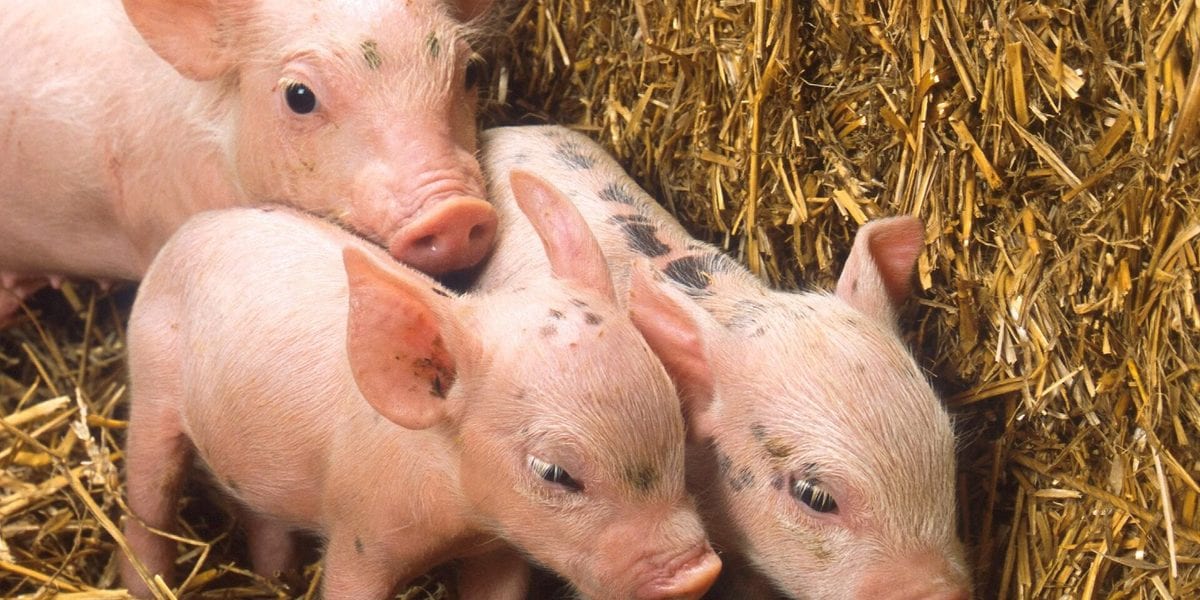
The Ideal Age: 8-10 Weeks
Philippine smallholder farms wean piglets at a median age of 44 days, with a range of 18-81 days (Lanada et al., 2005). The best time to buy is 8-10 weeks, after full weaning, when the piglet is eating solid feed independently and has received its first hog cholera vaccination.
| Purchase Age | Risk Level | Notes |
|---|---|---|
| Under 6 weeks | High risk | May not be fully weaned. Higher mortality from stress and scours. |
| 8-10 weeks | Best choice | Weaned, eating solid feed, vaccinated. Strong enough for transport. |
| 12+ weeks ("started") | Lower risk | Safer but more expensive. Less profit margin for fattening. |
Why not younger? Piglets weaned before 6 weeks have immature gut linings. The stress of transport plus a sudden feed change almost guarantees scours. In commercial setups with climate-controlled nurseries, early weaning works. In a backyard pen with no temperature control, it doesn't.
How Much Do Piglets Cost?
This is the question everyone asks but few guides answer with real numbers. Prices fluctuate by breed, season, and region, but here's what you can expect as of early 2026:
| Breed Type | Weight at 8 Weeks | Price per Head | Notes |
|---|---|---|---|
| Native (bisaya/black pig) | 5-8 kg | ₱1,500-₱2,500 | Slow growers, but hardy. Best for lechon de leche or heritage pork. |
| Landrace × Large White | 8-12 kg | ₱3,000-₱4,500 | The standard backyard crossbreed. Good FCR, widely available. |
| Duroc cross | 10-14 kg | ₱3,500-₱5,000 | Better meat quality, faster gains. Higher demand pushes prices up. |
| Commercial hybrid (PIC, Hypor) | 10-15 kg | ₱4,000-₱5,500 | Best FCR but needs better feed and management to hit potential. |
Prices based on direct-from-breeder sales in Visayas and Mindanao. Viajero (middleman) prices run ₱300-₱800 higher per head. Prices spike 15-25% from October to November as farmers stock up for the Christmas selling season.
Sus, those commercial hybrids look expensive. But run the numbers and you'll see the ₱1,500 premium over a basic crossbreed usually pays for itself in feed savings over a 4-month grow-out.
Free Tool
Pig Profit Simulator
Compare hybrid vs. crossbreed economics for a 4-month grow-out with your numbers.
What to Look For
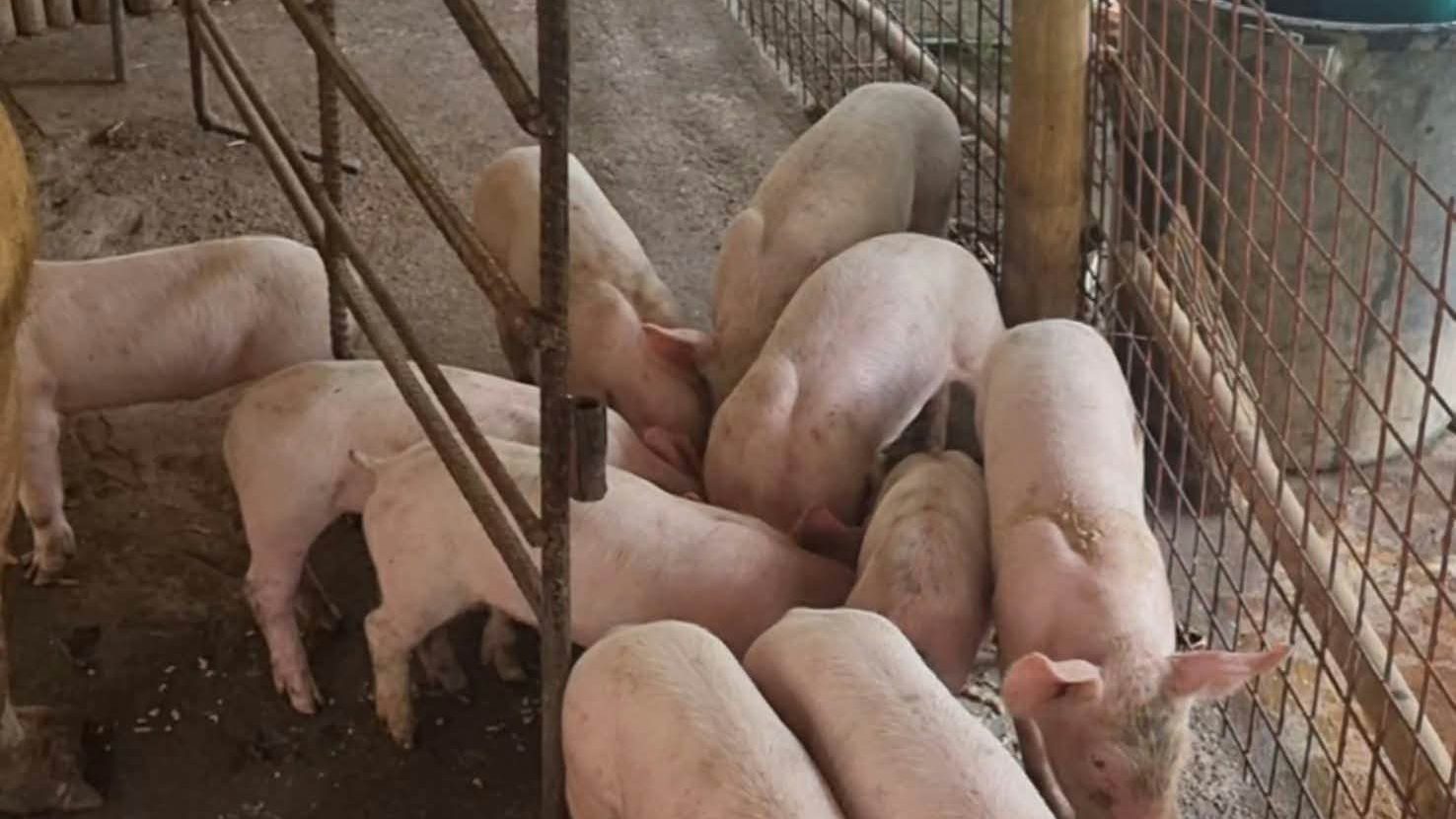
Healthy signs: buy this piglet
- Active, alert, curious. Approaches you, does not hide in the corner.
- Bright, clear eyes. No discharge or redness.
- Clean rear end. No diarrhea stains around the tail.
- Smooth, clean skin. No crusty patches, scabs, or rough areas.
- Good body shape. Not bony, not pot-bellied.
- Normal breathing. No coughing, sneezing, or wheezing.
- Walks and runs normally. No limping or stiffness.
- Weight: At least 8-12 kg at 8 weeks for improved breeds (native piglets may be smaller at 5-8 kg).
Red flags: do NOT buy this piglet
- Pot belly with thin body. Heavy parasite (worm) load.
- Rough, dull coat. Chronic poor nutrition or disease.
- Coughing or sneezing. Respiratory infection that can spread to your entire herd.
- Pale skin or droopy ears. Anemia, likely from parasites.
- Bloody or watery diarrhea. Active disease.
- Hernias (lumps at navel or scrotum). Genetic defect, will not perform well.
- Runt of the litter. Will never catch up to siblings. The cheapest piglet is rarely a good deal.
Honestly, if more than one piglet in a litter shows red flags, walk away from the whole batch. That's a management problem, not bad luck.
Where to Buy
Direct from breeder farms. The best option. You can see the parent stock and ask about health records. BAI maintains an accredited breeder farm list under BAI Administrative Order No. 23, though the online list isn't always current. Call your Provincial Veterinary Office for a local referral.
Fellow farmers in the barangay. Word-of-mouth is still the most common method. You can see the sow and the conditions the piglets were raised in.
Livestock auction markets (bagsakan). Found in major agricultural towns. In Central Visayas, the Catigbian Livestock Auction Center in Bohol operates on Mondays and Fridays. Davao region has the Mati City Farmers Bagsakan Center and the Sulop auction market in Davao del Sur. Prices are competitive but health history is unknown, so quarantine strictly.
Online (Facebook groups). Growing trend. Search "[your province] piglets for sale" on Facebook Marketplace or groups like "Hog Raisers Philippines" and "Cebu Hog Raisers." Verify seller reputation before transacting.
LGU dispersal programs. Some municipalities distribute subsidized piglets through the DA's INSPIRE Program (Integrated National Swine Production Initiatives for Recovery and Expansion) or 4H clubs. Ask your Municipal Agriculturist. As of 2026, the DA is also procuring 32,000 gilts for swine repopulation, with piglets from these animals to be distributed to smallholders.
Questions to Ask the Seller
Before handing over money, ask:
- What vaccines has this piglet received? At minimum: hog cholera (CSF) vaccine. Common brands available in the Philippines include Porcilis CSF Live (MSD), Coglapest (Ceva), and Suigen HC (Virbac). First dose is typically given at 5-6 weeks.
- When was the last deworming? Should be dewormed at least once before sale.
- What feed is the piglet currently eating? This matters because sudden feed changes cause scours. Ask for a small bag of the current feed to mix with yours during transition.
- How old is the sow, and how many litters? First-litter piglets tend to be smaller. Sows on their 3rd-5th litter typically produce the strongest piglets.
- Can I see the sow? Healthy, well-maintained sow = better piglets.
If the seller can't answer these questions or gets defensive, that's your signal to buy elsewhere.
ASF biosecurity reminder. The last national count BAI published was 8 active barangays across 7 provinces, on 8 May 2026, down 88% year on year. Treat that number as history, not as today's map. ASF came back in the Visayas from late June 2026: San Enrique in Negros Occidental was confirmed on 23 June (about 1,902 hog deaths province-wide by 25 June, not all of them from ASF), Barotac Viejo in Iloilo on 29 June, its first case in four years, then Bacolod and La Libertad in Negros Oriental on 1 July. Capiz red-zoned five LGUs and shut its border to pork on 24 June. Cebu banned Negros hogs and pork on 7 July. Quarantine every new arrival for 14 days, do not buy from an area with a recent outbreak, and call your Provincial Veterinary Office or the BAI before you move a piglet across a provincial line.
After Purchase: The First Two Weeks
The first two weeks after buying are the highest-risk period. Transport stress, new environment, and feed changes all combine to make piglets vulnerable. Budget for 3-5% first-week mortality on any batch purchase.
- Quarantine new pigs for 7-14 days before mixing with existing animals. Separate pen, separate feeding tools.
- Transition feed gradually over 5-7 days. Mix the old feed with your new feed, increasing the new feed proportion daily. For the first week, a quality pre-starter like B-MEG Premium Hog Pre-Starter (around ₱1,860-₱1,930 per 25 kg bag) or a repacked option at ₱75-99/kg helps the transition.
- Provide clean water 24 hours a day. Stressed piglets dehydrate fast.
- Deworm on arrival if the seller cannot confirm recent deworming.
- Keep the pen warm, dry, and draft-free. Newly transported piglets are stressed and more susceptible to pneumonia, especially during rainy season.
Timing Your Purchase for Profit
Piglet prices and pork selling prices follow seasonal patterns:
- Buy piglets in July-August, sell finished pigs in December-January (Christmas and fiesta season). The holiday lift is real, but it is far smaller than most guides promise. PSA farmgate liveweight averaged ₱182.83/kg in Q4 2025, ₱176.03/kg in Q1 2026 and ₱172.44/kg in Q2 2026. Four falling quarters in a row. As of May 2026 the trade is quoting ₱180-₱190/kg (SINAG industry average). Nothing has touched ₱200 since mid-2025, and the DA's ₱210/kg minimum farmgate price, set in November 2025, has never been paid by the national average, and outside the Cordillera by no region either of the PSA series. Budget as if it does not exist, because for you it doesn't.
- Avoid buying in October-November. Piglet prices inflate 15-25% because everyone stocks up for the holiday selling window.
- Track your total input cost from day one using a break-even calculator. A crossbreed weaner at ₱3,500, plus ₱9,000-₱11,000 of feed over four months at mid-2026 prices (premium grower/finisher runs ₱34.90-₱38.20/kg), plus vet, water and power, puts roughly ₱14,000-₱16,000 into a 90 kg pig. That is ₱155-₱178/kg just to get your money back, which lines up with the ₱180/kg cost of production SINAG and NatFed both put on the industry. Sell at the ₱185/kg the trade is paying and a clean batch clears a thin margin. Lose two head, or take another ₱1/kg on feed, and it clears nothing. That is the real math right now. Run your own numbers before you commit.
Bisaya / Cebuano
Para sa mga mag-uuma
Kanus-a ang pinakamaayo nga edad sa pagpalit og baktin?
Ang pinakamaayo: 8-10 ka semana, weaned na, mokaon na og kaugalingon, ug nabakuna na.
Pila ang presyo? Ang crossbreed nga baktin (Landrace × Large White), mga ₱3,000-₱4,500 matag usa. Ang native nga baktin, mas barato sa ₱1,500-₱2,500 pero hinay motubo.
Unsay tan-awon sa palit:
- Kusgan mokaon, aktibo, dili hilom-hilom
- Limpyo ang panit, walay galis o hubag
- Walay kahak o kalibanga
- Dili bilbil ang tiyan (pot belly = ulod)
Ayaw palita: ang pinakagamay sa batch (runt), ang nagkahak, o ang naay hubag sa pusod.
Tip sa panahon: Palit og baktin sa Hulyo-Agosto para ibaligya sa Disyembre, medyo mas taas ang presyo kay Pasko ug fiesta. Pero ayaw pag-asa og dako nga tubo. Karong Mayo 2026, ang farmgate mga ₱180-₱190 kada kilo, ug ang gasto sa pagpadako mga ₱180 kada kilo. Nipis kaayo ang kita.
Learn More
- Piglet inspection checklist the 12 things to physically check before paying for a weaner
- Best pig breeds for small farmers in the Philippines for help choosing your breed
- How much does it cost to raise a pig? for full budget planning
- Pig farming profit: real numbers for 10 pigs for batch economics
- How to deworm pigs for your arrival deworming protocol
- Pig vaccination schedule the booster timeline starting from arrival
- Pig skin problems the first symptoms to spot on a freshly-bought weaner
- Profit Simulator to model your return before buying
Sources: Lanada et al. 2005, smallholder weaning practices; BAI accredited breeder farm guidelines (AO No. 23); PSA farmgate hog price series, OpenSTAT, through March 2026; DA INSPIRE Program; BAI ASF situation updates, national count of 8 May 2026; SINAG and NatFed statements on cost of production, May 2026; DA Administrative Circular No. 12, ASF safeguards.