"Ayaw hulat nga daghan na ang masakit ayha ka molihok." (Do not wait until many are sick before you act.)
When pigs get sick, the first 24 hours decide whether you lose one or the whole herd. Isolate within an hour, take a temperature within two, call your LGU vet within 12. Skip blind antibiotics. If you suspect ASF, report inside 24 hours. That is a legal obligation under RA 11332, and it is also the only way you ever qualify for indemnification.
The First 24 Hours: Response Flowchart
Time matters. Here is your decision tree laid out as a step-by-step protocol. Follow it in order.
| Step | Action | Timeframe | Details |
|---|---|---|---|
| 1 | ISOLATE the sick pig | Immediately (within 1 hour) | Move to a separate pen or tie away from the herd. If you cannot move it, move the healthy pigs instead. |
| 2 | Take temperature | Within 2 hours | Normal: 38.7-39.8°C (Merck Veterinary Manual). Fever: above 40°C. Use a rectal thermometer. Record it. |
| 3 | Document symptoms | Within 2 hours | Take photos. Note: appetite, stool (color, consistency), skin color, breathing, posture, discharge from eyes/nose. |
| 4 | Check other pigs | Within 4 hours | Walk through every pen. Look for early signs: reduced feed intake, lethargy, huddling, coughing. Separate any suspects. |
| 5 | Restrict movement | Within 4 hours | No pigs in or out of the farm. No visitors. No borrowed equipment. No selling until you know what it is. |
| 6 | Clean boots and hands | Immediately and ongoing | Disinfect footwear between pens. Wash hands with soap. Change clothes after handling sick pigs before touching healthy ones. |
| 7 | Call your vet or LGU vet office | Within 6-12 hours | Describe symptoms, pig count, mortality. Ask if similar cases reported nearby. |
| 8 | Do NOT medicate blindly | Before vet contact | Antibiotics do nothing against viruses (ASF, classical swine fever, PRRS). Wrong treatment wastes money and time. Wait for vet guidance. |
| 9 | Collect samples if pig dies | If mortality occurs | Blood (EDTA tube), spleen, lymph nodes, tonsils. Keep cold. Your vet or BAI provincial office can advise on sample collection. |
| 10 | Report if ASF suspected | Within 24 hours | Mandatory. Contact your provincial or municipal veterinarian. See reporting section below. |
Print this table and post it in your farm. During a crisis, you will not have time to think through each step. Having it visible helps you act fast.
Recognizing What You Are Dealing With
Not all diseases require the same response. Some are manageable at the farm level. Others demand immediate government notification. The Merck Veterinary Manual is a good reference, but here is a practical field guide.
Red Flags That Suggest ASF or Classical Swine Fever
These symptoms mean you should assume the worst until proven otherwise:
- High fever (above 41°C) across multiple pigs simultaneously
- Reddish-purple blotching on ears, belly, or legs
- Bloody diarrhea or bloody nasal discharge
- Multiple sudden deaths within 2-3 days with no prior symptoms
- Pigs piling up, unable to stand, rapid progression from healthy to dead
Both African Swine Fever (ASF) and classical swine fever (the older farmers in the Visayas still call it "kolera") can present this way. They are different diseases, though. Classical swine fever has a cheap, widely available vaccine (LHCV, ₱40-80 a dose, often free at LGU vet offices), so a vaccinated herd is almost never the answer there. ASF has no treatment and no cure, and mortality approaches 100% in unvaccinated, never-exposed herds. There is now an ASF vaccine in the Philippines (AVAC ASF LIVE), cleared by BAI for commercial sale on 2 September 2026, but for fatteners only and through accredited veterinary outlets, so a sow, gilt or boar has no vaccine to fall back on and an unvaccinated batch has none either. For the full vaccine and recovery picture, see pig farming in the ASF-recovery era. The WOAH (World Organisation for Animal Health) lists ASF as a notifiable disease worldwide, and the Philippines has its own reporting law on top of that.
Signs That May Be Treatable at Farm Level
- Single pig with reduced appetite but no fever: could be stress, minor digestive upset, or a teeth or mouth injury
- Coughing in a few pigs: possible early respiratory infection, dust irritation, or poor ventilation
- Skin lesions without fever: mange, ringworm, sunburn, or skin problems treatable with topical medication
- Diarrhea in weanlings: nutritional scours, common during feed transition
Even these "minor" problems require monitoring. A single coughing pig can become a pen full of pneumonia cases within a week if conditions favor pathogen spread.
For a full guide to identifying specific diseases and their symptoms, read the pig diseases guide. To catch problems before they become outbreaks, see signs your pig is sick and why piglets die in the first week.
When to Call the Vet vs. When to Act Yourself
This is the question backyard farmers ask most, and the honest answer involves trade-offs. Private vets charge PHP 500-2,000 per visit plus medicines. For a farmer with 5 heads, that is a significant cost. But losing even one pig to a treatable condition costs more.
Call a vet or LGU vet immediately when:
- More than one pig is sick at the same time
- Any pig has a fever above 40.5°C
- You see blood in stool or nasal discharge
- A pig dies unexpectedly
- Pigs show neurological signs (circling, tremors, convulsions)
- Symptoms do not improve within 48 hours of supportive care
You can manage at the farm level when:
- A single pig has mild diarrhea with no fever, adjust feed, ensure hydration, monitor for 24-48 hours
- Skin problems like mange, apply ivermectin per weight (see your deworming guide)
- A pig that stopped eating but shows no other symptoms, check for mouth injuries, feed palatability, water supply, heat stress
- Routine conditions you have successfully treated before under previous vet guidance
Cost of delay vs. cost of vet visit:
| Scenario | Vet Visit Cost | Cost of NOT Calling Vet |
|---|---|---|
| Single pig, respiratory infection | PHP 500-1,500 | PHP 8,000-15,000 (if pig dies or infects others) |
| Multiple pigs, unknown fever | PHP 1,000-2,500 | PHP 50,000-200,000+ (herd loss) |
| Suspected ASF | PHP 500-1,000 (LGU vet is often free) | Loss of entire herd + potential legal liability for not reporting |
| Skin problem, single pig | May not need vet | PHP 0 if managed correctly, but misdiagnosis risks spread |
The municipal or provincial veterinary office provides free consultation and often free basic medicines for backyard operations. Sus, a lot of farmers do not know this. Call your LGU agriculture office. They have a vet on staff or on retainer.
ASF Reporting Requirements
African Swine Fever is a notifiable disease. Reporting a suspected case is a legal obligation, not a courtesy. The reporting duty sits under RA 11332, the Mandatory Reporting of Notifiable Diseases Act of 2019: ASF is a notifiable transboundary animal disease, and Category I notifiable diseases must be reported within 24 hours of detection. The ASF response itself runs through a stack of DA Administrative Orders. The ones worth knowing: DA AO No. 22, Series 2020 on swine depopulation, DA AO No. 30 on recovery and freedom declaration, and DA AO No. 10, Series 2024 on indemnification. You are legally required to report suspected cases. This is not optional.
How to report:
- Contact your municipal/city veterinarian or provincial veterinary office first. This is your fastest channel.
- Call the BAI hotline if local officials are unreachable: (02) 8528-2240 (main BAI office) or (02) 926-1522 (24/7 hotline).
- Message your barangay agriculture officer in parallel. They often relay faster than a phone call gets answered.
- Do not move or sell pigs from the farm while under investigation.
- Do not slaughter sick pigs for human consumption. Aside from being illegal if ASF is confirmed, it spreads the virus through pork products.
What happens after you report: the 1-7-10 Protocol
The DA enforces a zoning response around any confirmed ASF case:
- 1-km radius (Infected Zone): All pigs culled, farms quarantined, movement of pork and live animals stopped at checkpoints
- 7-km radius (Surveillance Zone): All farms inspected and tested, restricted movement
- 10-km radius (Buffer/Monitoring Zone): Active monitoring, market surveillance, biosecurity audits
For the affected farm specifically:
- The provincial vet team visits for inspection and sample collection
- Samples go to BAI's regional or national laboratory for confirmation
- If positive, depopulation of confirmed infected pigs is ordered under DA AO No. 22
- Indemnification under DA AO No. 10, Series 2024 replaced the old flat PHP 5,000 rate with a size-based scale: PHP 4,000 per piglet, PHP 8,000 per medium pig, PHP 12,000 per large pig, but only if you reported. The catch: payment depends on DA's quick-response fund still having budget, and DA money has historically arrived late, sometimes a year out. Confirm the exact rate that applies to you with your municipal agriculture office at the time of culling rather than banking on a figure from a news clip. Farmers who hide outbreaks get nothing either way.
Red, Pink, Yellow, Light Green: ASF Zone Classification
The domestic zoning scheme that decides what you can move and sell runs under the Amended National ASF Zoning and Movement Plan (DA Administrative Circular No. 2, Series of 2022). It is a four-tier color code, and a municipality moves up the ladder only after a clean surveillance period:
- Red (Infected Zone): Active ASF cases. Pig and pork movement out of the area banned.
- Pink (Buffer Zone): No cases inside the area, but adjacent to a red zone. Controlled movement.
- Yellow (Surveillance Zone): Cleared further out from infected areas, under active monitoring. Movement under permit.
- Light Green (Protected Zone): No cases and not adjacent to infected areas. Normal movement under standard requirements.
Do not confuse this with the November 2025 "ASF regionalization" you may have seen in the news. That framework (DA Administrative Circular No. 12, announced by the DA on 11 November 2025) is about which foreign ASF-free zones may export pork into the Philippines, in line with WOAH standards. It does not change your local farm zone.
Zone status changes fast, often within days of a new outbreak, and zone changes land in the BAI ASF disease situation reports. BAI's count stood at 226 active barangays in 24 provinces on 9 October 2026, and the October 2026 ASF cases post has the province table and the 40-day exit rule. Do not trust a screenshot or a neighbor's word. Verify your municipality's current status with your municipal vet the day you plan to buy or sell.
The honest part about reporting
Underreporting is the single biggest reason ASF keeps cycling through Philippine backyards. Recent peer-reviewed work estimates 80-90% of suspected cases never get reported. Farmers sell sick pigs to traders before they die, because the indemnification was historically too slow and too small to cover the loss. The 2024 rate increase helps, but trust between farmers and government is still rebuilding.
I get the math from a farmer's side. Losing one pig at PHP 8,000 indemnification is still less than what you would have netted at market. But hiding an outbreak does not just hurt you. One unreported case can take out every backyard piggery within kilometers. The WOAH reporting standards exist for exactly this reason. Report. Get whatever indemnification you qualify for. Restock when the zone reopens. That is still a faster recovery than rebuilding a dead barangay's worth of trust.
Quarantine Procedures
ASF or otherwise, quarantine is the single most effective tool you have for containing disease spread. Most backyard farms lose pigs not because the disease was untreatable, but because containment failed in the first 48 hours.
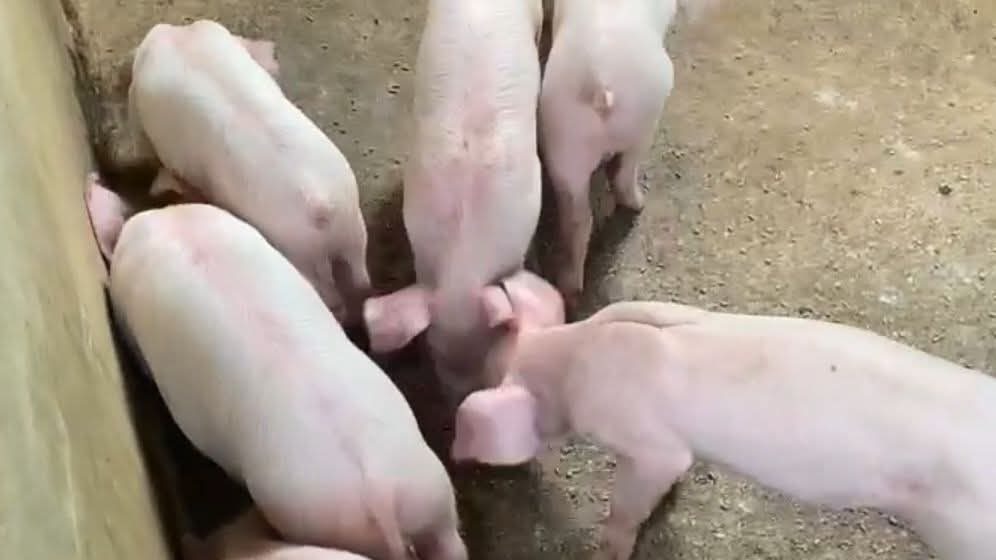
Setting Up Farm Quarantine
Physical separation:
- Sick pigs in an isolation area at least 10-15 meters from healthy pigs (farther is better)
- Ideally downwind from the main herd, airborne pathogens travel with wind
- Separate feeders, waterers, and cleaning tools for the isolation area, never share equipment
- If you have only one pen structure, create a barrier using plywood, bamboo, or tarpaulin. Not ideal, but better than nothing
People and traffic control:
- Designate one person to handle sick pigs. That person should not handle healthy pigs afterward without full boot change, hand wash, and ideally a clothing change
- No visitors, buyers, technicians, or neighbors entering the pig area
- Vehicles should not enter the farm if possible, if unavoidable, disinfect tires with lime or chlorine solution
- Your own daily routine: handle healthy pigs first, sick pigs last, never the reverse order
Duration:
- Maintain quarantine for at least 2 weeks after the last pig shows symptoms or the last death occurs
- For ASF: quarantine lasts until BAI officially lifts it (typically 90 days minimum after depopulation and disinfection)
Disinfection Protocol
Proper disinfection matters both during an outbreak and when preparing pens for restocking afterward. Most swine pathogens are killed by common disinfectants, but ASF virus is exceptionally hardy, it can survive in meat products for months and in the environment for weeks.
During the outbreak (daily):
- Remove all organic matter: manure, feed waste, bedding. Disinfectants do not work on dirty surfaces.
- Wash surfaces with detergent and water using a stiff brush or pressure washer
- Apply disinfectant: use commercial livestock disinfectant (Virkon S, glutaraldehyde-based products) at recommended concentration, or household bleach at 1:10 dilution (sodium hypochlorite)
- Boot dip at every entry point: a shallow basin with disinfectant solution, changed daily
Post-outbreak terminal disinfection (before restocking):
| Step | Action | Details |
|---|---|---|
| 1 | Remove everything | All bedding, feed, organic material. Burn or bury off-site. |
| 2 | Dry scrape | Remove caked manure from floors, walls, feeders with shovels and scrapers |
| 3 | Soak and wash | Pressure wash all surfaces with detergent. Let soak 20-30 minutes first. |
| 4 | First disinfection | Apply approved disinfectant at label concentration. Cover all surfaces. |
| 5 | Dry completely | Allow 24-48 hours of drying. Sunlight helps. UV kills many pathogens. |
| 6 | Second disinfection | Repeat disinfectant application. Two rounds are better than one. |
| 7 | Lime application | Spread agricultural lime (calcium hydroxide) on floors and around pen perimeter. |
| 8 | Rest period | Leave pen empty for minimum 30 days (ASF: 90+ days). |
For concrete-floored pens, this protocol is effective. For earthen-floored pens, consider removing and replacing the top 10-15 cm of soil, as virus can persist in contaminated earth. FAO, WOAH and the World Bank set out disinfection protocols by farm type in Good Practices for Biosecurity in the Pig Sector.
Post-Outbreak Recovery and Restocking
After the outbreak is contained and your pens are cleaned and disinfected, the question becomes: when and how to restock?
Restocking timeline:
- Non-ASF diseases (respiratory, bacterial infections): Restock 30-45 days after terminal disinfection and confirmed negative follow-up, if available
- ASF-confirmed farms: Follow BAI's repopulation protocol under DA AO No. 6 and No. 7, Series 2021. Minimum 90 days after terminal disinfection, with sentinel pig testing before full restocking
- Sentinel testing: Place 2-3 pigs in the cleaned pens and monitor for 30 days. If they remain healthy, proceed with restocking. If they get sick, your disinfection was incomplete.
Where to source replacement stock:
- Buy only from municipalities in Yellow or Light Green zones under the national zoning plan, and verify the veterinary health certificate with your own municipal vet
- Request health certificates, deworming records, and proof of iron injection in piglets
- Quarantine all incoming pigs for 14-21 days before mixing with any existing stock
- Start with fewer pigs than your previous batch. Scale back up only after confirming the farm environment is safe
Upgrading biosecurity for the future:
Every outbreak is an expensive lesson. Use it. Common upgrades farmers make after an outbreak:
- Perimeter fencing to keep stray pigs and dogs out
- Concrete footbaths at entry points (permanent, not improvised)
- Separate clothing and boots stored at the farm
- Written protocols for feed delivery, visitor access, and new pig introduction
- A real biosecurity routine treated as part of daily work, not paperwork after the fact
If you raise pigs from abroad and rely on a worker on the ground, see managing a pig farm from abroad. The disease-response chain breaks down fast when the owner is not on the farm. For practical layout and biosecurity-friendly pen design, see how to build a backyard piggery.
Common Mistakes During Outbreaks
Based on what municipal vets in Central Visayas and Western Visayas report seeing repeatedly:
- Panic slaughter and selling. Farmers sell sick pigs to traders to recover some money before they all die. This spreads the disease to other farms and into the food chain. It is also illegal for ASF-suspect pigs.
- Medicating everything with antibiotics. Antibiotics do nothing for viral diseases. Injecting amoxicillin into a pig with ASF wastes PHP 50-100 per dose and gives you false hope.
- Not isolating fast enough. "Tan-awa lang nako ugma kung mo-ayo" (I will just see tomorrow if it gets better), that delay costs pigs. Isolate today, observe tomorrow.
- Sharing equipment between sick and healthy pens. One shovel, one pair of boots, one bucket used everywhere. This is how disease moves through a farm.
- Restocking too early. The empty pens feel like wasted money, so farmers buy new piglets 2 weeks after losing a herd. The virus is still there, and the cycle repeats.
Bisaya / Cebuano
Kung Nasakit ang Baboy: Unsaon Paglihok sa Unang 24 Oras
Step 1: IBULAG DAYON (sulod sa 1 oras) Ibalhin ang nasakit nga baboy sa lain nga lugar, layu sa ubang baboy. Kung dili mahimo ibalhin ang nasakit, ibalhin ang healthy. Ayaw hulata nga "tan-awon pa nako ugma." Ang usa ka adlaw nga hulat pwede makadaot sa tibuok batch.
Step 2: SUKDA ANG TEMPERATURA (sulod sa 2 oras) Gamit og rectal thermometer (₱150-₱250 sa agri-vet). Normal: 38.7-39.8°C (Merck Veterinary Manual). Kung 40°C pataas, naay sakit. Isulat ang temperatura, kinahanglan ni sa vet.
Step 3: TAWAG SA VET (sulod sa 6-12 oras) Ang municipal vet libre ra ang konsulta, usahay libre pa ang tambal. Isulti niya: pila ka baboy ang nasakit, unsa ang temperatura, unsa ang simtoma (dili mokaon, kalibang, ubo, pula ang dalunggan), kanus-a nimo namatikdan.
Step 4: AYAW MAGPALIT OG TAMBAL NGA WALAY VET Ang antibiotics walay epekto sa virus (ASF, classical swine fever o kolera, PRRS). Kung moturok ka og amoxicillin sa baboy nga naay ASF, giusik lang nimo ang ₱50-100 ug naghulat ka og wala. Hulata ang vet.
Kung namatay ang baboy:
- Kung dugoon ang ilong, tiyan, o dalunggan, posible ASF. I-REPORT DAYON sa municipal vet sulod sa 24 oras. Obligado kini sa balaod.
- Ayaw ibaligya ang nasakit o namatay nga baboy. Illegal ni ug mao ang nagpakaylap sa sakit sa ubang farm.
- Kung confirmed ASF, naay indemnification gikan sa gobyerno ubos sa DA AO 10 (2024): ₱4,000 matag piglet, ₱8,000 matag medium, ₱12,000 matag dako nga baboy. Pero kung nagtago ka sa outbreak, wala gyud kay makuha.
Pagkahuman sa outbreak:
- Hugasi ug disinfect ang tangkal (bleach 1:10 o apog)
- Biyai og minimum 30 ka adlaw nga walay baboy (ASF: 90+ ka adlaw)
- Ayaw mag-restock og paspas. Butangi og 2-3 ka "sentinel" nga baboy una, tan-awa og 30 ka adlaw kung okay ba.
Ang pinaka-common nga sayop: magbaligya og nasakit nga baboy para maka-recover og kwarta. Makasabot ko ngano, pero mao ni ang nagpalawig sa sakit sa tibuok barangay. Ug kung ASF, illegal.
Learn More
- Pig diseases in the Philippines: symptoms guide: identify what is affecting your herd
- Signs your pig is sick: catch problems early before they become outbreaks
- Why piglets die in the first week: early-life mortality is its own emergency category
- How to deworm pigs in the Philippines: routine parasite control reduces opportunistic disease pressure
- Iron injection for piglets: one of the few injections backyard farmers should manage themselves
- How to build a backyard piggery: pen design that makes quarantine and disinfection actually possible
Sources: RA 11332, Mandatory Reporting of Notifiable Diseases Act of 2019 (ASF is a notifiable transboundary animal disease; Category I = report within 24 hours); DA Administrative Circular No. 2, Series 2022 (Amended National ASF Zoning and Movement Plan: Red/Pink/Yellow/Light Green); DA Administrative Order No. 22, Series 2020 (swine depopulation), AO No. 30 (LGU recovery and freedom declaration), AO No. 6 and No. 7 Series 2021 (repopulation protocols), AO No. 10 Series 2024 (revised indemnification rates: ₱4,000/₱8,000/₱12,000); DA assures higher indemnification for ASF-affected raisers (Philippine News Agency); DA chief orders ASF-free pork import rules (DA Press Office, 11 November 2025, AC No. 12 import regionalization); BAI ASF Response Protocol and zone updates via the BAI disease situation reports; WOAH ASF disease portal and reporting standards; Merck Veterinary Manual, Porcine Diseases; FAO Good Practices for Biosecurity in the Pig Sector; Frontiers in Veterinary Science (2025), "Local ASF challenges: the Philippine perspective on ASF stamping-out policy".