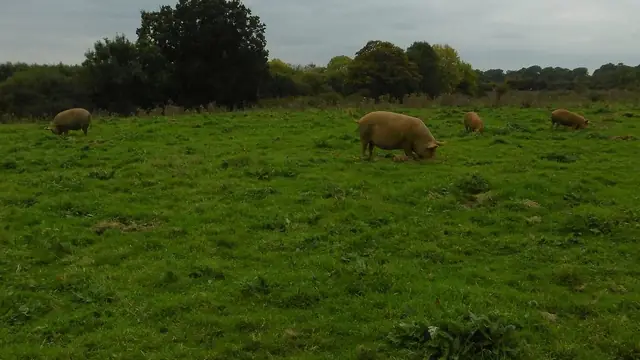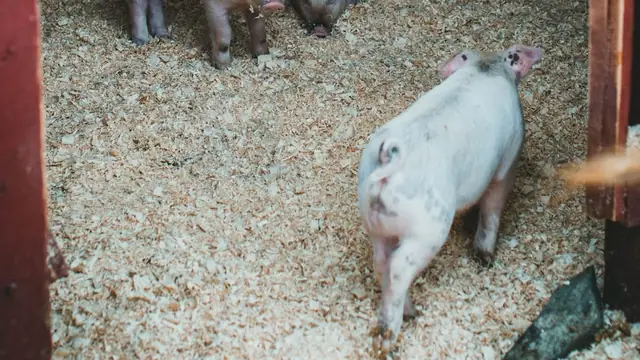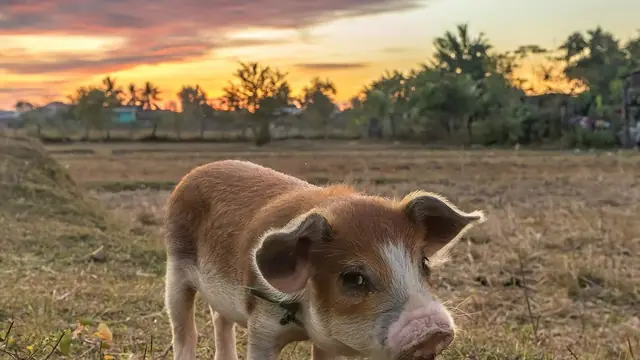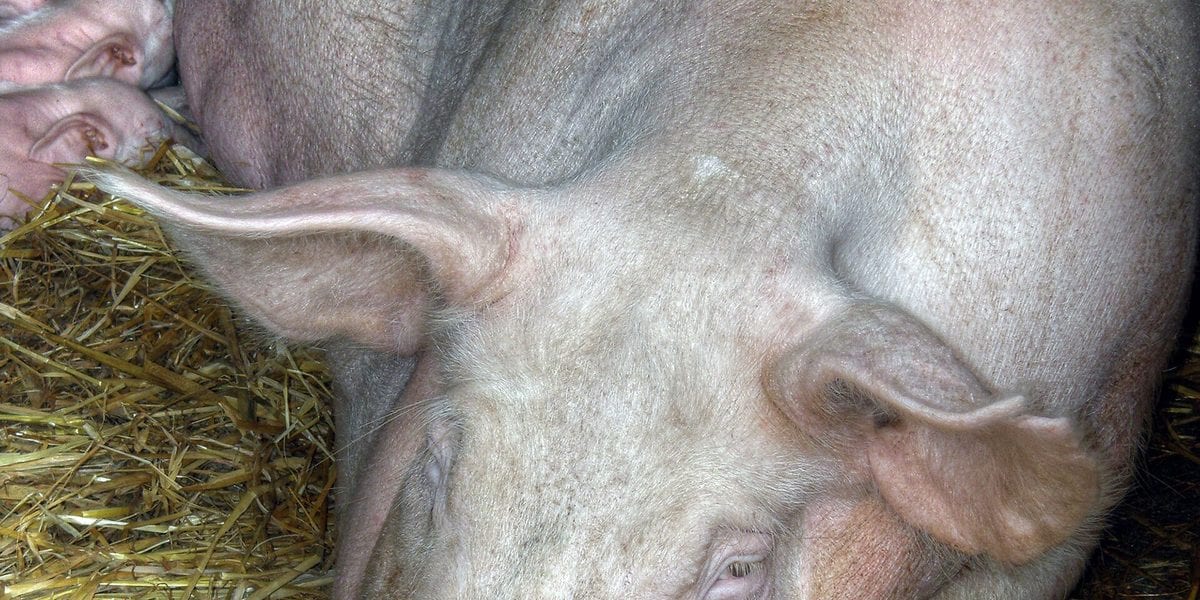
"Hilom na kaayo ang baboy, basin nasakit." (The pig is very quiet, it might be sick.)
The earliest signs are subtle: appetite loss, a limp tail instead of a curled one, droopy ears, and one pig separating from the group. Normal pig temperature is 38.7-39.8°C; above 40.5°C is serious. If you see fever plus purple skin plus bloody diarrhea plus sudden deaths, suspect ASF and call BAI on 0995-135-9339.
The First Warning Signs
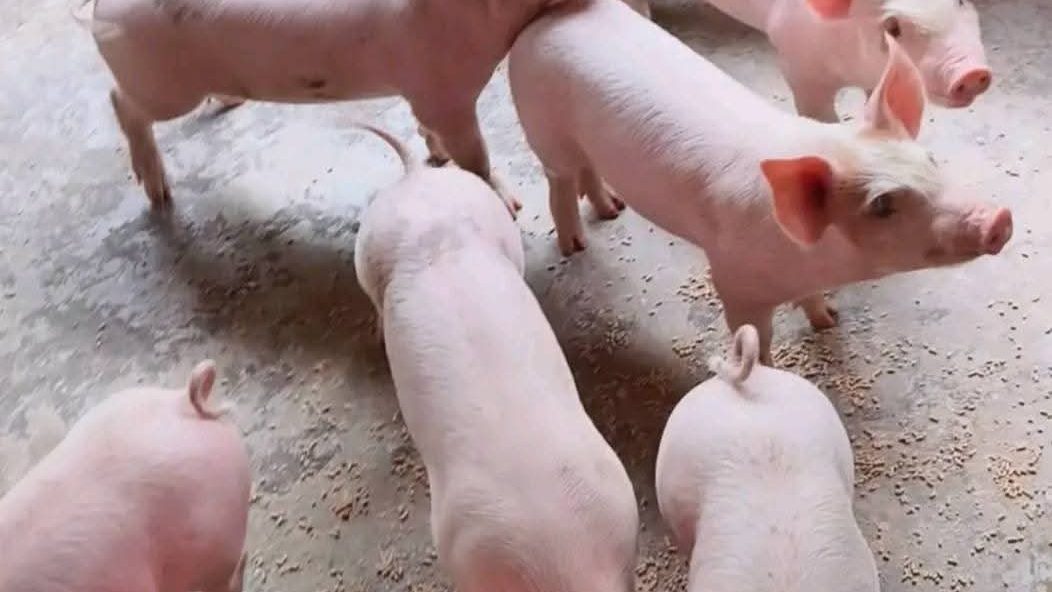
1. Loss of appetite
This is the single most reliable early indicator. A healthy pig is eager to eat. If your pig shows no interest in feed, or eats significantly less than usual, something is wrong. For a deeper look at diagnosing feed refusal, see why your pig stopped eating.
Possible causes: fever (from almost any infection), dental problems, digestive issues, heat stress, or internal parasites. In Visayas and Mindanao, heat stress is underdiagnosed because farmers assume pigs can handle the climate. They can, but not without adequate water access and shade.
2. Changes in behavior
- Separating from the group. Sick pigs isolate themselves. If one pig stays in the corner while the rest crowd the feeder, check that pig first.
- Lying down more than usual. Especially if the pig does not stand when feed arrives. A pig that won't get up for food is seriously ill.
- Restlessness or unusual vocalization. Can indicate pain, particularly abdominal pain from gut issues or urinary problems.
3. Limp tail
A healthy pig's tail curls. A straight, limp, hanging tail is one of the earliest signs of illness. Most farmers in Cebu and Leyte I've talked to notice this before anything else. It is a surprisingly reliable indicator.
4. Droopy ears
Ears that point downward instead of being alert and upright suggest the pig is not feeling well. Combined with a limp tail, this is a strong signal even before appetite changes are obvious.
Specific Symptoms and What They Mean
Skin changes
For a detailed guide on diagnosing and treating skin conditions, see pig skin problems and treatment.
| Symptom | Likely cause |
|---|---|
| Reddening of ears, belly, legs | Fever, erysipelas, or ASF (very serious) |
| Crusty, thickened skin (starts at ears) | Sarcoptic mange |
| Pimples or raised bumps | Greasy pig disease (Staphylococcus) |
| Diamond-shaped red patches | Erysipelas |
| Purple discoloration of ears/belly/inner thighs | Hog cholera or ASF (emergency) |
| Dull, rough hair coat | Poor nutrition, chronic parasites |
Mange is extremely common on backyard farms. If a pig is scratching constantly and developing crusty ears, that is almost certainly mange. Oral ivermectin (Agmectin, ₱25-45 per 5g sachet) or injectable ivermectin (GenVet Ivermec, 1 mL per 33 kg body weight) clears it in 1-2 treatments. But don't guess on the purple skin discoloration. That's an emergency.
Diarrhea
The color and timing tell you a lot:
| Appearance | Age/timing | Likely cause |
|---|---|---|
| Yellowish watery (piglets day 7-14) | Suckling piglets | Coccidiosis (Cystoisospora suis) |
| Yellowish-grey liquid | Any age | Bacterial scours (E. coli) |
| Profuse yellow-green watery | Weaners/growers | Porcine Epidemic Diarrhea (PED) |
| Bloody or dark red | Any age | Dysentery, or possibly ASF |
| Grey-brown, chronic | Growers | Chronic dysentery, Salmonella |
Any diarrhea in piglets under 2 weeks is an emergency. They dehydrate and die within 24-48 hours. Start oral electrolytes immediately: Apralyte (₱24-26 per 6g sachet, mix 6g in 40 mL water, give 1 mL/kg body weight for 3-5 days) or Electrogen D+ (₱250 per box of 20g sachets). Don't wait for the vet to start rehydration.
For more on preventing piglet deaths from scours, we have a separate guide.
Breathing problems
- Dry cough. Mycoplasma pneumonia (enzootic pneumonia), lungworms, or dust irritation. Very common in enclosed pens with poor ventilation.
- Rapid, labored breathing. Pneumonia or high fever. Check temperature.
- Blue coloring at ear tips or snout. Severe pneumonia, poor oxygenation. This is critical.
- Bloody froth from mouth/nose. Internal hemorrhage. This pig needs a vet now, not tomorrow.
For respiratory issues, Vetracin Gold (doxycycline with probiotics, ₱25-38 per 5g sachet) mixed in drinking water for 3-5 days handles mild cases. But if multiple pigs are coughing, that's a herd problem, not an individual one. Check your vaccination schedule.
Eyes
- Dull, sunken eyes. Dehydration or chronic illness. Press the skin on the neck; if the fold stays up for more than 2 seconds, the pig is dehydrated.
- Eye discharge, nasal discharge. Respiratory infection. Common with Mycoplasma or Pasteurella.
- Red, bloodshot eyes. Could indicate internal bleeding. Combined with fever and skin reddening, suspect ASF.
How to Take Your Pig's Temperature
Every backyard farmer should own a digital thermometer. A standard one from Mercury Drug or Watsons (₱150-300) works fine. You don't need a fancy veterinary model.
Normal pig temperature: 38.7-39.8°C (Merck Veterinary Manual). Above 39.8°C is a fever.
Technique:
- Restrain the pig. For smaller pigs, hold in a cradle position. For larger ones, use a snare or have someone hold the pig against a wall.
- Apply a bit of petroleum jelly or cooking oil to the thermometer tip.
- Insert 2-4 cm into the rectum, angled slightly toward the belly wall.
- Wait for the beep. Most digital thermometers read in 10-30 seconds.
- Record the reading and the time. Afternoon temperatures run slightly higher than morning.
Take temperatures at the same time each day if you are monitoring a sick pig. A pig at 39.5°C in the morning and 40.2°C in the evening is trending worse, even though the evening reading alone might not look alarming.
When to Suspect ASF
ASF is not finished with us. The last national count BAI actually published was 8 active barangays across 7 provinces, on 8 May 2026, down 92% from the 98 barangays of 31 December 2025. It is the newest official number there is, and it was out of date almost immediately: BAI has released no national count since. We publish that count as its own series and left it frozen at the 8 May reading rather than carrying it forward. The herd it is counted against is PSA's smallhold inventory, close to four fifths of every pig in the country, which is why a backyard case matters nationally in a way the headlines rarely bother to say.
Because the virus came back in the Visayas. Negros Occidental confirmed San Enrique on 23 June 2026, with 1,902 hog deaths province-wide by 25 June, not all of them from ASF. Barotac Viejo in Iloilo followed on 29 June, the province's first case in four years. Bacolod and La Libertad in Negros Oriental on 1 July. Cebu banned Negros hogs and pork on 7 July (EO 39), and Capiz red-zoned five LGUs and then shut its border to pork on 24 June. If you are anywhere in Panay, Negros or Cebu, treat the "declining cases" headlines as history, not as your situation.
Smallholder farms hold 78.5% of the national inventory now, up from 71.1%, so most of the country's pigs sit exactly where biosecurity is thinnest. There is a vaccine, AVAC, but do not plan around it yet: it is under monitored government release, which means supervised use rather than a product on sale, and the rollout has stayed Luzon-centred. It is not on sale at your local agrivet. DA is targeting Q3 2026 for that.
If you see multiple of these signs together, suspect ASF:
- High fever (above 40.5°C)
- Reddening or purple discoloration of ears, belly, and legs
- Bloody diarrhea
- Vomiting
- Sudden death of multiple pigs
- Mortality near 100% in affected animals
Do not move sick pigs. Do not slaughter and sell. Isolate immediately and report to your municipal veterinarian or call the BAI ASF hotlines:
- Globe: 0995-135-9339
- Smart: 0920-854-3119
- Email: [email protected]
The DA's BABay ASF program (Administrative Order No. 07, Series of 2021) set up barangay-level surveillance through trained Barangay Biosecurity Officers. If your barangay has a BBO, they are your first contact. ASF has no cure, but early reporting triggers the 1-7-10 protocol (culling within 1 km, surveillance within 7 km, monitoring within 10 km) that protects your neighbors and your future herd.
What to Do When You Spot Something
Do not self-medicate with antibiotics unless directed by a veterinarian. Incorrect antibiotic use promotes resistance and can mask symptoms, making diagnosis harder. Electrolytes and isolation are always safe first steps.
Step 1: Isolate. Move the sick pig away from the herd immediately. Use a separate pen if possible, or at minimum a partition.
Step 2: Check temperature. Above 39.8°C = fever. Above 40.5°C = serious. Record it.
Step 3: Provide clean water with electrolytes. A sick pig that keeps drinking has a much better chance. Electrogen D+ or Apralyte in the water helps maintain hydration.
Step 4: Observe and record. Note which symptoms you see: appetite, stool consistency, skin changes, breathing, posture. Take photos if you can. This helps the vet diagnose remotely if they can't visit immediately.
Step 5: Contact your municipal veterinarian. Some LGUs provide free or subsidized consultations for registered backyard farmers. In Cebu Province, only 10 of 53 LGUs currently have their own municipal vet, so you may need to contact the Provincial Veterinary Office instead. The situation is similar across most of Visayas and Mindanao. Don't wait for a physical visit if the vet can advise by phone.
Step 6: If ASF is suspected, do not treat. Report immediately. Call the BAI hotlines above. This is not a case where you try home remedies first.
Quick Reference: Symptom to Action
| What you see | Most likely cause | First action |
|---|---|---|
| Won't eat, limp tail, droopy ears | Early illness (many causes) | Isolate, take temperature |
| Fever + coughing | Respiratory infection | Vetracin Gold in water, call vet |
| Watery diarrhea (piglets) | E. coli or coccidiosis | Apralyte immediately, call vet |
| Crusty, itchy skin | Mange | Agmectin (oral ivermectin) |
| Purple skin + fever + bloody stool | ASF or hog cholera | Do not treat. Report to BAI. |
| Sudden death, multiple pigs | ASF | Report immediately. Do not move pigs. |
| Not gaining weight, dull coat | Parasites, poor nutrition | Deworm, check feed quality |
| Pig not gaining despite eating | Parasites or chronic disease | See why pig not gaining weight |
Bisaya / Cebuano
Para sa mga mag-uuma
Mga senyales nga nasakit ang baboy:
- Dili mokaon, pinaka-una nga senyales sa hapit tanan nga sakit
- Nagtul-id ang ikog, ang himsog nga baboy kurbado ang ikog
- Nagtunob ang dalunggan, nagpakita nga dili maayo ang pamatyag
- Lain-lain ang panit, pula, galis, hubag
- Nagkahak o naglisod og ginhawa, problema sa baga
- Kalibanga, tan-awa ang kolor: pula = delikado, dalag = bacteria
Kung makakita ka og purple nga panit + kalibanga nga dugo + hilanat = posibleng ASF. Ayaw ibalhin ang baboy. Tawagi dayon ang BAI: 0995-135-9339 (Globe) o 0920-854-3119 (Smart).
Unang buhaton: Ilain ang masakiton nga baboy. Sukda ang temperatura (normal: 38.7-39.8°C). Hatagi og tubig nga may electrolytes. Tawag sa veterinarian.
Related Guides
- Complete guide to pig diseases: detailed disease profiles with treatment protocols
- Preventing pig diseases: biosecurity basics before illness strikes
- Why piglets die in the first week: neonatal mortality causes and prevention
- How to build a backyard piggery: biosecurity design features that prevent disease spread
- Pig skin problems and treatment: diagnosis and treatment guide for skin conditions
- Why your pig stopped eating: diagnosing and fixing feed refusal
Sources: Merck Veterinary Manual normal rectal temperature ranges and swine disease recognition; BAI Administrative Order No. 07, Series of 2021 (BABay ASF Programme); BAI active-barangay count (8 May 2026) and provincial/LGU orders on the 2026 Visayas outbreaks (Capiz border closure signed 24 June 2026; Cebu EO 39, 7 July 2026); PSA Swine Situation Report (Q1 2026 inventory and smallholder share); FAO Farmer's Handbook on Pig Production disease identification; UNAHCO product references (Apralyte, Electrogen D+, GenVet Ivermec); ThePigSite health management guides; The Freeman/Cebu municipal vet shortage data.