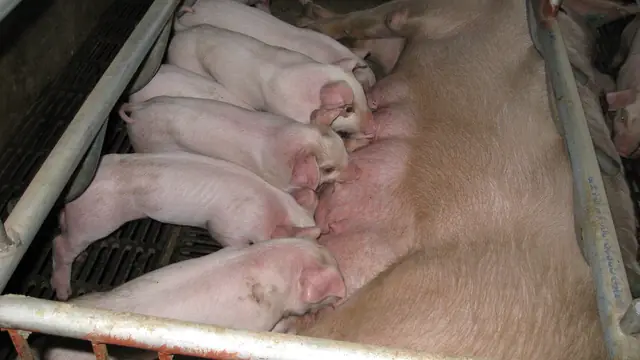
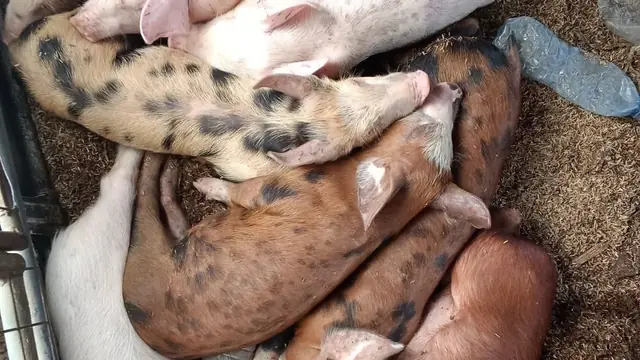
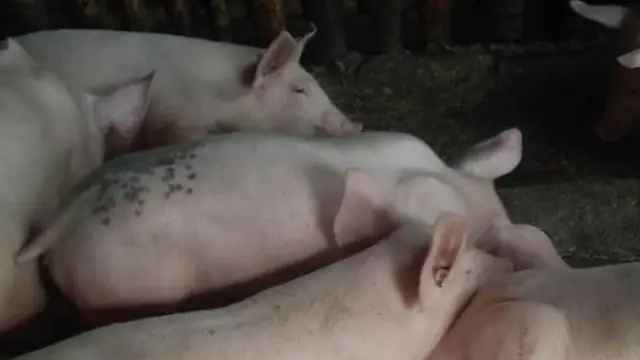
A 10-pig backyard piggery drops 50-60 kg of fresh manure every day. Left alone that becomes a smell and runoff problem. Run it through an ₱27,500 plastic biogas digester and the same manure turns into roughly ₱1,500 a month of free cooking gas plus liquid fertilizer worth another ₱500-₱2,000. Payback lands in 10-20 months at 2026 prices.
Free Tool
Break-Even Price Calculator
Plug your monthly LPG bill and current piggery size into the break-even tool. It shows you how many months until a biogas investment pays back at your specific scale.
How Biogas Actually Works on a Pig Farm
Pig manure, like any wet organic waste, breaks down anaerobically (without oxygen) to produce methane gas, also called biogas. A biogas digester is a sealed container that captures this gas, lets you pipe it to a stove or generator, and leaves behind a nitrogen-rich slurry that works as crop fertilizer.
The basic system has four parts:
- Inlet pipe. Where pig manure (mixed with water) enters
- Digestion chamber. Where anaerobic bacteria break down the manure (the "tank")
- Gas storage. Where biogas accumulates above the slurry
- Outlet pipe. Where finished slurry exits as liquid fertilizer
For a typical Filipino backyard piggery, the digester sits next to the pen, manure is hosed into the inlet daily, gas is piped 5-20 meters to the house for cooking, and slurry overflows into a collection tank or directly onto crops.
This is mature technology, not an experiment. China has installed tens of millions of domestic biogas units and India several million. In the Philippines, DA-BSWM (Bureau of Soils and Water Management) and PCAARRD (Philippine Council for Agriculture, Aquatic, and Natural Resources Research and Development) have promoted biogas since the 1980s. Adoption stayed slow at the backyard level for two reasons: upfront cost, and the shortage of skilled installers in rural areas. The Renewable Energy Act of 2008 (Republic Act 9513, Section 30) formally recognizes waste-to-energy systems like farm biogas, which is why the DOE now runs adoption programs.
The Three Digester Types
Each type has its own cost, lifespan, and management profile.
Type 1: Plastic Balloon (Bag Digester)
The cheapest and most common option for backyard piggeries. A long PVC or HDPE plastic tube buried in a trench, sealed at both ends, with inlet and outlet pipes.
| Spec | Value |
|---|---|
| Volume (typical) | 6-12m³ |
| Cost installed (2026) | ₱25,000-₱50,000 |
| Installation time | 2-4 days |
| Lifespan | 3-5 years (UV exposure issue) |
| Skill to build | Low (most farms DIY with a guide) |
| Maintenance | Weekly slurry stirring |
| Gas pressure | Low (needs gravity head to use) |
The plastic balloon is the entry-level option, and the one the DOST-promoted ZWaP plastic-drum system from Central Luzon State University is built around. Most backyard piggeries that adopt biogas start here because the upfront cost is low. The catch is the 3-5 year replacement cycle. When the plastic finally cracks, usually from UV degradation if it is not properly shaded, you are back at zero.
Best fit: 5-15 pig backyard farms, families testing the model, sites with a limited construction budget.
Type 2: Concrete Fixed-Dome (Chinese Design)
A buried concrete tank with a dome-shaped top. The dome itself stores the gas. No moving parts, very durable.
| Spec | Value |
|---|---|
| Volume (typical) | 6-20m³ |
| Cost installed (2026) | ₱60,000-₱120,000 (8m³ standard) |
| Installation time | 2-4 weeks |
| Lifespan | 20-30 years |
| Skill to build | High (needs a skilled mason) |
| Maintenance | Monthly slurry stirring + drainage |
| Gas pressure | Variable as dome fills/empties |
The concrete fixed-dome is the standard for permanent installations. Higher upfront cost, much longer life. Once paid back, it produces free gas for decades.
Best fit: Farms with 15+ pigs committed to long-term operation, OFW-funded farms with construction budget, families who want a one-time installation.
Type 3: Floating Drum (Indian-Style)
A buried tank with a separate floating gas-holder drum. The drum rises and falls as gas accumulates and is used, keeping pressure constant.
| Spec | Value |
|---|---|
| Volume (typical) | 4-8m³ |
| Cost installed (2026) | ₱40,000-₱80,000 |
| Installation time | 1-2 weeks |
| Lifespan | 10-15 years (drum corrosion) |
| Skill to build | Medium (pre-fab drum + mason work) |
| Maintenance | Quarterly drum cleaning, anti-rust |
| Gas pressure | Constant (advantage) |
The floating drum gives stable gas pressure, which matters if you are running a generator or other equipment that needs consistent flow. It is less common here than the balloon or fixed-dome, but a reasonable middle-tier option.
Best fit: Farms using biogas for power generation (not just cooking), commercial-scale operations, areas with skilled metal fabricators.
Sizing the Digester to Your Farm
The right size depends on the daily manure output of your pigs. The general rule:
- Each pig produces 5-6 kg of fresh manure per day
- Fresh pig manure at roughly 20% total solids yields about 0.04 m³ of biogas per kg, so 8 kg makes roughly 0.3-0.4m³ (methane content runs 60-80%)
- A 2-burner stove uses about 0.4m³ of biogas per hour
- A typical Filipino household uses 2-4 hours of cooking gas per day, so 0.8-1.6m³ daily
Cross-reference these numbers to size the digester:
| Pig Count | Daily Manure | Daily Biogas | Daily Cook Hours | Recommended Size |
|---|---|---|---|---|
| 2-3 fatteners | 10-18 kg | 0.4-0.7m³ | 1-1.5 hours | 4m³ |
| 5-10 fatteners | 25-60 kg | 1.0-2.3m³ | 2.5-5 hours | 6-8m³ |
| 10-20 fatteners | 50-120 kg | 1.8-4.5m³ | 4-10 hours | 8-12m³ |
| 3-5 sow operation | 80-150 kg | 3.0-5.5m³ | 7-13 hours | 10-15m³ |
| 10-sow operation | 150-250 kg | 5.5-9m³ | 13-22 hours | 15-20m³ |
Most backyard pig farmers oversize their digester (a common cost error) or undersize it (resulting in unreliable gas). The sweet spot is to size the digester for daily manure output × 30 days = working volume.
Payback Math: 8m³ Plastic Balloon on a 10-Pig Farm
Here are the actual numbers for the most common scenario: a 10-pig backyard piggery installing an 8m³ plastic balloon digester. Worth noting the LPG figure, because most older biogas guides still quote ₱1,000 a cylinder. That number is stale. As of May 2026, DOE price monitoring and Shell/Petron list an 11kg household cylinder at ₱1,497-₱1,600 (about ₱136-₱145 per kg). Higher LPG means biogas pays back faster, not slower.
Upfront cost (2026 Central Luzon):
| Item | Amount (PHP) |
|---|---|
| 8m³ HDPE plastic tube (5m × 1.5m diameter) | ₱8,000 |
| PVC inlet and outlet pipes + fittings | ₱2,500 |
| Concrete inlet tank + cement work | ₱5,000 |
| Gas pipe (10m black HDPE) | ₱1,500 |
| Stove conversion or biogas-ready stove | ₱3,500 |
| Trench digging + installation labor | ₱5,000 |
| Miscellaneous (clamps, valves, sealing) | ₱2,000 |
| Total installed cost | ₱27,500 |
This is a realistic budget number. If you DIY most of the work, you can get this down to ₱20,000. If you hire a contractor to install everything, expect ₱45,000-₱50,000.
Monthly savings:
| Savings Source | Monthly Amount |
|---|---|
| LPG replaced (about 1 cylinder/month @ ₱1,497-₱1,600) | ₱1,500 |
| Slurry fertilizer (used on farm or sold @ ₱20/sack) | ₱500-₱1,500 |
| Reduced manure-disposal cost or labor | ₱300-₱500 |
| Total monthly savings | ₱2,300-₱3,500 |
Payback calculation:
- Worst case (only LPG savings, no fertilizer use): ₱27,500 / ₱1,500/month = 18 months
- Realistic case (LPG + fertilizer use): ₱27,500 / ₱2,300/month = 12 months
- Best case (LPG + fertilizer sales): ₱27,500 / ₱3,500/month = 8 months
For most 10-pig backyard farms, the payback is 10-20 months depending on how aggressively you use the slurry fertilizer and whether you sell the surplus.
After payback you keep ₱2,300-₱3,500 a month in pure savings until the plastic balloon needs replacing (year 3-5). Over a 4-year life that is ₱110,000-₱168,000 gross, minus the ₱27,500 capital, so roughly ₱80,000-₱140,000 net across four years before the next balloon.
Payback Math: 8m³ Concrete Fixed-Dome on a 3-Sow Operation
Now the higher-tier option: an 8m³ fixed-dome concrete digester on a 3-sow farrow-to-finish operation (30+ pigs at peak production). Same 2026 LPG basis as above, around ₱1,500 a cylinder.
Upfront cost (2026):
| Item | Amount (PHP) |
|---|---|
| Excavation (5m × 5m × 3m deep) | ₱10,000 |
| Concrete (15-20 bags @ ₱350/bag) | ₱7,000 |
| Steel reinforcement (rebar, wire mesh) | ₱5,000 |
| Hollow blocks (200 pcs × ₱22/pc) | ₱4,400 |
| Inlet tank, outlet tank, mason work | ₱18,000 |
| Skilled mason labor (4 weeks) | ₱25,000 |
| PVC piping, valves, gas storage line | ₱5,000 |
| Stove conversion + 2-burner biogas stove | ₱4,500 |
| Miscellaneous (sealant, water test, etc) | ₱5,000 |
| Total installed cost | ₱83,900 |
Monthly savings (larger operation, more daily cooking + fertilizer demand):
| Savings Source | Monthly Amount |
|---|---|
| LPG replaced (about 1.5 cylinders/month @ ₱1,500) | ₱2,250 |
| Slurry fertilizer (used on rice/corn fields) | ₱1,500-₱3,000 |
| Reduced manure-disposal labor | ₱500-₱800 |
| Total monthly savings | ₱4,250-₱6,050 |
Payback calculation:
- Worst case: ₱83,900 / ₱4,250/month = 20 months
- Realistic case: ₱83,900 / ₱5,000/month = 17 months
- Best case: ₱83,900 / ₱6,050/month = 14 months
A concrete fixed-dome on a 3-sow operation pays back in 16-26 months once you account for cash-flow lumps like the 4-week mason job. After payback you keep ₱4,250-₱6,050 a month for the 20+ years the dome lasts. Even at a conservative ₱4,250 a month over 20 years, that is north of ₱1 million in cumulative savings against ₱83,900 of capital.
That lifetime gap is why fixed-dome makes sense for a serious farm: the upfront cost stings once, the gas stays free for two decades.
When Biogas Doesn't Pay Back
Biogas is not always the right call. Skip it if:
1. Your Farm Has Fewer Than 5 Pigs
And before any of the five: a digester competes for the same money as your next batch of weaners. At the ₱172.44/kg PSA recorded for Q2 2026, an ₱27,500 balloon is close to two finished pigs' worth of gross revenue. That trade looks very different at ₱209.83, which is where the quarterly farmgate series sat in Q1 2025. Cheap-pig years are when farm capex gets postponed, and a lot of biogas guides never mention that the decision moves with the price of pork.
Below 5 pigs, daily manure output (under 25 kg) is too low to keep an 8m³ digester producing usable gas year-round. You'll have unreliable supply and the math gets worse. Smaller digesters (4m³) exist but their economics are tighter.
2. You Don't Use Much LPG
If your household cooks rarely (single person, lots of eating out, mostly cold meals), the LPG savings won't justify the capital. Realistic LPG users go through 1-2 cylinders per month. That is where the math works.
3. You're Renting or on a Short Lease
A 3-5 year balloon installation needs to be on land you'll own or lease for at least 5 years. A 20-30 year fixed-dome needs 15+ years of tenure. If your land situation is uncertain, hold off.
4. Your Pen Is Far From Your House
Gas pipes longer than 30 meters lose pressure and add cost. If your pen and house are 50+ meters apart, the additional piping and pressure regulators eat into the savings.
5. You Don't Have Space for Slurry Outlet
Biogas digesters produce as much slurry coming out as manure going in. You need fields, crops, or a fish pond to absorb 50-150 liters of slurry per day. Scale that nationally and it is a lot of slurry: PSA counted 7,080,312 head on smallhold farms alone on 1 July 2026, which is where almost all of the country's untreated pig manure sits. Without a slurry outlet, you'll have a wet-waste problem instead of a manure problem.
Hidden Costs and Risks
The headline payback math doesn't include:
- Stove conversion. Standard LPG stoves don't work on biogas without a jet conversion. Convertible biogas stoves cost ₱2,500-₱4,500. Some farmers try unconverted stoves; the flame is poor and unsafe.
- Stove safety. Biogas is mostly methane, which is flammable and produced constantly. Bad sealing, leaky pipes, or unvented installations are fire and explosion risks. Hire a competent installer and test for leaks every 6 months.
- Slurry handling. Wet slurry is awkward to move. Most farms run it into a settling tank then apply it to crops. Some compost it with rice hulls to dry it out. Plan the slurry workflow before installing.
- Cold-weather drop in gas production. Biogas output slows below 25°C. In Baguio, Bukidnon, and other highland areas, expect 30-40% lower gas from December to February. Tropical lowlands don't see this.
- Insurance and fire safety. Some homeowner insurance policies require disclosure or a premium adjustment for biogas installations. Check with your provider before installing near the house.
Where to Get Plans and Training
The Philippines has free government and NGO resources for biogas installation:
- DA-BSWM (Bureau of Soils and Water Management). Free design plans and technical assistance through provincial agriculture offices.
- PCAARRD. Research-backed designs and farmer training programs.
- Department of Energy (DOE) Renewable Energy Bureau. Runs biogas adoption programs under the Renewable Energy Act (RA 9513).
- University of the Philippines Los Baños (UPLB). The Department of Agricultural Engineering offers training courses.
- DOST / CLSU Zero Waste Pig Farming (ZWaP). A documented plastic-drum digester model already in use by dozens of Filipino pig raisers.
- Facebook and YouTube farmer groups. Practical DIY walkthroughs from Filipino installers (search "biogas digester Philippines DIY").
Several NGOs run installation training, especially in regions hit by ASF, where better manure handling became a real priority. Your municipal agriculturist office is the fastest first stop.
A Note on Environmental Compliance
Under Annex A of EMB Memorandum Circular 2014-005, a piggery needs an environmental compliance certificate (ECC) from DENR-EMB only above 100 heads of stocking population (an IEE checklist up to 4,999 heads, a full EIS from 5,000), not from 20 pigs as often repeated. The IEE checklist asks for your waste management plan, and a working digester is an easy one to describe.
For backyard operations of 100 pigs or fewer, no ECC is required, but biogas installation can help with:
- Barangay neighbor complaints about smell and runoff
- Local zoning compliance (some LGUs now prefer biogas over open lagoons)
- DA livestock registration requirements for sanitary waste handling
- Future eligibility for organic agriculture certification
Bisaya / Cebuano
Para sa mga mag-uuma
Pwede ba mag-biogas digester sa backyard piggery?
Oo, ug ang math nag-trabaho gyud kung 5+ ka baboy ang inyong farm. Tulo ka klase:
1. Plastic balloon (pinakamubo). ₱25,000-₱50,000 nga installation. 3-5 ka tuig nga kinabuhi. Sayon i-install pero kasagaran malabay sa UV pagkahuman sa 3-5 ka tuig.
2. Concrete fixed-dome (pinakamaayong long-term). ₱60,000-₱120,000. 20-30 ka tuig nga kinabuhi. Dako og initial cost pero dagko og ROI sa long-term.
3. Floating drum (Indian style). ₱40,000-₱80,000. 10-15 ka tuig. Stable gas pressure pero rare sa Pilipinas.
Payback math sa 10-pig farm + 8m³ plastic balloon:
- Initial cost: ₱27,500
- Monthly savings: ₱2,300-₱3,500 (LPG + fertilizer, base sa ₱1,500/cylinder nga 2026 presyo)
- Payback: 10-20 ka bulan
Payback math sa 3-sow farm + 8m³ concrete fixed-dome:
- Initial cost: ₱83,900
- Monthly savings: ₱4,250-₱6,050
- Payback: 16-26 ka bulan
- Lifetime savings sulod sa 20 ka tuig: kapin ₱1 milyon
Kanus-a DILI angay ang biogas:
- Ubos sa 5 ka baboy ang inyong farm (kulang ang manure)
- Gamay ra ang inyong LPG nga gigamit
- Naa kay short-term lease ra
- Layo ang kulungan sa balay (sobra sa 30 ka metro)
- Walay lugar para sa slurry outlet
Asa makakuha og plano ug training:
- DA-BSWM (Bureau of Soils and Water Management)
- PCAARRD
- Department of Energy Renewable Energy Bureau
- UPLB Agricultural Engineering Department
- DOST ug CLSU Zero Waste Pig Farming (ZWaP) nga plastic-drum design
- Mga YouTube ug Facebook videos sa Filipino farmers
Bahin sa ASF: ayaw pagdala og hugaw gikan sa gawas aron pun-on ang digester, ug ayaw paghuwam og slurry nga galamiton tali sa mga farm. Ang manure ug slurry mahimong magdala sa ASF base sa DA ug BAI nga protocol. Kung naay quarantine sa inyong lugar, pangutana usa sa municipal agriculturist o provincial veterinarian.
Importante: ang biogas dili lang savings, kondili waste management solution. Makasolbar kini sa baho, sa mga reklamo sa silingan, ug sa environmental compliance. Usahay mas dako pa ang dili pinansyal nga benepisyo kaysa LPG savings.
Related Reading
- Backyard Piggery Construction: pen design that integrates with a biogas inlet.
- Raise Pigs in a Small Backyard Philippines: LGU regulations and waste-handling requirements that biogas helps satisfy.
- Cost to Raise a Pig in the Philippines: full per-pig cost breakdown, including the utility line a digester cuts.
- Pig Farming Profit on 10 Pigs: where the LPG and fertilizer savings sit in a real 10-pig P&L.
- Break-Even Calculator: model the digester capital against your farm scale.
- Profit Simulator: fold the monthly savings into a full operation forecast.
Sources
- Department of Energy, NCR LPG price monitoring and GMA News, REGASCO 11kg cylinder pricing. Source for the 2026 LPG cylinder cost (₱1,497-₱1,600) used in the payback math.
- Meralco, lower residential rates for May 2026. May 2026 electricity rate (about ₱14.33/kWh) for the generator offset estimate.
- Climate Tracker Asia: From manure to clean fuel, Philippine pig farmers embrace biogas. DOST/CLSU Zero Waste Pig Farming plastic-drum digester model and adoption figures.
- IEA Bioenergy: Potential and utilization of manure to generate biogas. Biogas yield per kg of manure and methane content reference.
- USDA FAS Philippines Biofuels Annual 2025. Renewable Energy Act (RA 9513) waste-to-energy framework and the DA-DOE agriculture energy program.
- PMC: Agricultural potentials of biogas slurry (digestate NPK and FAO safety limits). Digestate fertilizer NPK value and safe-use evidence.
- EMB Memorandum Circular 2014-005, Annex A (project thresholds). Piggery ECC coverage: 100 heads or fewer not covered, over 100 to 4,999 IEE checklist, 5,000+ EIS.
Digester install-cost ranges are 2026 budget estimates built up from line-item material and labor pricing, cross-checked against retail listings; treat them as planning figures and get local quotes before committing. DA-BSWM, PCAARRD, and the DOE Renewable Energy Bureau publish free design plans referenced above.