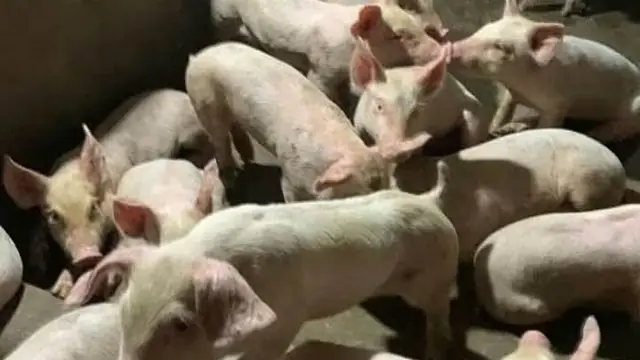
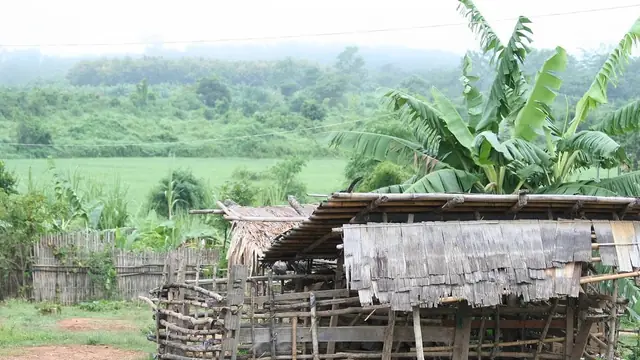
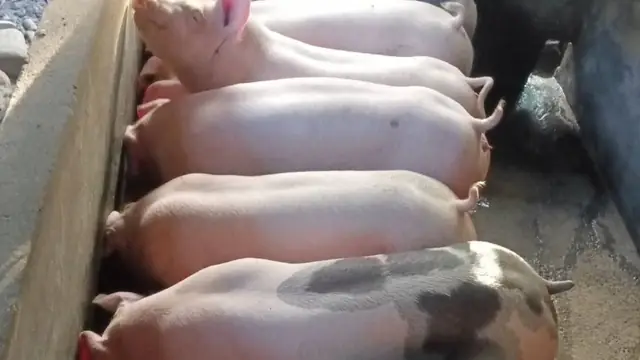
"Ang bagyo dili mangayo og pananghid." (The typhoon does not ask permission.)
About 20 tropical cyclones enter Philippine waters each year and 8 or 9 cross land, with roughly 70% of them arriving between July and October. Typhoon Tino alone killed or affected 135,475 farm animals in December 2025, ₱282.71 million in livestock and poultry losses. Preparation for a backyard piggery is a weekend of work and ₱2,000 to ₱6,000.
Read the signal, then act on the clock
My rainy season guide covers the seasonal work: drainage, mould, ventilation, the April-May vaccination window. This piece is the storm itself. The difference matters, because seasonal prep is optional-ish and storm response is not.
PAGASA's wind signals each carry a stated lead time. That lead time is your planning budget.
| Signal | Winds | Lead time | What it means for a pen |
|---|---|---|---|
| No. 1 | 39-61 km/h | 36 hours | Start the checklist. Buy feed now, before the dealer queue |
| No. 2 | 62-88 km/h | 24 hours | Light GI roofing starts lifting. Last comfortable window to move or sell |
| No. 3 | 89-117 km/h | 18 hours | Poorly fixed roofs go. Secure everything, decide on evacuation now |
| No. 4 | 118-184 km/h | 12 hours | Structural damage likely. Too late to arrange transport or a buyer |
| No. 5 | 185 km/h+ | 12 hours | Assume total roof loss. Protect people first |
Most backyard raisers I have talked to start moving at Signal No. 3. That is one signal too late. By then trucks are booked, buyers have stopped answering, and you are tying down a roof in rain.
The countdown
| When | Do this |
|---|---|
| 72 hours | Buy feed to 7-10 days. Photograph and count the herd. Check the PCIC policy is current. Withdraw cash |
| 48 hours | Tie down roofing. Brace the windward wall. Clear drains and cut overhanging branches. Charge phones and power banks |
| 24 hours | Fill every drum and container with water. Move feed to the highest dry point. Move pigs if you are moving them. Test the generator |
| 12 hours | Final headcount and photos with a timestamp. Medicines, electrolytes and rope into one grab box. Open pen gates only if flooding is certain and you have nowhere to move them |
| During | Stay out of the pen. No pig is worth a flying GI sheet |
| 0-72 h after | Drain standing water. Headcount. Photograph every casualty before disposal. File the Notice of Loss |
| 3-14 days after | Watch for fever, jaundice, red urine, abortion. Test or replace shallow-well water. Restock feed |
The roof: what actually fails, and what it costs to fix
Backyard pen roofs fail in a predictable order. The sheet lifts at an edge, wind gets underneath, and the whole panel peels off the purlin. Then the purlin goes. Almost never does the concrete post fail.
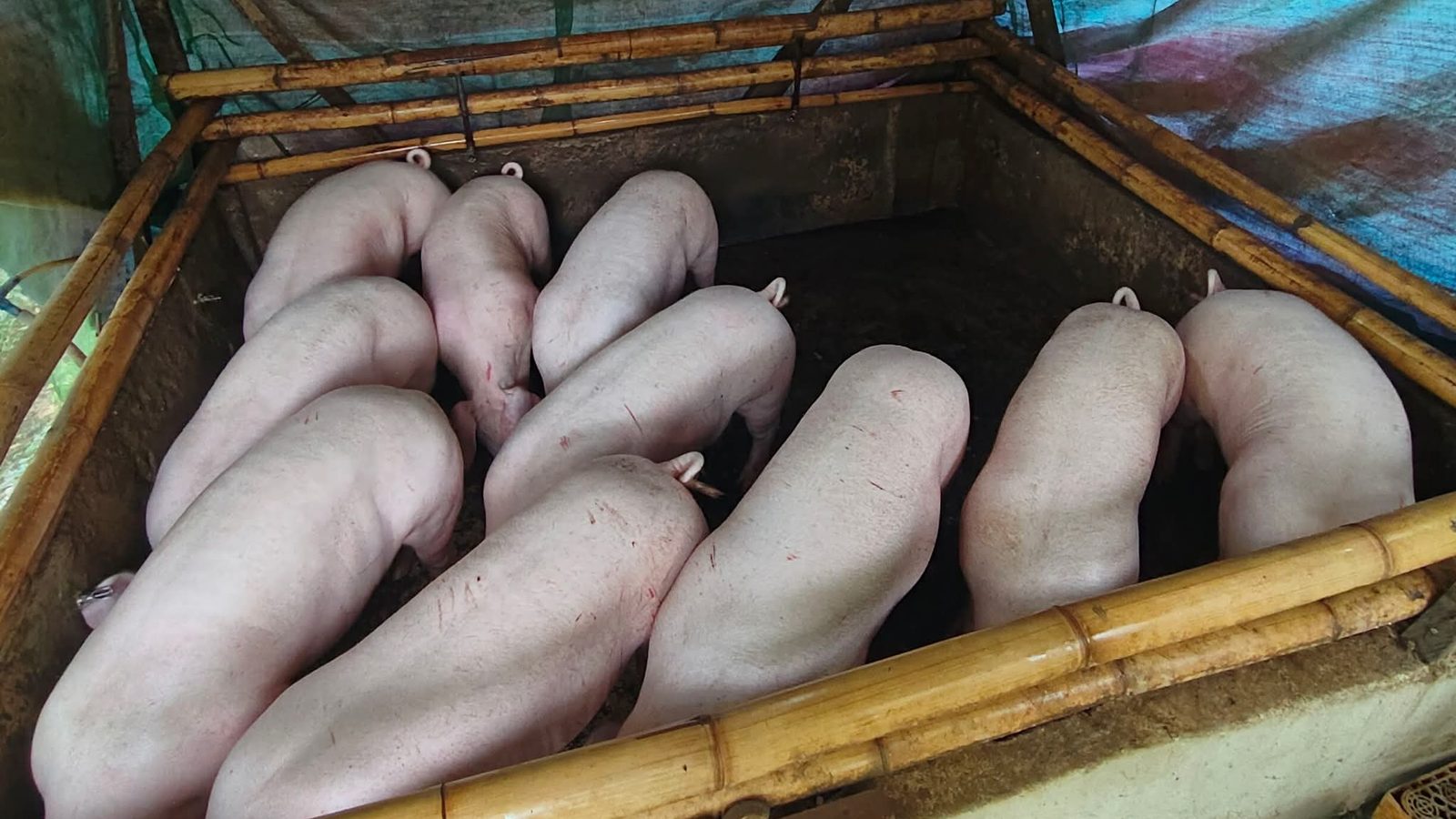
So the money goes into fasteners, not posts.
| Item | Spec | Rough cost | Notes |
|---|---|---|---|
| Tekscrews or J-bolts with rubber washers | 10 per m² | ₱400-₱900 for a 25 m² pen | The standard for typhoon-prone areas; most pens have half this |
| GI tie wire (#16) | 1-2 kg | ₱65-₱140 | Sold by the kilo; a 35 kg roll listed at ₱2,205-₱2,380 in 2026 |
| Timber or angle-bar bracing | 2-4 lengths | ₱400-₱1,200 | Diagonal bracing on the windward truss |
| Nylon or PP rope, 12 mm | 20-30 m | ₱250-₱600 | Over-the-roof strapping, anchored to ground stakes or posts |
| Sandbags or filled sacks | 8-12 | ₱150-₱400 | Weight on flat roof sections and against the door |
| Total, 20-30 m² pen | ₱1,500-₱4,000 | One-time, then annual inspection |
Hardware prices checked against Philippine online price lists in August and September 2026. Local hardware in the provinces usually lands slightly higher than Metro Manila listings.
Three things worth doing that cost almost nothing:
- Add fasteners at the edges and ridge first. The middle of a sheet rarely starts the failure.
- Brace the windward wall, open the leeward. A pen that lets wind through survives better than one that traps pressure under the roof. If your pen was built with the standard open-sided layout, you already have this.
- Cut the trees. Falling branches destroy more backyard roofing than wind alone.
Do not tie ropes over a roof and anchor them to the pen posts alone. If the roof goes, it takes the posts with it. Anchor to separate ground stakes or to the concrete slab, so the roof fails without pulling the structure down.
Stay, move, or sell early
This is the decision that actually costs money, and most guides dodge it.
| Your situation | Signal 2 forecast | Signal 3+ forecast |
|---|---|---|
| Pen above known flood level, solid roof | Stay, tie down | Stay, tie down, headcount |
| Pen in a flood path, pigs under 60 kg | Tie down, prepare to move | Move to higher ground |
| Pen in a flood path, pigs 75 kg+ | Consider selling | Sell, do not gamble |
| Breeding sows, any location | Move, never sell | Move, arrange this at Signal 1 |
The sell-early argument is narrower than it sounds. Selling a 75 kg pig two weeks short of target costs you real money at any farmgate price. PSA's national liveweight series ran ₱172.44/kg for Q2 2026 and ₱171.76 in June, and a pre-storm buyer knows exactly why you are calling. You will get shaded.
The maths that makes it worth it: if the pig is within about 10 to 15 kg of your target and your pen genuinely floods, a discounted sale beats a drowned pig and a claim process. If the pig is 40 kg, selling is just realising a loss early. Move it instead, or accept the risk.
Never sell breeding stock in a panic. A proven sow takes a year and a half to replace, and the buyer offering you cash the day before landfall knows that too. Line up the sale properly through the normal selling channels if you must, and remember that the best-selling months sit in exactly the November-to-December window that peak typhoon season runs into. Storm-season decisions and Christmas-market decisions are the same decision.
Free Tool
Break-Even Price Calculator
Run your batch through break-even before you accept a pre-storm offer, so you know the kilo price at which selling early stops making sense.
Feed, water, power
Feed. Seven to ten days for the herd, in sealed drums, 15 cm off the floor. Buy it at Signal No. 1, not after. If the roads stay shut longer than your stock, the emergency feeding playbook covers the kamote tops, banana trunk and rice bran fallbacks that will hold pigs without wrecking their gut.
Water. Fill everything. Drums, buckets, the bathtub if you have one. Mains water and pumps go down with the power, and a 90 kg pig drinks 8 to 12 litres a day even sitting still. This is the single most commonly under-prepared item, and it is free.
Power. For a backyard piggery, power matters for two things: water pumping and, if you have farrowing piglets, heat. Everything else can wait.
A 2.5 to 3 kVA gasoline generator runs about ₱13,500 to ₱16,000 in 2026 Philippine listings, INGCO and Mailtank class rather than anything branded Honda, which is enough for a shallow-well pump plus a couple of heat lamps and not much more. If you are weighing petrol against panels, run that comparison on your own load first, because a panel that cannot start the pump is decoration. Budget for fuel storage too, because petrol stations run dry and queue for days after a landfall. Twenty litres in sealed containers, rotated so it does not go stale.
If you have no generator and no farrowing pen, honestly, skip it. Hand-carry water for a week and spend the ₱15,000 on the roof and the drainage instead. That is where the loss actually happens.
The two weeks after: leptospirosis and the disease window
More pigs die after the storm than during it. Water is contaminated, feed is damp, animals are stressed, and everything that was subclinical becomes clinical.
Leptospirosis is the specific post-flood risk worth naming. The Merck Veterinary Manual lists swine as maintenance hosts for Leptospira interrogans serovars Pomona and Bratislava, with infected pigs becoming chronic renal carriers that shed in urine long-term. Clinical problems concentrate exactly where pigs and urine-contaminated water meet: wallows, solid floors, contaminated drinkers, open effluent gutters. A flood turns your whole barangay into that situation.
What you see is mostly reproductive: infertility, sporadic abortion, stillbirths, weak piglets. Most adult infections show no signs at all. So the honest advice is that you cannot diagnose this by looking, and you should not try. Get a vet or your municipal agriculture office involved if sows abort or pigs run fever with dark urine.
It is a human disease too. DOH data recorded 3,037 human leptospirosis cases from January to July 2025, with a spike a week after the rainy season opened, and its standing advice is to avoid wading, wear boots, cover wounds, and wash exposed skin. Doxycycline prophylaxis exists but is a medical decision, not a farm one.
The rest of the post-flood watchlist:
- Days 1-3: drain standing water, discard any feed that got damp, put electrolytes in the drinking water.
- Days 4-7: watch for coughing, scouring and lameness. Sick-pig signs show up fast in a stressed herd.
- Days 8-14: repeat deworming if pigs walked through floodwater, and test or replace shallow-well water. If disease spreads beyond one or two animals, switch to the outbreak response protocol, which covers DA reporting and indemnification.
Biosecurity collapses in a flood. Boots, vehicles and floodwater all cross farm boundaries at once, which is why post-typhoon periods have historically preceded ASF clusters. Nothing about the ASF vaccine situation changes that. Rebuild your footbath and your visitor rule in week one, not week four.
PCIC: get the paperwork right before the storm
PCIC livestock mortality insurance covers accidental drowning and other accidental deaths, plus a long list of diseases including leptospirosis. PCIC's own regional office handles enrolment, and what follows is only the storm-specific part. Coverage has been set at up to ₱10,000 per head for fattening pigs and ₱14,500 per head for breeding swine, with deductibles in the 10-30% range, and it is free for farmers registered under the RSBSA. Animals have to be enrolled before the loss, and reports have to move fast: the Notice of Loss goes to the PCIC regional office within 10 calendar days of death, and regional offices have publicly urged raisers to report within seven.
PCIC terms change between programme years. Confirm the current cover amount, deductible and enrolment window with your PCIC regional office or your municipal agriculture office before you rely on any figure here, including these.
What to have on hand before landfall:
- A dated headcount with photos of the herd, ideally with something showing the date in frame.
- Ear-tag or ear-notch numbers matching your enrolment list.
- Your RSBSA registration number and PCIC policy or certificate.
- Purchase receipts for the animals and recent feed receipts, which support the valuation.
- The phone number of your municipal agriculturist, saved offline.
After the event: photograph every dead animal before disposal, with the ear tag visible if possible. Get the barangay to note the flood or wind event. Then file. A claim assembled from memory two weeks later is the claim that gets denied.
If you are not RSBSA-registered, do it now, outside storm season. It is the gate for PCIC free cover and for most DA assistance, including programmes like SAAD's free piglet distribution. Registering the week a typhoon is forecast is too late.
Bisaya / Cebuano
Para sa mga magbababoy: pag-andam sa bagyo
Kada tuig, mga 20 ka bagyo ang mosulod sa atong nasod, ug mga 8 o 9 ang moigo og yuta. Ang pinakadaghan mao ang Hulyo hangtod Oktubre. Ang tinuod nga kadaot, dili kanunay ang hangin. Ang mga baboy nga mamatay human sa bagyo, mas daghan pa kaysa sa namatay atol sa bagyo.
Kung Signal No. 1 na:
Palit og feeds nga igo sa pito hangtod napulo ka adlaw. Ibutang sa drum nga sirado, taas sa salog og bali sa napulog lima ka sentimetro. Kuhaa og hulagway ang tanan nimong baboy, ug ihapa. Kana nga hulagway mao ang imong ebidensya kung mangayo ka og bayad sa PCIC.
Kung Signal No. 2 na:
Higti ang atop. Napulo ka tekscrew kada metro kwadrado, dili lima. Ang kasagaran nga kulungan sa backyard, kulang kaayo og tornilyo sa kilid ug sa taas. Putla ang mga sanga sa kahoy nga naa sa ibabaw sa kulungan. Pun-a og tubig ang tanan nga drum ug balde, kay mawala ang kuryente ug ang bomba.
Kung Signal No. 3 na ug ang inyong dapit mabahaan gyud:
Ibalhin ang mga baboy sa mas taas nga dapit. Kung ang baboy hapit na sa timbang nga ibaligya, mas maayo pa nga ibaligya na, bisan ubos-ubos ang presyo. Apan ayaw ibaligya ang inahan nga baboy. Lisod kaayo pulihan, ug ang mamalit nasayod niana.
Human sa bagyo:
Ayaw pagtunob sa baha nga walay bota. Ang leptospirosis, delikado sa baboy ug sa tawo. Ilabay ang feeds nga nabasa. Butangi og electrolytes ang tubig sulod sa lima ka adlaw. Kung ang inahan makuhaan o motaas ang hilanat sa baboy ug mopula ang ihi, adto dayon sa beterinaryo.
Ang labing importante: kuhaan og hulagway ang matag baboy nga namatay, sa dili pa ilubong. Walay hulagway, lisod ang claim.
The part nobody does, and should
Write the plan down and tape it inside the feed room door. One page: signal thresholds, phone numbers for your buyer, your hauler, your vet and your municipal agriculturist, where the rope and the grab box live, and where the pigs go if you have to move them.
Every raiser who lost animals will tell you the same thing afterwards, that they knew what to do and ran out of time doing it. Storm decisions get made at ten at night with a phone at 12% battery and a wife asking where the flashlight is. That is not the moment to work out whether your pen floods at Signal 3 or Signal 4, or to remember which neighbour has the elevated pen and owes you a favour.
Then do the boring version of this in March: check the fasteners, re-register with RSBSA, and confirm your PCIC enrolment covers this year's herd, not last year's. Dry-season paperwork is what makes wet-season decisions cheap.