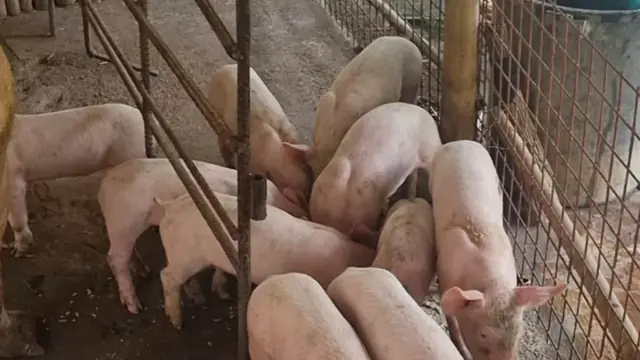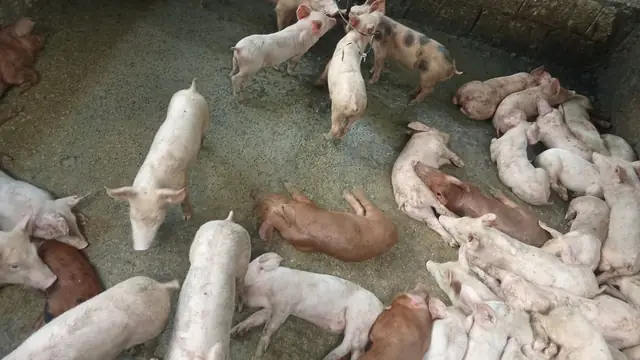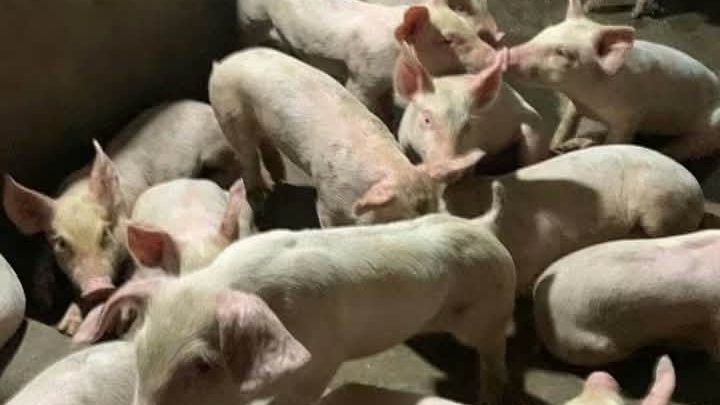
RSBSA-listed backyard raisers get free PCIC swine insurance worth ₱10,000 per fattener, ₱14,500 per breeder, and ₱34,000 per parent stock, with ASF covered. The premium (1.75% of sum insured for fatteners, 3.5% for breeders) is 100% subsidized by the DA for RSBSA-listed backyard raisers. Most eligible raisers never enroll. Here is how to register, and the 21-day waiting period that voids most claims.
"Libre ang seguro sa inyong baboy kung naka-RSBSA ka. Daghan ra ka magbababoy ang wala mahibalo. Sus, libre na ngani, dapat kuhaon nato." (Insurance for your pigs is free if you are RSBSA-listed. A lot of farmers do not know this. It is free, so you should claim it.)
What PCIC actually covers for swine
The Philippine Crop Insurance Corporation (PCIC) runs the country's livestock mortality insurance. For swine, three sum-insured tiers matter:
| Animal type | Sum insured per head |
|---|---|
| Fattener (grower-finisher) | ₱10,000 |
| Breeder (sow or boar) | ₱14,500 |
| Parent stock (pure-line GGP/GP) | ₱34,000 |
The premium is 1.75% of the sum insured for fatteners and 3.5% for breeders. For backyard raisers listed in the RSBSA, the DA subsidizes 100% of that premium, so it costs the raiser nothing. Commercial operations pay a rate discounted from the regular schedule (2.25% fattener, 4% breeder) rather than the full rate (DA-PCIC, doubled ASF indemnity and premium structure). Backyard raisers wondering "pila man ang akong bayaran?" Wala. Zero, if your RSBSA listing is active.
One thing worth keeping straight: the ₱10,000 PCIC fattener payout is insurance you carry on your own animals. It is a different pot of money from the DA's culling indemnification, the separate compensation the government pays when it orders ASF depopulation. You can qualify for both if your animal is insured and then culled under an LGU order. Treat the DA culling money as a bonus that may arrive late or not at all; PCIC is the line you can actually plan around.
What is covered
- Disease mortality, including ASF, classical swine fever, FMD, and other common pig diseases
- Accidental death: drowning during typhoons, fire, lightning strike, electrocution
- Forced slaughter ordered by veterinary authorities (such as ASF zone culling, where the animal cannot be saved)
- Death from natural disasters declared by the government
What is not covered
- Theft. Covered separately under PCIC's optional theft rider (extra premium, paid by the farmer)
- Escape and not recovered
- Death due to the farmer's neglect (no water, no feed, no veterinary care attempted)
- Death older than the animal's productive life cycle. For swine, generally not above 5-6 years for breeders
- Death within 21 days of enrollment. See the 21-day rule below
- Animals that were already sick at the time of enrollment
The exclusions are reasonable. The program is not a windfall scheme. It is real coverage for real animal losses, but it does require honest enrollment.
The two-step registration
Step 1: RSBSA enrollment (one time, free, lifetime)
Without RSBSA, no free PCIC. Get this done first.
Where: Your Municipal Agriculture Office (MAO) or the DA Regional Field Office. Many barangays also help facilitate.
What to bring:
- Original and photocopy of any valid government-issued ID (driver's license, voter's ID, PhilSys, postal ID, etc.)
- Proof of land ownership or lease if you own or rent the land where you raise pigs (tax declaration, deed, or lease contract). If you raise on a relative's land, a sworn statement of permission works.
- Optional but useful: a recent utility bill or barangay clearance as proof of address
How long: A first-time RSBSA enrollment usually takes one office visit and 30-60 minutes. The form is short. Once you have your RSBSA number, it is yours for life (DA, RSBSA Registration and Updating).
Cost: Zero.
Step 2: PCIC swine insurance application
With your RSBSA number in hand, file the insurance application.
Where: PCIC has regional offices in every region. Many MAOs also accept the form and forward it to PCIC. Ask your municipal agriculturist or check the PCIC office locator on pcic.gov.ph.
What to bring:
- RSBSA number or proof of enrollment
- Accomplished PCIC Insurance Application Form (free at the office, or download from the PCIC site)
- Valid government-issued ID
- Barangay certification confirming you are a swine raiser, OR farm ownership proof
- Photos of the livestock, specifically showing the hind side and owner together (this is the PCIC standard for identification)
Timing: File the application before you need it. The 21-day rule means a pig that dies within 21 days of enrollment is not covered, even if it died of an insured cause.
Cost: Zero, if RSBSA-listed and applying under the non-commercial mortality cover.
The 21-day rule, the catch most farmers miss
PCIC's livestock guidelines set a 21-calendar-day waiting period before coverage activates. If you enroll on the 1st of the month and a pig dies on the 18th, that pig is not covered. If it dies on the 25th, it is. A few specified diseases carry a longer 3-month waiting period instead, so ask your PCIC office which ones apply to swine in your area (PCIC, Guidelines on the Livestock Mortality Insurance Program).
The reasoning is sound: it prevents enrolling pigs that are already sick. But many raisers register only after a death has occurred and assume their other pigs are now covered. The newly enrolled animals are covered only after that waiting period clears.
What this means for you:
- Enroll new piglets within the first week of arrival, while they are still healthy.
- Do not wait for "when I have time." Set up RSBSA and PCIC enrollment as part of your standard new-batch routine.
- Re-enroll every batch. PCIC enrollment is per-animal, not blanket. If you sell a covered batch and buy new piglets, you re-enroll the new ones.
Filing a claim when an animal dies
Speed matters. PCIC's guidelines require a written Notice of Loss within 10 calendar days of the death. Sooner is better. Filing on the day of death, even by text or e-mail, protects the claim.
General mortality (non-ASF)
- Notify your MAO immediately, ideally on the day of death. Do not bury, burn, or sell the carcass before notification.
- Take photos of the dead animal: full body, hind side, and any visible disease signs.
- Get a barangay certification confirming the death and the cause if known.
- Get a veterinarian's or municipal vet's statement of the cause of death. For most diseases, the municipal vet examines the carcass or reviews the records.
- File the Notice of Loss within 10 calendar days at your PCIC regional office or via the MAO, then submit the full claim documents.
- Wait for PCIC processing. The guidelines target settlement within 45 calendar days of complete documents. In practice it can run longer if papers are incomplete or PCIC requests extra veterinary verification, so plan cash flow around two to three months, not one.
ASF mortality
ASF claims have an extra layer because of mandatory reporting and zone control:
- Report immediately to the BAI or your provincial veterinarian. ASF is a notifiable disease. Reporting is required by law.
- The BAI or provincial vet issues an ASF Incident Report or laboratory blood-test result confirming ASF.
- The LGU issues an Executive Order for the culling and disposal protocol.
- PCIC sends a representative to document the cull before disposal. Notify PCIC ahead of the cull, not after (PNA, PCIC urges Antique farmers to immediately report hog mortalities).
- Submit: the BAI ASF incident report or blood test, the LGU Executive Order on culling, photos of the animals before disposal, your insurance policy, and a sworn affidavit of loss.
- PCIC pays the claim at the insured value per head.
The Antique case is the proof. After the late-2023 ASF wave, PCIC released over ₱12.23 million to 508 backyard raisers across Hamtic, San Jose de Buenavista, Sibalom, and Belison, starting with a first batch of about ₱174,400 to two raisers in San Jose de Buenavista (PNA, PCIC pays insurance claims of ASF-affected farmers in Antique). The raisers who got paid reported on time, had documentation, and let PCIC representatives observe the culling. The ones who culled and disposed before notifying PCIC lost their claims.
Do not bury, burn, or dispose of any insured animal before PCIC documents the loss. This is the single most common reason claims are denied. Even if you are sure of the cause and want to prevent disease spread, photograph and notify first. PCIC will accept photos plus barangay or vet certification if disposal must be immediate for biosecurity, but you must still notify them right away and file the written Notice of Loss within 10 calendar days.
Why some farmers say PCIC "does not pay"
If you ask around your barangay, you will probably find someone who claims PCIC denied their valid claim or never paid. Most of these stories, when you dig, fall into one of three categories:
- The farmer disposed of the carcass before notifying PCIC. Without documentation of the loss, PCIC has no basis to pay.
- The animal was within the 21-day waiting period. Bad luck, but the rule was disclosed at enrollment.
- The farmer never actually completed enrollment. Many submit forms but never receive the policy number, never follow up, and assume coverage exists. Insurance only exists after the policy is issued.
PCIC is a government agency with real bureaucratic friction, but for backyard raisers who follow the rules, the program pays. The ₱12.23 million paid out across Antique after the 2023 ASF wave is the evidence. Not a promise on a website, actual money in actual raisers' accounts.
Other relevant PCIC programs
Beyond mortality coverage, PCIC offers:
- High-Value Crops Insurance for farmers also raising vegetables or rice on the same RSBSA registration
- Fisheries Insurance for tilapia ponds or similar
- Accident and Dismemberment Insurance for the farmer themselves at very low premium
The RSBSA registration that gets you free swine insurance also unlocks these. One enrollment, multiple programs.
Action checklist for this week
If you have not done this already, here is the sequence:
- Today: Call your barangay or MAO and ask: "Naka-RSBSA na ko? Kung wala, unsay buhaton?"
- This week: Walk into the MAO with your ID and land proof. Get the RSBSA form filled out and your number issued.
- Same visit if possible: Ask for the PCIC swine insurance application form. Fill it out.
- Take photos of all your current pigs (hind side, with you in the frame).
- Submit the PCIC form with photos and ID copies.
- Wait 21 days before counting your animals as covered.
- Keep your policy number somewhere you can find it. You will need it for any claim.
The whole process, start to finish, is about two MAO visits and three hours of your time spread over a few weeks. It pays for itself the first time a single pig dies of a covered cause.
Bisaya / Cebuano
Para sa mga magbababoy
Libre ba gyud ang seguro sa baboy gikan sa PCIC?
Oo, libre kung naka-RSBSA ka. Tag-iya og ₱10,000 kada baboy nga ginatambukan, ₱14,500 kada inahan o bana, ug ₱34,000 kada parent stock. Ang premium (1.75% sa fattener, 3.5% sa breeder) bayran sa DA, mao nga zero ra imong gasto.
Unsay buhaton aron makakuha?
- Adto sa Municipal Agriculture Office (MAO). Padara og ID ug land proof.
- Pagpa-RSBSA. Libre, walay bayad, lifetime na imong number.
- Sa parehong adlaw, pangayoa ang PCIC Insurance Application Form. Sulati.
- Kuhai og litrato ang imong baboy ug ang imong nawong (likod sa baboy, kuyog ka sa litrato). Standard na ni para sa PCIC.
- Isumiter ang form ug litrato.
Importanteng punto:
- 21 ka adlaw ang waiting period. Kung mamatay ang baboy sulod sa 21 adlaw human ka mag-apply, dili pa cover.
- Kung mamatay ang baboy, dili dayon ilubong o sunogon. Tawagan usa ang MAO o PCIC. Magpadala silag tao para mag-document. Isumiter ang Notice of Loss sulod sa 10 ka adlaw, kay kung dili, mawala ang claim.
- Para sa ASF: Kinahanglan og ASF report gikan sa BAI o provincial vet, Executive Order gikan sa LGU, ug mag-observe ang PCIC sa culling.
Daghan ra magbababoy nga niingon nga "wala nibayad ang PCIC." Kasagaran sa ila wala ka-follow sa rules: gilubong na ang baboy, wala mag-pa-document, o sulod pa sa 21 adlaw. Kung sundan nimo ang sequence, mubayad gyud ang PCIC. Pananglitan sa Antique: kapin ₱12 milyon ang gibayad sa 508 ka magbababoy human sa ASF sa 2023.
Read next
- 12 Hidden Costs of Starting a Piggery in the Philippines for the wider cost picture insurance is meant to protect
- ASF Recovery Era: Biosecurity That Actually Works for the disease prevention side that reduces claim frequency
- Disease Outbreak on Your Farm: Step-by-Step Response Guide for what to do the moment you suspect an outbreak
- OFW Pig Farm Investment: Honest Due-Diligence Guide on the broader risk-management thinking for absentee owners
Sources
- PCIC, Livestock Insurance program page
- PCIC, RSBSA program page
- PCIC, Insurance Products page
- PCIC, General Information on the Livestock Mortality Insurance Program (PDF)
- PCIC, Guidelines on the Livestock Mortality Insurance Program (PDF)
- DA, DA-PCIC doubles ASF indemnity to ₱10K per pig, premium structure
- PNA, DA urges hog raisers to avail of free insurance from PCIC
- PNA, PCIC urges Antique farmers to immediately report hog mortalities
- PNA, PCIC pays insurance claims of ASF-affected farmers in Antique
- DA, RSBSA Registration and Updating
- PIDS, Discussion Paper on PCIC Insurance Programs (PDF)
- DA-PCIC, Hog raisers urged to insure to bounce back