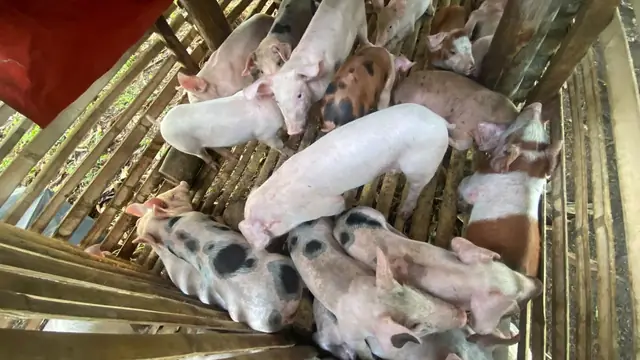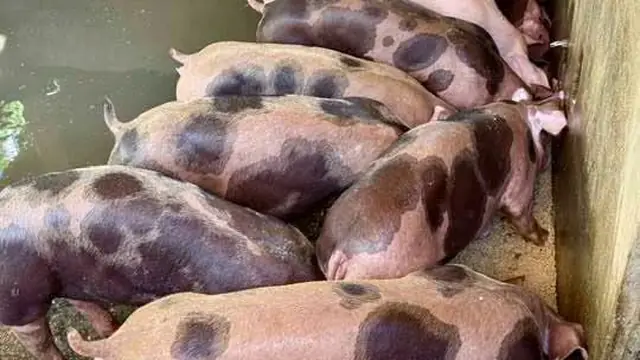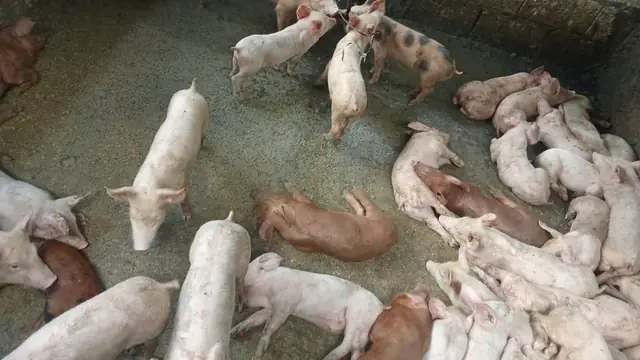
Most family pig-farm pitches sent to OFWs overstate profit by 30 to 60% and understate cost by the same. Before you GCash a single peso, get a written one-page plan with capital, feed cost per head, target market weight, breakeven price, and what happens if pig prices drop ₱20/kg. If they cannot answer in writing, that is the answer.
Free Tool
Pig Farm Readiness Wizard
Get the verdict you can hand back to the family — Go / Caution / Wait, the realistic capital range, and the risk flags. 8 questions, 3 minutes.
I run Baboy PH, a Philippine pig farming research site, and the same patterns keep coming up in what farmers and OFW investors describe. They are consistent enough to write this as a guide. The goal is not to talk you out of helping your family. Some of these farms do work. The goal is to make sure the money goes somewhere real.
One real-ish pattern, anonymized: a seafarer based in Dubai sent his brother ₱180,000 in early 2024 for a "10-head fattening operation" in Leyte. The brother was confident, the area had never had ASF, the math on paper penciled out. Month three, ASF was reported in the neighboring barangay. The brother buried the pigs under DA supervision before they even reached 60 kg. ₱180,000 gone, relationship intact because the seafarer had structured it as a forgiven-if-ASF loan. Most OFWs in the same scenario do not have that agreement and end up with both a loss and a family fight. The goal of this article is to keep you out of the second column.
The Three Ways the Ask Usually Comes
OFW pig farm asks fall into three shapes. Knowing which one you are getting changes how you respond.
The startup ask. Someone in the family wants to start from zero. Build a pen, buy piglets, buy feed. Numbers thrown around: ₱50,000 for "a few heads" up to ₱300,000 for a "proper" 10-20 head setup. This is the most common ask and the one where planning quality varies wildly. Some cousins have done real research. Most have talked to one neighbor who said "malaki kita sa baboy."
The expansion ask. The relative already has 5 pigs and says the next batch will be bigger if you can send capital. Feels safer because "it is already working." Often it is not. The first batch might not have sold yet, or it sold at a loss the relative did not tell you about. Ask to see the numbers from the first batch before funding the second.
The rescue ask. Framed as "investment" but actually a bailout. Pigs already sick, feed bill already unpaid, lechon operator already owes them money. You are being asked to plug holes, not to invest. This is the ask most likely to end in total loss, and also the one where the emotional pressure is highest because a sick pig this week is a dead pig next week.
The rescue ask often arrives as an "investment opportunity" because asking for a loan feels embarrassing. If the timeline is under two weeks and the tone is urgent, you are almost certainly being asked to bail out an existing problem. That does not make it wrong to help. It changes whether you should call it an investment or a gift.
What ₱50K to ₱1M Actually Buys You
Before you evaluate any specific pitch, calibrate against real 2026 numbers. These ranges are what shows up on the ground, not what sounds good in a pitch.
| Amount | What It Actually Covers | What It Does Not Cover |
|---|---|---|
| ₱30,000 - ₱50,000 | 3-5 weaner piglets plus 2 months of feed | Pen construction, vaccines, water system, contingency |
| ₱110,000 - ₱140,000 | 5-head backyard fattening, including a simple pen and full feed to market | Second batch capital, labor, repairs, vet emergencies |
| ₱200,000 - ₱260,000 | 10-head fattening, basic pen, full feed, small contingency | Major biosecurity upgrades, insurance (there is almost none anyway), multiple batches |
| ₱350,000 - ₱600,000 | 20-25 head semi-commercial, better pen, some labor cost, proper biosecurity | Farrow-to-finish breeding stock, commercial-grade facilities |
| ₱800,000 - ₱1,500,000 | 5-10 sow farrow-to-finish setup or 40-50 head fattening with one paid caretaker | Full commercial license, land purchase, feed mill |
A few things to notice. The ₱30,000 "test" almost never includes the pen. It buys pigs that then live in whatever structure already exists, which is often not suitable for biosecurity. The ₱200,000 "10-head" tier is probably the most honest entry point for a real trial. At ₱17,100 of cost per pig to market weight, ten head is ₱171,000 before you have built anything, so any 10-head pitch that comes in under ₱180,000 is missing a line item. And the ₱1,000,000 number is where people start making real mistakes, because at that scale the excitement outpaces the actual skill of the operator.
For a detailed breakdown of what each cost line actually looks like in 2026, see the pig farm real cost guide for OFW investors, the companion article in this series.
The 7 Questions to Answer Before Sending a Single Peso
Do not send money based on a voice message. Ask these questions, in writing, and wait for written answers. If the person running the farm cannot answer these, that is the answer.
1. Is there a written plan with numbers?
Not a paragraph. Not "more or less ganito." A document, even a one-page spreadsheet, that shows: capital needed, feed cost per head, target market weight, expected selling price, expected profit, and what happens if prices drop ₱20/kg.
If the answer is "trust me," the answer is no. Every serious farmer can show you the numbers on a piece of paper. Start with the pig farming business plan guide. Send it to them and ask them to fill it out. What comes back tells you a lot.
2. What is the breakeven price per kilo?
This is the single most important number in the whole business. It is total cost to raise a pig divided by its market weight.
If total cost to raise one pig to 95 kg is ₱17,100, breakeven is ₱180/kg. That means if farmgate drops below ₱180, the farm loses money on every pig. And ₱180/kg is about where SINAG and NatFed independently put the national cost of production in 2026. That is not a worst case. That is the average farm.
Now put the selling price beside it. PSA has the national farmgate average at ₱172.44/kg for Q2 2026 (₱174.00 in April, ₱171.56 in May, ₱171.76 in June). In May 2026 SINAG's industry average was ₱180-₱190/kg and trade quotes ran ₱183-₱193, above what the survey recorded for the same months. On the official number the average Philippine pig operation is now selling below its own cost. Not a catastrophe on one batch. Not a business either. You do not have to take my word or your cousin's: PSA's monthly figures are published here as the all-farms series and the backyard-only series, which is the one a family pen with ten pigs in it falls under. Download either, look at the last twelve rows, and put the pitch next to them.
Two things your relative may tell you that are not true. First, that farmgate is ₱200 to ₱230. It has not been above ₱200 since mid-2025, when June peaked at ₱214.52 and then fell back. Second, that the DA's ₱210/kg minimum farmgate price (set 4 November 2025) guarantees them ₱210. It does not. It is an industry-agreed, DA-backed target, not enforceable. The national average has not reached it since it was set; four regions have for a few months (Cordillera 5, BARMM 2, Central Visayas 2, NCR 1). It is a target, and nobody is going to pay your cousin the difference.
So a breakeven of ₱180 means the farm runs to stand still. A breakeven of ₱160 means the operator is doing something genuinely right on feed or piglet cost, and you should ask what. A breakeven of ₱190 means the plan loses money on every pig at today's prices, and no amount of optimism fixes that.
If your relative does not know their breakeven, they are not running a business yet. They are gambling. Run the numbers yourself with the breakeven calculator.
Free Tool
Pig Profit Simulator
Plug in the pitched feed cost, market weight, and farmgate price. See profit per head and what happens if pig prices drop ₱20/kg.
3. Who actually runs the farm day-to-day?
"Ako naman" (I will) is not an answer if the person saying it has a full-time job. Pigs do not take weekends off. Feed times, water checks, cleaning, and sickness response all have to happen every day, often twice a day, without fail.
Acceptable answers include: "My husband is retired and this is his project," "We are hiring a caretaker at ₱8,000 a month plus a per-head bonus," "I quit my tricycle job because I want to do this full time." Unacceptable answers include: "My kids will help after school," "We will figure it out," or "My brother said he can check on them."
4. Where are the piglets coming from?
Weaner quality determines everything downstream. A sick piglet is a dead pig three weeks later, and every peso you sent for that pig is gone.
Good answer: a named, reputable local breeder with a history. "We are getting them from [a known breeder in the area], ₱3,500 per 12-kg weaner, vaccinated and dewormed." Better if they can send receipts. See how to buy piglets for fattening for what "reputable" actually looks like.
Bad answer: "kung saan may tinda" or "sa palengke" or "sa kilala ng kapitbahay namin." Market-sourced piglets are the single biggest cause of catastrophic mortality in small farms.
5. What is the biosecurity plan?
If this question gets a blank stare, stop. Biosecurity is not optional in post-ASF Philippines.
Minimum acceptable: a separate pen area that is not open to other animals (dogs, chickens, other people's pigs), footbaths at the entrance, no swill from restaurants, no visitors who have been to other farms in the last 48 hours, and vaccination records. See the disease prevention monthly plan.
If the relative says "wala namang sakit dito sa amin," they have not been paying attention. African Swine Fever has hit Central Luzon, parts of the Visayas, and Mindanao at various times in the last five years. The virus does not care about "dito sa amin."
The resurgence began in the Visayas. Negros Occidental confirmed cases in San Enrique on 23 June (about 1,902 pig deaths province-wide by 25 June, not all of them from ASF), Iloilo recorded its first case in four years on 29 June, Bacolod and Negros Oriental followed on 1 July, Cebu banned Negros pigs and pork on 7 July, Capiz shut its border to pork on 24 June, and by September 2026 ASF was confirmed inside Cebu province (Ginatilan, and Pamutan, Toong and Buhisan in Cebu City, per the Daily Tribune). If the farm sits inside that arc, price is not the first problem. Movement bans are: you cannot sell a healthy pig across a closed border. The AVAC vaccine does not fix that either. BAI cleared AVAC ASF LIVE for commercial sale on 2 September 2026, for fatteners only, sold through accredited veterinary outlets, but a vaccinated pig still cannot cross a closed border, and it does not replace biosecurity.
6. What counts as failure, and what happens if it does?
This is the question almost nobody asks. It is also the one that protects you from the worst outcome.
Define, in advance: what level of mortality makes this batch a loss? What happens if farmgate prices drop to ₱150/kg during the sale month? That last one is not hypothetical, and it is answerable before you send anything: PSA's backyard farmgate by province shows what your relative's own province has actually been paid, month by month, and in June 2026 the country ranged from roughly ₱120 a kilo to roughly ₱290. What happens if an ASF case is reported in the neighboring barangay? If the relative cannot answer, they have not thought about downside.
The honest answer looks like: "If we lose more than 3 out of 10 pigs, the batch is a loss and we eat that loss. If prices crash, we will hold for 2-3 weeks and take the best offer. If ASF comes close, we follow the DA's response protocol." Written down. Not "hindi naman mangyayari 'yun."
7. Where does the money literally go, and can I see the receipts?
"Send ko na sa GCash mo" and then the money disappears into "gastos sa baboy" with no paper trail is the single most common path to trust breakdown. Not necessarily because anyone is stealing, but because everyone has selective memory about where money went.
Acceptable arrangement: funds go to a specific GCash or bank account that is only used for the farm, every purchase above ₱500 is receipted and photographed, and you get a monthly summary. You do not need to be suspicious. You need to set up a system that removes the temptation to be vague. Good people become less good when there is no accountability. This is not a judgment; it is just what happens.
Red Flags and Scam Patterns
Most family asks are not scams. They are overoptimistic, underplanned, and emotionally charged. But actual scams do exist, and they prey on OFWs who have capital and limited time to verify. The seven most common are catalogued in pig farming scams in the Philippines, including the "guaranteed buyer" scheme and the "imported breeder" hustle that have cost OFWs millions. Read it before you wire anything.
The guaranteed-return pitch
On January 23, 2020, the SEC issued a public advisory against Bill Ford VIP Trading, an outfit soliciting "investments" where someone would buy a pig for ₱2,500 and get ₱4,375 back in three months. That is a 75% return in 90 days. That is a Ponzi. The SEC eventually revoked the company's corporate registration in April 2021 after a show-cause order in February of that year. No real pig operation returns 75% in 90 days. None. Anything framed as "guaranteed X% per month" or "no risk" is either a scam or a misunderstanding of what risk means.
Real pig farming returns in 2026 are thin. With the national cost of production near ₱180/kg and PSA's official farmgate at ₱172.44, the average operation loses money per head. A well-run backyard batch that pushes its cost down toward ₱160/kg might make 10-15% on the batch before ASF or a feed-price move, and two clean batches in a year might return 20-30% of capital. That is a good year, not a doubling. If someone is promising more, they are either lying or guessing. The quarterly farmgate series is the plainest rebuttal to a doubling pitch: ₱209.83 in Q1 2025, ₱172.44 in Q2 2026, down every quarter in between.
The "we already have a buyer" line
A family pitching you an "investment" where they claim a buyer has already committed to specific prices at a specific future date should be able to show you a contract, a text message, or an LPO. If they cannot, the buyer does not exist yet. "Sure na yan, kilala ko 'yung operator" is not a buyer; it is a hope.
The vague total
"Mga ₱200 to ₱300k siguro" is not a budget. It is a gut feel. A real budget has line items. If the total moves by ₱100,000 depending on who is asking, the total is not real.
The urgent timeline
Real farms do not need the money on Tuesday. If the ask arrives with a deadline that is shorter than one week, and the reason for urgency is vague, slow down. Urgency is a pressure tactic.
A relative who loves you does not need you to decide in 48 hours. If they pressure you for a fast answer, the correct response is: "I want to help. I need one week to think about it. If one week is too long, the answer is no." Watch how they respond. That tells you more than the pitch itself.
"Investment" vs Remittance Dressed as Investment
This is the hardest section to write and the most important one.
A lot of OFW "pig farm investments" are not investments. They are remittances, money you would send to family anyway, wearing business clothes. That is not automatically bad. Helping family is a legitimate choice. But mislabeling it as an investment creates two problems.
First, you expect returns. When the returns do not come, the relationship takes damage that would not have happened if you had called it a gift from the start. Second, the family member on the ground treats the money with less discipline than they would if you had called it a loan with real terms. "Investment" is fuzzy. "₱150,000 loan at 0% to be repaid over 24 months from farm profits" is not fuzzy.
Before you send anything, answer for yourself: if this money disappears entirely, how do I feel? If your answer is "I would be angry at them for losing it," you are doing an investment and need investment-grade discipline (contract, clear terms, milestones). If your answer is "I would be sad but I love them and I chose to help," you are doing a gift and should call it one. Either is fine. Confusing the two is not.
How to Structure the Deal (Five Options)
If you decide to participate, there are cleaner and messier ways to do it. Ranked from cleanest to messiest:
| Structure | How It Works | Best For | Downside |
|---|---|---|---|
| Gift | You give money. No expectation of return. | Small amounts (under ₱50,000), rescue situations, preserving relationship | You get nothing back. Family may still expect more next time. |
| Interest-free loan with terms | Written document, fixed repayment schedule over 24-36 months from farm profits or salary | Mid-sized amounts (₱100,000-₱500,000) where you want accountability | Family may feel offended by formality at first. Explain it is to protect both sides. |
| Profit share (no equity) | You fund the batch, receive a pre-agreed % of profits (e.g., 40%) until capital returned + 20% upside. See paiwi/hatian profit math for worked examples. | Batch-by-batch arrangements, testing the operator | Requires honest accounting. Can get messy across many batches. |
| Equity share | You own X% of the farm business. Get X% of profits long-term. | Larger setups (₱500,000+) with a long-term vision | Hard to exit cleanly. Valuation is a fight. |
| Employment arrangement | You own the whole thing, pay the family member a monthly salary plus performance bonus | Any size, if the relative needs income and you want full control | You absorb all the risk. Relative has no skin in the game. |
For most OFW situations, the interest-free loan with written terms is the sweet spot. It respects that this is family (no interest, flexible), but creates enough structure to prevent the "where did the money go" conversation two years later.
A sample clause that covers a lot of ground: "This loan of ₱200,000 is for the pig farming operation described in the attached plan. Repayment begins month 6 at ₱10,000/month. If the farm fails through no fault of the operator (ASF, typhoon, disease despite proper biosecurity), the loan is forgiven. If the farm fails through avoidable mistakes, repayment resumes when the operator has income." Not a legal document, but a clear one. Sign it. Keep a copy.
What a "Yes with Conditions" Looks Like
This is the middle path. You want to help, you believe the person, but you want to keep the downside survivable. Structure the funding in stages:
Stage 1 (₱20,000 - ₱40,000): Pay for the pen build and the first 3 piglets. Milestone to unlock Stage 2: pigs arrive alive, pen is built, you receive photos weekly for 4 weeks.
Stage 2 (next 40-50% of total): Releases when the first batch reaches 50 kg (~month 3) and the operator sends video of the pigs and a feed-cost summary that matches the original projection. If costs are already 20%+ over projection, you pause and have a conversation before releasing more.
Stage 3 (final 10-20%, reserved): Releases only if the first batch sells at or above breakeven. This is the "expansion" money. If the first batch breaks even or better, the operator has proven the model and you can scale. If not, you hold.
This structure does two things. It protects your capital from being burned before you see any evidence of execution, and it gives the operator a reason to focus. They know the next tranche depends on delivering this one. Most family operators actually appreciate this once they understand it is not mistrust but good business practice.
If your relative pushes back hard on staged funding ("bakit hindi mo ako pagkatiwalaan?"), that is the red flag. Honest operators welcome milestones because milestones protect both sides. Operators who want the full amount upfront usually have a reason, and it is rarely a good one.
When It Is a Hard No
Some scenarios are not worth thinking about further. If any of these apply, decline.
-
The pitch has no written numbers, and the person asking cannot or will not produce them when asked. This is a talent and temperament mismatch with the business. Pig farming is spreadsheet work as much as it is pen work.
-
The area has had a recent ASF outbreak (within 6 months) and the operator has no biosecurity plan beyond "maghuhugas kami ng paa." Probability of losing your full capital is too high.
-
The operator has already lost money on a previous batch and is asking you to fund the next one without changing anything about how they operate. Whatever killed batch one will kill batch two. If they cannot articulate what they are changing, decline.
-
The relationship is already strained. Money does not fix relationships; it accelerates whatever direction the relationship is already heading. If trust is low before the money, it will be worse after.
-
You cannot afford to lose the amount they are asking for. Even a well-run pig farm can lose 100% of a batch to ASF. If losing the money would force you into debt or delay your own plans (buying a house, your kids' tuition, your own return home), the answer is no regardless of how good the pitch is. See the survival math guide. That framework applies to you too.
The OFW Decision Checklist
Print this. Or screenshot it. Before you send the money, confirm:
- Written business plan with capital, costs, breakeven, and downside scenario
- Breakeven price per kg calculated and under ₱170 (the industry cost of production is about ₱180/kg and PSA's official farmgate is ₱172.44, so a plan that breaks even above ₱172 is already losing)
- A specific named person running the farm full-time (or paid caretaker arrangement)
- Piglet source identified (named breeder, not "palengke")
- Biosecurity basics in place (separate pen, footbath, no swill, vaccinated stock)
- Failure criteria defined in advance ("we accept loss at X mortality")
- Dedicated GCash or bank account for farm expenses, with monthly reporting
- Deal structure documented (gift, loan with terms, profit share, or equity)
- Staged funding if over ₱100,000 total
- You can absorb the full loss without financial hardship
Nine out of ten boxes ticked is probably a go. Six or fewer is a no. The middle is where you negotiate.
If You Are Still on the Fence
One more question. Imagine you send the full amount today, and in six months your relative calls you and says "Kuya, nawala lahat, ASF tinamaan kami." What happens in your family?
If the answer is "we figure it out together, it is sad but we move on," the money is either a gift or a reasonable risk. Proceed.
If the answer is "this would permanently damage my relationship with them or my siblings or my parents," either do not send it, or send it with the explicit understanding on both sides that this outcome is possible. Better to have the hard conversation now, when everyone is calm, than to have it after a bad outcome.
Next in This Series
This is Part 1 of a 3-part OFW pig farm investment series.
- Part 2: What a Pig Farm Actually Costs in the Philippines (the number your family probably did not tell you). Real 2026 numbers for 10-head, 25-head, and 5-sow scenarios with honest mortality and regional variance.
- Part 3: Managing a Pig Farm From Abroad: Disease, Workers, and What You Can Actually Control. ASF reality, worker trust structures, embezzlement patterns, and remote monitoring that actually works.
You can also browse all pig farming business guides on Baboy PH.
Sources
- Securities and Exchange Commission, Philippines: advisory against Bill Ford VIP Trading (Jan 24, 2020) and registration revocation (April 2021).
- Department of Agriculture, Bureau of Animal Industry: ASF situation updates 2025-2026. Latest national bulletin: 226 active barangays in 24 provinces, 9 October 2026 (Id 805); low of 6 in 4 provinces, 22 May 2026 (Id 706); peak of 293 in 31 provinces, 24 September 2026 (Id 798); 98 barangays on 31 Dec 2025.
- DA (2 Sep 2026): AVAC ASF LIVE cleared for commercial sale, fatteners only.
- Philippine Statistics Authority (OpenSTAT): national farmgate price of pigs for slaughter, liveweight. Q2 2026 average ₱172.44/kg (Apr ₱174.00, May ₱171.56, Jun ₱171.76); Q1 2026 ₱176.03; Q4 2025 ₱182.83; Q3 2025 ₱191.51; 2025 peak June at ₱214.52.
- SINAG and NatFed: industry farmgate average ₱180-₱190/kg and cost of production about ₱180/kg, as of May 2026.
- BusinessWorld: DA minimum farmgate price of ₱210/kg, set 4 November 2025. Industry-agreed, DA-backed, not enforceable. The national average has not reached it since it was set; Cordillera (5 months), BARMM (2), Central Visayas (2) and NCR (1) have.