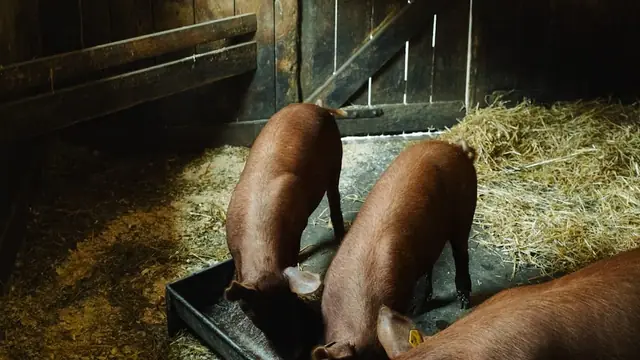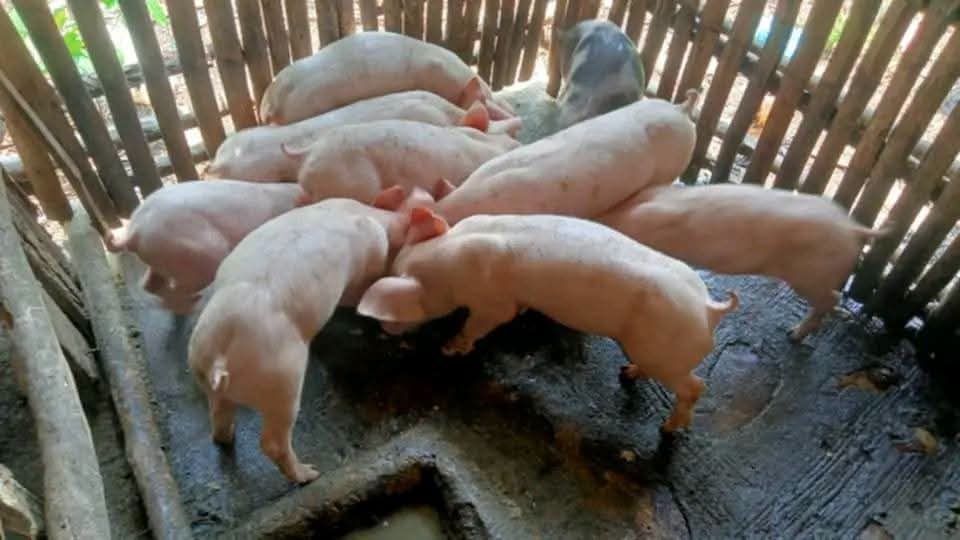
A healthy pig survives 24 to 48 hours without feed if it has clean water, dehydration kills faster than hunger. When typhoons cut supply or a feed sack jumps from ₱1,800 to ₱2,100 overnight, you need maintenance rations of around 60 percent normal energy and 12 percent crude protein from kamote tops, kangkong, and cooked cassava.
Free Tool
Quick Feed Estimate
Fast sack-and-cost estimate so you know how long current stock will hold.
The First 48 Hours: Triage
When feed supply is suddenly cut off, do not panic. Focus on what you can control right now.
A healthy adult pig can go 24-48 hours without feed and suffer no lasting damage, as long as it has clean water. Bigger pigs with body reserves tolerate it longer, weaners and piglets much less because they have higher energy needs and almost no fat. Dehydration kills faster than hunger: a water loss above 15 percent can be fatal within two days.
Immediate priorities:
- Secure water supply first. A 60-kg grower pig needs 6-10 liters of water per day. If your water system is also disrupted, that is the real emergency.
- Inventory what you have. Count remaining bags of commercial feed. Calculate how many days you can stretch it by reducing rations to 70% of normal.
- Identify local ingredients. Walk your property and your barangay. What is growing? Camote patches, kangkong along waterways, banana groves, rice paddies with leftover bran at the mill.
- Prioritize your herd. If feed is scarce, allocate it strategically: pregnant sows and nursing sows first, then weanlings, then growers, then finishers near market weight (they have the most body reserves).
Emergency Feed Ingredients Available in Most Philippine Provinces
You do not need a feed mill to keep pigs alive. Filipino farmers have been raising pigs on local ingredients for generations before commercial feeds existed. The FAO's emergency feed resources guide confirms that pigs can survive and even maintain reasonable condition on locally available feedstuffs when commercial feeds are disrupted.
The following table lists ingredients you can likely find within your municipality during an emergency:
| Ingredient | Crude Protein (%) | Energy Level | Availability | Est. Cost/kg | Max Inclusion (%) | Notes |
|---|---|---|---|---|---|---|
| Rice bran (darak) | 12-14 | Medium | Year-round, rice areas | PHP 10-15 (mill-gate); PHP 20-25 (supply store) | 40% | Source fresh from mill; rancid darak causes diarrhea |
| Copra meal | 20-22 | Medium | Visayas, Mindanao | PHP 12-18 | 25% | Good protein but low lysine; prices rising with coconut oil exports |
| Camote tops (sweet potato vines) | 16-20 (DM) | Low-medium | Nationwide | PHP 2-5 fresh | 30% (fresh) | Excellent protein; wilt before feeding |
| Kangkong (water spinach) | 18-25 (DM) | Low | Nationwide, waterways | Free-PHP 3 | 20% (fresh) | High moisture, good vitamin content |
| Banana trunks/stalks | 1-3 | Very low | Mindanao, Visayas | Free-PHP 2 | 15% | Almost no protein; roughage and water only |
| Ripe bananas (rejects) | 3-5 | Medium | Banana regions | PHP 3-8 | 20% | Good energy, palatable, but protein-poor |
| Cassava root (dried/cooked) | 2-3 | High | Visayas, Mindanao | PHP 10-20 | 30% | Must dry or cook to remove HCN toxins |
| Cassava leaves (dried) | 20-25 (DM) | Low | Visayas, Mindanao | Free-PHP 5 | 10% | Higher HCN than roots; dry thoroughly |
| Coconut meat (reject/surplus) | 6-8 | High | Coconut areas | PHP 5-10 | 15% | Good energy; spoils fast in heat |
| Kitchen/canteen food waste | 8-15 (variable) | Medium | Urban/peri-urban | Free-PHP 5 | 40% | Must cook/boil to kill pathogens; no pork scraps |
| Azolla (water fern) | 22-28 (DM) | Low | Growable nationwide | Free if grown | 15% | Doubles biomass every 5-7 days |
| Moringa leaves (malunggay) | 25-30 (DM) | Low | Nationwide | Free-PHP 5 | 10% | Excellent protein and vitamin source |
DM = dry matter basis. Fresh green materials are 80-90% water, so actual protein intake per kg fresh weight is much lower.
Emergency Ration Formulas
The goal of emergency feeding is not optimal growth. It is preventing muscle wasting and keeping pigs alive until normal feed supply resumes. According to pig333.com's nutrition resources, pigs on maintenance rations need roughly 60-70% of their normal energy intake and a minimum of 12% crude protein to avoid serious muscle loss.
Formula 1: Rice Bran + Copra Meal Base (Most Areas)
This works wherever rice mills and coconut processing exist, which covers most of Luzon, Visayas, and Mindanao.
| Ingredient | % of Mix | Function |
|---|---|---|
| Rice bran (fresh darak) | 45% | Energy base |
| Copra meal | 20% | Protein boost |
| Camote tops (wilted, chopped) | 20% | Protein + vitamins |
| Banana/cassava (cooked, mashed) | 10% | Energy filler |
| Salt | 0.5% | Mineral, palatability |
| Limestone/shell grit | 0.5% | Calcium |
| Clean water | Mix to mash consistency | Hydration |
Approximate crude protein: 14-15%. Not ideal for fast growth, but adequate for maintenance and slow gain.
Formula 2: Food Waste + Greens Base (Peri-Urban)
For operations near towns, restaurants, or markets where food waste is available.
| Ingredient | % of Mix | Function |
|---|---|---|
| Cooked food waste (no pork) | 40% | Energy + some protein |
| Rice bran | 25% | Energy base |
| Kangkong/camote tops (chopped) | 20% | Protein + fiber |
| Copra meal or fish meal | 10% | Protein concentration |
| Salt + limestone | 1% | Minerals |
| Water as needed | to mash | Consistency |
All food waste must be heated to at least 90°C for 60 minutes with continuous stirring before feeding (PCSP Technical Advisory No. 005, S. 2020). Raw food waste, especially anything that has contacted meat products, can transmit ASF, foot-and-mouth, and other diseases. DA Memorandum Order No. 22, S. 2018 specifically prohibits the use of uncooked catering waste from airports and seaports as swine feed. "Luto-a gyud una ang mga sobra sa kan-anan ayha ipakaon sa baboy" (Always cook leftover food before feeding it to pigs).
Formula 3: Pure Forage Emergency (No Commercial Ingredients Available)
When even rice bran and copra meal are unavailable. This is the worst-case typhoon scenario.
| Ingredient | Amount (per 60-kg pig/day) | Notes |
|---|---|---|
| Camote tops + kangkong | 5-7 kg fresh | Primary protein source |
| Camote roots (cooked) or bananas | 2-3 kg | Energy source |
| Cassava root (boiled 30 min) | 1-2 kg | Energy supplement |
| Moringa leaves | 0.5-1 kg fresh | Protein and vitamin boost |
| Salt | 5-10 grams | Dissolved in water |
This ration will keep a 60-kg pig alive and prevent serious muscle wasting for 2-4 weeks. Growth will be minimal to zero. Expect weight loss of 0.1-0.3 kg per day even with this ration. But the pig survives, and that is what matters during an emergency.
What NOT to Feed During an Emergency
Desperation makes people try things they shouldn't. Even in a crisis, some ingredients will do more harm than good.
| Ingredient | Why NOT | What Happens |
|---|---|---|
| Raw cassava (uncooked) | Contains cyanogenic glycosides (HCN) | Vomiting, difficulty breathing, death in severe cases |
| Raw kidney beans or soybeans | Contain trypsin inhibitors | Digestive shutdown, severe diarrhea |
| Moldy feed or grain | Aflatoxins and other mycotoxins | Liver damage, immunosuppression, death |
| Raw pork scraps or bones | ASF transmission risk | Potential herd wipeout from ASF |
| Treated lumber or sawdust | Chemical preservatives (CCA) | Arsenic and chromium poisoning |
| Spoiled coconut meat | Rancid oils, aflatoxins | Liver damage, poor feed intake |
| Ipil-ipil leaves (more than 5% of diet) | Mimosine toxicity | Hair loss, poor growth, reproductive failure |
The biggest mistake after typhoons is farmers feeding whatever they can find without checking. Raw cassava is the classic killer. Fresh cassava roots can carry 140 to 890 ppm hydrocyanic acid, well above the 100 ppm safe limit, and FAO's review of cassava in pig diets documents young pigs dying from cyanide toxicity in fresh roots. Soaking then boiling removes more cyanide than boiling alone, and thorough sun-drying works too (FAO, Use of cassava products in pig feeding). Young pigs are the most vulnerable. Cook everything. When in doubt, boil it.
Minimum Protein Targets by Pig Class
Not all pigs have the same requirements. During feed emergencies, use these minimum crude protein (CP) targets to prioritize your limited resources. Going below these levels for more than 7-10 days risks serious muscle catabolism and immune suppression.
| Pig Class | Weight Range | Normal CP Target | Emergency Minimum CP | Daily Feed (minimum) | Priority Level |
|---|---|---|---|---|---|
| Nursing sow | adult | 16-18% | 14% | 4-5 kg | HIGHEST |
| Pregnant sow | adult | 14-16% | 12% | 2-2.5 kg | HIGH |
| Weanling | 8-15 kg | 18-20% | 15% | 0.5-0.8 kg | HIGH |
| Starter | 15-25 kg | 16-18% | 13% | 0.8-1.2 kg | MEDIUM |
| Grower | 25-60 kg | 14-16% | 12% | 1.5-2.5 kg | MEDIUM |
| Finisher | 60-100 kg | 13-14% | 10% | 2-3 kg | LOWER |
| Boar | adult | 14-16% | 12% | 2-2.5 kg | MEDIUM |
Finishers near market weight (80+ kg) have the most body reserves and the lowest priority. If you are running low on feed, sell finishers early, even at a lower price, to free up feed for the rest of the herd. Set your expectations honestly: as of May 2026 the industry farmgate average is ₱180-190/kg liveweight (SINAG), and cost of production sits near ₱180/kg, so even a normal sale is close to break-even. The DA's ₱210/kg minimum farmgate price, set in November 2025, has never actually been reached by the national average, and outside the Cordillera no region has been paid it either. Do not build your emergency plan around getting it. A 75-kg pig sold at ₱180/kg is still better than a dead pig that ate feed meant for your sows. And honestly, during an emergency, even ₱150/kg is a win if it frees up feed for your breeding stock, you are buying time, not profit.
How Long Can Pigs Survive on Emergency Rations?
This depends on the pig's condition going in, the quality of your emergency ration, and environmental stress.
General guidelines:
- 1-2 weeks on 70% rations: Minimal impact. Growth slows by 30-40%, but pigs recover quickly once full feeding resumes. No lasting damage.
- 2-4 weeks on maintenance rations: Noticeable growth stall. Growers may lose 2-5 kg. Finishers hold weight better. Sows may delay estrus return. Recovery takes 1-2 weeks of full feeding.
- 4-8 weeks on forage-only emergency rations: Real weight loss in growers (5-10 kg). Breeding performance in sows will be affected for the next cycle. Some pigs may become immunocompromised. Full recovery may take 3-4 weeks.
- Beyond 8 weeks: Consider culling part of the herd to save the rest. Chronic underfeeding leads to permanent growth setbacks in young pigs and reproductive failure in sows.
The Merck Veterinary Manual's section on swine nutrition notes that pigs are among the most feed-efficient livestock and can maintain body condition on surprisingly low inputs compared to ruminants, but only for limited periods.
Signs Your Pigs Need More Feed
During emergency feeding, check your herd daily. These signs mean your rations are not enough and you need to find more feed or start culling:
- Visible hip bones and spine on growers or finishers (body condition score below 2)
- Tail biting or ear chewing among penmates. This is stress from hunger, not aggression
- Nursing sow losing condition fast. If you can see ribs on a lactating sow, her piglets are also losing. Prioritize her immediately
- Weanlings standing at the trough for extended periods after feeding, or chewing on pen fixtures
- Diarrhea in multiple pigs on the same emergency ration. This usually means a bad ingredient, not just low quantity. Check for mold or rancid darak
If more than 2-3 of these signs appear across your herd, your emergency ration is failing. Time to sell some animals, borrow feed from a neighbor, or reach out to your municipal agriculturist for emergency feed assistance. Most LGUs have disaster response funds that include livestock support. The Animal Industry Development and Competitiveness Act (RA 12308), signed 25 September 2025, created an Animal Emergency Response Task Force and an Animal Competitiveness Enhancement Fund, with ₱1.8 billion earmarked for recovery from biosecurity threats. How fast that money reaches a backyard farmer in practice is another question, so do not wait on it. Call your municipal agriculturist now, not after the herd is already thin.
Recovery Feeding: Getting Back to Normal
When commercial feed supply resumes or prices come down, do not go straight back to full rations. Pigs that have been on restricted feeding for more than a week need a gradual transition.
Week 1 recovery: Feed 80% of normal ration, blending emergency ingredients with commercial feed at roughly 50/50.
Week 2 recovery: Move to 90% normal ration with 75% commercial feed.
Week 3 and beyond: Full commercial ration. Pigs will often show compensatory growth, gaining 10-15% faster than normal for 2-3 weeks after nutritional recovery. This partially offsets lost growth time.
Watch for digestive upset during transition. A sudden switch from high-fiber emergency feeds to concentrated commercial feed can cause diarrhea and reduced intake. If you see loose stools, slow the transition.
Price Spike Strategies (When Feed Is Available but Expensive)
Sometimes the problem is not availability but affordability. A 50-kg sack of grower feed runs roughly ₱1,800 at ₱36/kg in normal times. When it jumps to ₱2,100 (₱42/kg), or Pigrolac goes up ₱200 overnight, the math stops working. Sus, most backyard farmers don't have that kind of margin. Here are options besides full emergency rations:
Before you decide the spike is permanent, check where it came from. A Philippine sack price is negotiated against the world grain market months before it reaches your feed store, and the World Bank's maize reference price is the number that import cost moves against. It will not tell you what to pay next week. It tells you whether the pressure behind the spike has eased or is still building.
Check the two ingredients you would blend down with, too. BAI publishes wholesale rice bran D1 and copra meal weekly, and rice bran has more than doubled from trough to peak inside three years. Blending down is not automatically the cheap move. It is only cheap when darak is cheap.
Blend down. Replace 20-30% of commercial feed with rice bran and copra meal. Your feed formulation does not need to be perfect. Even a rough blend maintains most of the growth performance at lower cost. Use our feed calculator to estimate the nutrient levels.
Shift feeding schedule. Instead of ad libitum feeding, move to twice-daily measured feeding. You will waste less feed and can control exactly how much goes to each pig.
Sell early. If the numbers do not work at current feed prices, sell your finishers at 80-85 kg instead of waiting for 95-100 kg. The last 15 kg of weight gain has the worst feed conversion ratio. FCR of 3.5-4.0 vs 2.5-3.0 during the grower phase. Check our quick feed estimate tool to see if finishing makes financial sense at current prices.
Negotiate or join a cooperative. Volume buyers get discounts of ₱50-150 per bag. If your neighbors also raise pigs, a collective purchase order can unlock these savings. This is common practice in Bulacan, Tarlac, and Pampanga.
Most advice online will tell you to "wait it out" during price spikes. That is bad advice for small-scale farmers. Every day you feed a finisher at ₱2,100/sack prices, you're losing money. Run the numbers with our break-even calculator before deciding to hold. More often than not, selling early beats hoping for cheaper feed next month.
Emergency Ration Cost vs Commercial Feed
Here's what emergency feeding actually costs compared to commercial feed, per pig per day for a 60-kg grower:
| Feeding Strategy | Daily Cost/Pig | Daily Gain | Cost per kg Gain |
|---|---|---|---|
| Full commercial (grower feed at ₱35-38/kg, 2.5 kg/day) | ₱88-95 | 0.6-0.7 kg | ₱125-160 |
| 70% commercial + 30% rice bran/copra blend | ₱60-75 | 0.4-0.5 kg | ₱130-160 |
| Formula 1 (rice bran + copra base) | ₱25-40 | 0.1-0.2 kg | ₱150-250 |
| Formula 3 (pure forage) | ₱5-15 | 0 (maintenance) | N/A |
The blended approach (70% commercial + 30% local) is usually the sweet spot during price spikes. You lose some growth rate but your cost per kg of gain stays pretty much the same. Pure emergency rations keep pigs alive but the feed conversion is terrible.
For a deeper analysis of feed economics and how to protect your margins, see our Philippine feed economics breakdown and cheapest ways to feed pigs.
Building Feed Resilience Before the Next Emergency
The best time to prepare for a feed emergency is before it happens.
- Grow your own forage. Plant camote, kangkong, and moringa around your piggery. A 100-square-meter camote plot can produce 300-500 kg of tops per month, enough to supplement feed for 10-15 grower pigs.
- Stockpile 2-3 weeks of rice bran. Darak is cheap and stores reasonably well if kept dry and used within 2-3 weeks.
- Build relationships with local millers. During normal times, know where your nearest rice mill and copra processor are. When supply chains break, local is everything.
- Learn fermentation. Fermented feed extends shelf life and improves digestibility. Our guide on alternative feeding systems covers the process.
- Keep a cash reserve. Most farmers I have talked to got into trouble not because feed was unavailable, but because they couldn't afford the price spike. Even ₱5,000 set aside per 10-head batch gives you a buffer to buy emergency ingredients without going into debt.
- Know your break-even. Run your numbers through the profit simulator now, not during the crisis. Know the feed price point where selling early becomes smarter than finishing.
Bisaya / Cebuano
Para sa mga mag-uuma: Emergency feeding tips
- Kung walay feeds, ayaw i-panic. Ang baboy makasugakod og 1-2 ka adlaw walay kaon basta naa'y tubig
- Ang camote tops ug kangkong makahatag og 15-20% protein kung i-dry basis. Maayo gyud ni nga emergency feed
- Luto-a gyud ang tanan nga food waste ayha ipakaon, labi na kung naay ASF sa inyong lugar
- Kung mahal na kaayo ang feeds, ibaligya dayon ang finisher kaysa maghulat. Mas maayo ang 80 kg nga nabaligya kaysa 100 kg nga nalugi
- Pagtanom og camote ug malunggay sa palibot sa inyong babuyan. Mao ni ang inyong insurance
Learn More
- Cheapest way to feed pigs in the Philippines for long-term cost reduction strategies
- Alternative feeding systems covers fermentation, local ingredients, and formulation
- Pig feed formulation guide for mixing your own balanced rations
- Philippine feed economics on what drives feed prices
- Feed calculator to estimate nutrient content of your custom mix
- Quick feed estimate tool to check if finishing at current prices makes sense
Sources: FAO Emergency Feed Resources and Animal Nutrition Guidelines, PCSP Technical Advisory No. 005, S. 2020: Recovery from ASF/Swill Feeding, DA Memorandum Order No. 22, S. 2018: Prohibition on Catering Food Wastes from Airports and Seaports as Swine Swill Feed, FAO: Use of Cassava Products in Pig Feeding (Gomez), Merck Veterinary Manual: Nutrition, Pigs, RA 12308 (AIDCA), Sep 2025, PCAARRD Triple Typhoon Aftermath Report, 2025, BAI Swine Production Technical Bulletins, PhilRice Rice Bran Utilization Studies, PCAARRD Alternative Feed Resources for Smallholder Livestock, pig333.com Swine Nutrition Resources, DA-ATI Backyard Piggery Training Modules.