"Ayaw dawata ang unang presyo, pangutana pa sa uban." (Do not accept the first price, ask others first.)
Three buyer types control your selling price: viajeros pay the least, lechon operators ₱10-₱20/kg more for a pig that fits their spec, and your own direct buyers the most. PSA's latest official national average is still Q2 2026 at ₱172.44/kg, but the DA said the national liveweight price fell to ₱150/kg in August 2026, against a cost of production of ₱180-₱190/kg. The average farm is selling well below its own cost, which is exactly why the selling matters: it decides how much you lose, or whether you scrape a profit. Weigh the pig yourself, know your peso-per-kilo cost, and don't take the first offer. The gap between panic-selling and the best channel is about ₱3,300 per head.
Know Your Buyer Types
Different buyers operate differently. Knowing who they are and what they want puts you in a stronger position.
The buyer prices below are first-half 2026 ranges, when PSA's national quarter ran ₱172-₱176. Since June the market has dropped further (the DA put August at ₱150/kg), so expect every channel to sit roughly ₱20-₱30 lower today. The order between channels holds; the levels do not.
| Buyer Type | Typical Price | Payment Terms | Volume | Pros | Cons |
|---|---|---|---|---|---|
| Viajero (trader/middleman) | ₱165 - ₱185/kg liveweight | Cash on pickup | Buys 5-20+ heads | Convenient, no transport cost | Lowest price, you have least negotiating power |
| Direct to wet market | ₱180 - ₱200/kg liveweight | Cash or 1-3 day terms | 1-5 heads per trip | Better price | You handle transport, need market connections |
| Lechon operator | ₱185 - ₱205/kg liveweight | Usually cash | 1-3 heads (prefers 25-40 kg for lechon de leche, 70-90 kg for regular) | Premium price for right size | Very specific weight/quality requirements |
| Direct to consumer (social media, referral) | ₱190 - ₱210/kg liveweight | Cash on delivery | 1-2 heads | Best price | Slow sales, need your own buyer network |
| Meat shop / cold storage | ₱230 - ₱250/kg dressed weight | 7-15 day terms | Regular orders | Steady demand | Delayed payment, need to dress the pig |
| Cooperative / consolidator | ₱175 - ₱190/kg liveweight | 3-7 day terms | Batches | Volume commitment | Requires membership, may have quality standards |
The peso ranges in that table were observed in the first half of 2026, when PSA's national farmgate ran ₱172-₱179/kg. Since then the DA has put the national figure at ₱150/kg (August 2026), and producer groups report ₱120-₱160/kg in some areas, so expect every channel to be paying less than the table shows. What still holds is the order and the gaps between channels, which is what you are choosing between.
In the Visayas and Mindanao, viajeros dominate backyard pig sales. In Luzon, especially near Metro Manila, more options exist because of proximity to large wet markets and processing plants.
Liveweight vs. Dressed Weight: Know the Math
This is where many farmers get confused, or get cheated.
Liveweight = the pig weighed alive, on the hoof. Dressed weight = after slaughter, hair removal, and evisceration (no internal organs, no blood).
The dressing percentage for market pigs is typically 72-78%. That means a 100 kg live pig yields 72-78 kg dressed weight.
| Liveweight | Dressing % | Dressed Weight | Price if ₱150/kg LW | Price if ₱200/kg DW | Difference |
|---|---|---|---|---|---|
| 90 kg | 74% | 66.6 kg | ₱13,500 | ₱13,320 | -₱180 |
| 95 kg | 75% | 71.3 kg | ₱14,250 | ₱14,260 | +₱10 |
| 100 kg | 76% | 76.0 kg | ₱15,000 | ₱15,200 | +₱200 |
| 105 kg | 77% | 80.9 kg | ₱15,750 | ₱16,180 | +₱430 |
At heavier weights with good dressing percentage, dressed weight pricing can actually be better. But at lighter weights or with poor dressing percentage (thin backfat, light muscle), liveweight pricing protects you more.
Rule of thumb: If the dressed weight price offered is less than 1.3x the liveweight price, sell liveweight. If they offer 1.35x or higher, dressed weight may be better, but weigh the pig yourself first.
For current regional pricing data, see liveweight pig prices by region.
Timing Your Sale
Everybody will tell you December is the peak and July is the trough. Twelve years of PSA data say neither. On the backyard (household) series, 2014 to 2025, measuring each month against its own year's average, the median June runs 3.3% above and the median May 2.8%, while December runs 0.4% above and July 1.0% above. January, at 2.6% under, is the usual low. December beats November every year, but by a median 1.8%, about ₱3/kg. And the last full cycle shows the same thing: the holiday lift was small and short, and the "low season" paid better than Christmas did.
| Period | PSA farmgate, liveweight | What actually happened |
|---|---|---|
| June 2025 | ₱214.52/kg | The high of 2025. A supply squeeze, not a holiday. |
| Q3 2025 (Jul-Sep) | ₱191.51/kg average | The supposed low season still paid better than Christmas did. |
| Q4 2025 (Oct-Dec) | ₱182.83/kg average | December (₱187.06) rose on November, but the quarter came in under Q3. |
| January 2026 | ₱172.56/kg | The December lift gone in a month. |
| February 2026 | ₱176.31/kg | A small recovery. |
| May 2026 | ₱171.56/kg | The lowest month PSA has published. |
| June 2026 | ₱171.76/kg | Latest official month. Q2 average ₱172.44 |
| July-September 2026 | not yet published | PSA's next update is due 6 November 2026. |
| August 2026 (DA, not PSA) | ₱150/kg | DA's national figure, against ₱180-₱190/kg cost of production. |
What sets the farmgate price now is supply and imports, not the fiesta calendar. Importers landed 851,760 MT of pork in 2025, and EO 116 (19 May 2026) raised the tariff-quota volume from 54,210 MT to 204,210 MT. January to August 2026 brought in 602,655 MT, against 573,091 MT a year earlier. The DA also blames raisers themselves: Secretary Tiu Laurel says ASF fear has pushed farms to dump pigs early, which floods the market. SINAG blames imports. The national herd is tight, 8.93M heads as of 1 July 2026, and it grew 2.6% that quarter without buying anybody any pricing power, because the gap gets filled at the port. The other half of that squeeze is downstream: who gets the rest of the ₱380 walks the whole chain from your gate to the palengke stall, with the published price at every level.
Holiday demand is still real. It just shows up in the lechon and direct-to-consumer channels rather than in the viajero's offer. A lechon operator in December will pay ₱10-20/kg over the viajero for a pig that fits his spec, and that premium is yours if you already have his number.
Practical implication: if you run 2-3 batches a year, line one up against a buyer you have already spoken to, at a weight he has already told you he wants. Timing the buyer is a stronger lever than timing the calendar.
Pricing Strategy: How to Set Your Price
Do not just accept whatever the buyer offers. Know your numbers first.
Step 1: Know Your Breakeven
Total cost per head, divided by the kilos you actually sell. Producer groups put cost of production at ₱180-₱190/kg as of October 2026, so a 95 kg pig raised at typical cost has about ₱17,100-₱18,050 of weaner, feed, meds, and utilities in it. Sell that pig at the DA's August national figure of ₱150/kg and you gross ₱14,250: a loss of ₱2,850-₱3,800 a head for four months of work. Even at PSA's last official quarter, ₱172.44, you gross ₱16,382 and still lose ₱718-₱1,668. That is the honest arithmetic at the national average, and it is the reason the rest of this page exists.
The farmers who come out ahead are the ones well under that cost. Raise your own weaners, mix part of your feed, keep mortality low, and your cost might land at ₱150/kg, ₱14,250 on the same pig. Even then, a sale at ₱150 only breaks even; a ₱172.44 sale would clear ₱2,132. Nobody can hand you your breakeven. Compute it.
Free Tool
Break-Even Price Calculator
Plug in your actual feed bill, weaner cost, and finishing weight to see the exact peso-per-kg floor below which you start losing money on the sale.
Step 2: Know the Current Market
Check prices from at least 3 sources:
- Ask 2-3 viajeros what they are paying today
- Check the nearest wet market pig prices
- Ask neighboring farmers what they sold at recently
- Check regional DA price monitoring reports
Regional differences do not run the way most people assume. PSA, June 2026, the newest regional month published: the highest farmgate prices in the country were Cordillera at ₱224.10/kg and Central Visayas at ₱208.73/kg. Central Luzon, which everyone treats as the premium market, was sixth at ₱181.05. Negros ₱166.29. SOCCSKSARGEN was lowest at ₱141.98. Being close to Manila does not get you a better farmgate price.
Step 3: Set Your Floor Price
Your floor is your breakeven. That is it. But at a ₱150 market sitting under a ₱180-₱190 cost of production, a viajero has no reason to pay you breakeven, let alone breakeven plus ₱40; he will just drive to the next barangay. The extra margin has to come out of the channel you choose, not out of a number you announce.
Ignore the ₱210/kg floor while you are at it. The DA and the industry agreed it on 4 November 2025, but the DA has no legal power to enforce it, and the national average has never met it since it was set. A few regions have in some months (the Cordillera most often), but for most raisers it has never been paid. No buyer owes it to you, and no batch plan should be built on it.
If nobody will meet your breakeven, holding a finisher for 1-2 weeks costs roughly ₱90-₱110/day in feed (2.5-3 kg of grower/finisher at ₱34.90-₱38.20/kg, July 2026). He gains maybe 0.8 kg/day, so the extra weight roughly pays for the extra feed and no more. Holding buys you time to find a second offer. It does not build you a better price.
Step 4: Negotiate from Strength
- Get at least 2-3 offers before committing. Viajeros know which farmers only have one buyer, those farmers get the worst prices.
- Weigh the pig yourself before the buyer arrives. Viajeros sometimes underestimate weight by 3-8 kg. At ₱150/kg, that is ₱450-₱1,200 lost.
- Sell in batches when possible. A viajero who can buy 5-10 heads in one trip saves on transport, that should translate to a better per-kilo price.
Marketing Channels for Small Farmers
1. Viajero Network
The most common channel. Build relationships with 3-4 viajeros so you always have competing offers. In the Visayas, viajeros often cover specific routes, the one who serves your barangay may not give the best price, but the one from the next town over might.
2. Social Media (Facebook Groups)
Facebook Marketplace and local buy-and-sell groups are surprisingly effective for pigs in rural Philippines. Post photos, weight estimate, location, and asking price. Groups like "Baboy Buy and Sell [Province]" exist for most provinces.
Tips for social media selling:
- Post 1-2 weeks before target sale date
- Include clear photos showing body condition
- State the weight and your asking price
- Mention the breed (crossbreed commands higher price than native for fatteners)
3. Direct to Lechon Operators
Lechon operators are premium buyers, especially for pigs in the 25-40 kg range (lechon de leche) and 70-90 kg range. In Cebu, Talisay, Mandaue, and Lapu-Lapu, lechon businesses buy hundreds of pigs weekly. Build direct relationships, they will pay ₱10-20/kg more than viajeros for pigs that meet their specs.
4. Cooperative Sales
If a local livestock cooperative exists, joining can give access to bulk buyers and more stable pricing. Cooperatives in Nueva Ecija, Bulacan, and Tarlac have established relationships with commercial processors.
5. Value-Added: Sell Lechon, Not Live Pigs
This is where the real money is. Sell lechon instead of live pigs. A 40 kg live pig at ₱150/kg = ₱6,000. The same pig roasted and sold whole, or at ₱250-₱350/kg by the cut, nets roughly ₱12,000-₱16,000 after charcoal, labor, and seasoning. That is about double.
This only works if you have the skill, equipment, and customer base. But it is the single biggest profit multiplier available to backyard farmers.
Common Selling Mistakes
| Mistake | What Happens | Better Approach |
|---|---|---|
| Selling too early (70-80 kg) | About ₱800-₱1,000 of net gain left on the table (20-25 kg of growth at ₱150/kg, minus roughly 3 kg of feed per kg of gain at ₱36.69/kg) | Hold to 90-100 kg unless price or cash flow forces early sale. See how long until a pig is ready to sell |
| Accepting the first offer | Typically ₱5-15/kg below best available price | Get 2-3 competing offers |
| Not weighing the pig | Viajeros underestimate by 3-8 kg | Invest in a platform scale (₱3,000-₱8,000) or use a weight tape |
| Timing the calendar instead of the buyer | PSA farmgate fell from ₱191.51/kg in Q3 2025 to ₱172.56 in January 2026. December's lift was gone within a month | Plan the batch around a named buyer and a target weight, not around the holidays |
| Panic selling on an ASF rumor | Farmers dump pigs at ₱100-₱140/kg, far below the ₱180-₱190/kg it cost to raise them. The DA says this kind of fear-selling is a big part of why the national price fell after June | ASF is genuinely active in the Visayas: Negros Occidental and Iloilo since late June 2026, and Cebu province (Ginatilan) confirmed in September 2026, with new Luzon cases in Camarines Sur and Cagayan. Confirm the outbreak status and the movement rules with your municipal vet before you dump stock. The AVAC ASF vaccine has been on commercial sale for fatteners since 2 September 2026; ask your vet |
| Ignoring body condition | Thin, rough-coated pigs get lower offers | Ensure good finish (solid backfat, smooth coat, alert demeanor) |
| Not having multiple buyer contacts | One buyer = price taker | Maintain 3-4 viajero contacts + at least 1 alternative channel |
Price Comparison: What Farmers Actually Get
Here is what different seller strategies yield on a 95 kg pig at the market as it stood in late 2026. The national row is the DA's August figure of ₱150/kg. The panic row is the ₱130-₱140/kg producer groups were reporting in some areas in October. The two better rows add this page's own channel gaps to the national figure: ₱5-₱15/kg for getting competing offers, ₱10-₱20/kg for a lechon operator. Cost of production on that pig is ₱17,100-₱18,050 (₱180-₱190/kg). "vs. worst" is measured against the middle of the panic row, ₱12,825.
| Strategy | Price/kg | Revenue/Head | vs. Worst Strategy | Against ₱17,100-₱18,050 cost |
|---|---|---|---|---|
| Panic sell to first viajero (no weighing, weak area) | ₱130 - ₱140/kg | ₱12,350 - ₱13,300 | Baseline | Loss of ₱3,800-₱5,700 |
| Normal viajero sale (national average) | ₱150/kg | ₱14,250 | +₱1,425 | Loss of ₱2,850-₱3,800 |
| Competitive sale (weighed, 2-3 offers) | ₱155 - ₱165/kg | ₱14,725 - ₱15,675 | +₱1,900 - ₱2,850 | Loss of ₱1,425-₱3,325 |
| Direct to lechon operator or your own buyers (right size) | ₱160 - ₱170/kg | ₱15,200 - ₱16,150 | +₱2,375 - ₱3,325 | Loss of ₱950-₱2,850 |
The difference between worst and best on the same pig is up to about ₱3,300 per head, ₱33,000 on a 10-head batch. Same pig, same feed cost, same labor. Just better selling.
Look at the last column, though. At this market, every row loses money for a raiser at the national cost of production. The selling is not a bonus on top of a profitable batch. At today's prices, the selling decides how much you lose, and only a raiser whose own cost is well under ₱180/kg turns any of these rows into a profit.
For current regional prices and breed-specific data, see crossbreed pig prices in the Philippines.
Building a Buyer Network
This takes time but pays off every single batch. Tried and tested na.
- Keep a phone list of every viajero, meat vendor, and lechon operator you have met or heard of
- Ask for referrals when one viajero cannot take your pigs, ask who else buys in the area
- Join local Facebook groups for livestock buy-and-sell
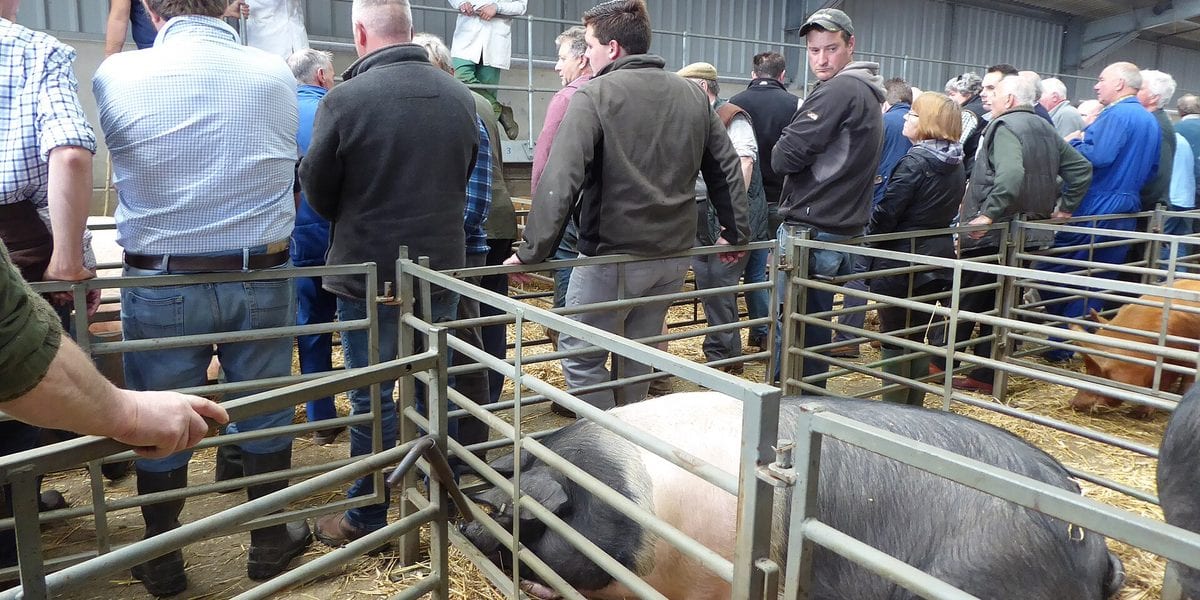
- Attend your municipal livestock auction if one exists, you will meet buyers
- Talk to your municipal agriculturist they often know which buyers are active and reputable
"Daghan og buyer, maayo ang presyo." (Many buyers, good price.)
Bisaya / Cebuano
Para sa mga mag-uuma nga mobaligya og baboy
Unsaon pagkuha og maayong presyo:
- Ayaw dawata ang unang offer pangutana sa 2-3 ka viajero o buyer bago modesisyon
- Timbanga ang baboy sa dili pa moabot ang buyer daghan og viajero nga mogamay sa timbang, mawala ka og ₱450-₱1,200 per head
- Hibaloi ang imong gasto ₱180 hangtod ₱190 kada kilo ang gasto sa pagpadako karon. Ang pinakabag-o nga opisyal nga PSA kay ₱172.44 (Q2 2026), ug sumala sa DA, ₱150 na lang niadtong Agosto 2026. Lugi ang kasagaran nga uma, mao nga importante kaayo ang maayong pagbaligya
- Ayaw pagsalig sa Disyembre ni-ubos ang presyo sa PSA gikan sa Q3 2025 (₱191.51) hangtod Q2 2026 (₱172.44), ug mas ubos pa karon. Ang lechon buyer mobayad og dugang sa Disyembre, apan ang viajero dili
- Paghimo og listahan sa mga buyer 3-4 ka viajero + lechon operators + Facebook groups
- Kung kahibaw ka mohimo og lechon mas dako ang ganansya kaysa liveweight selling, halos doble
"Ang pagbaligya mao ang pinaka-importante nga bahin sa negosyo sa baboy, dili ang pagpakaon." (Selling is the most important part of the pig business, not the feeding.)
Learn More
- Liveweight pig prices by region, current regional price data
- How long until a pig is ready to sell?, optimal market weight timing
- Pig farming profit for 10 pigs, real batch economics
- Crossbreed pig prices in the Philippines, breed-specific pricing
Sources: Philippine Statistics Authority (PSA) monthly and quarterly farmgate price series for pigs for slaughter and swine inventory (OpenSTAT; latest official month June 2026), DA national liveweight figure for August 2026 (The Manila Times, 28 Sep 2026), DA on ASF-fear selling (Daily Tribune, 7 Sep 2026), cost of production ₱180-₱190/kg and ₱130-₱140/kg in some areas (Daily Tribune, 2 Oct 2026; BusinessMirror, 9 Oct 2026), January-August 2026 pork imports (Philstar, 24 Sep 2026), AVAC vaccine commercial release (DA, 2 Sep 2026), SINAG and NatFed on trade prices and margins, the 4 November 2025 ₱210 floor agreement (non-enforceable; Philstar, 21 Sep 2026), Bureau of Animal Industry ASF bulletins and LGU orders (Capiz, Cebu EO 39), Executive Order 116 (19 May 2026) on pork MAV volumes, pig333.com market analysis (pig333.com), PIDS Discussion Paper on Small-Scale Hog Farming Economics. Prices are point-in-time and stated as of the dates given.