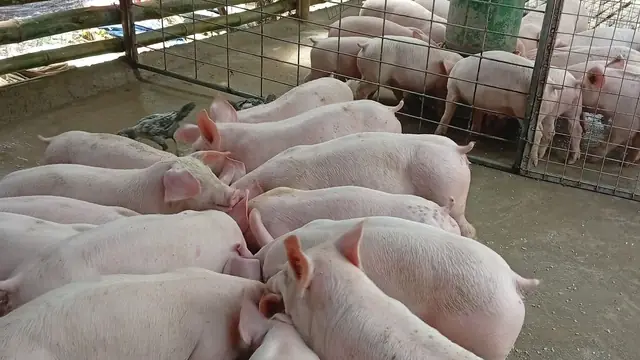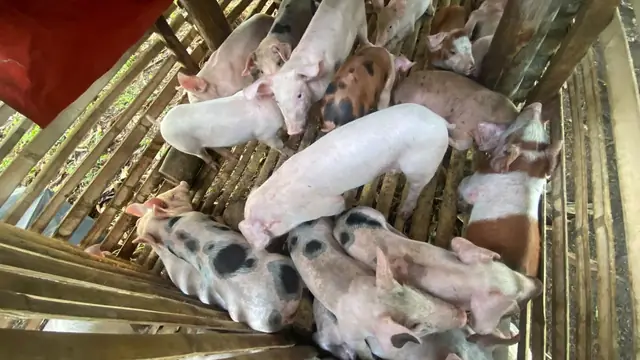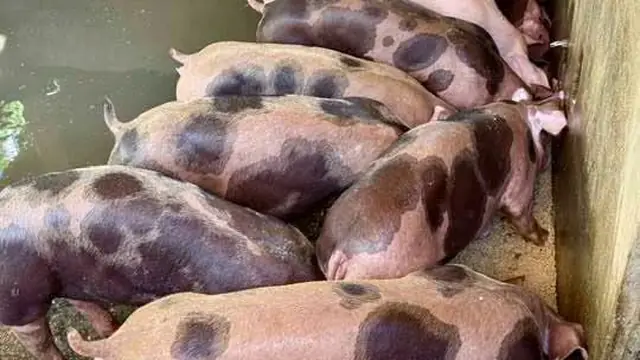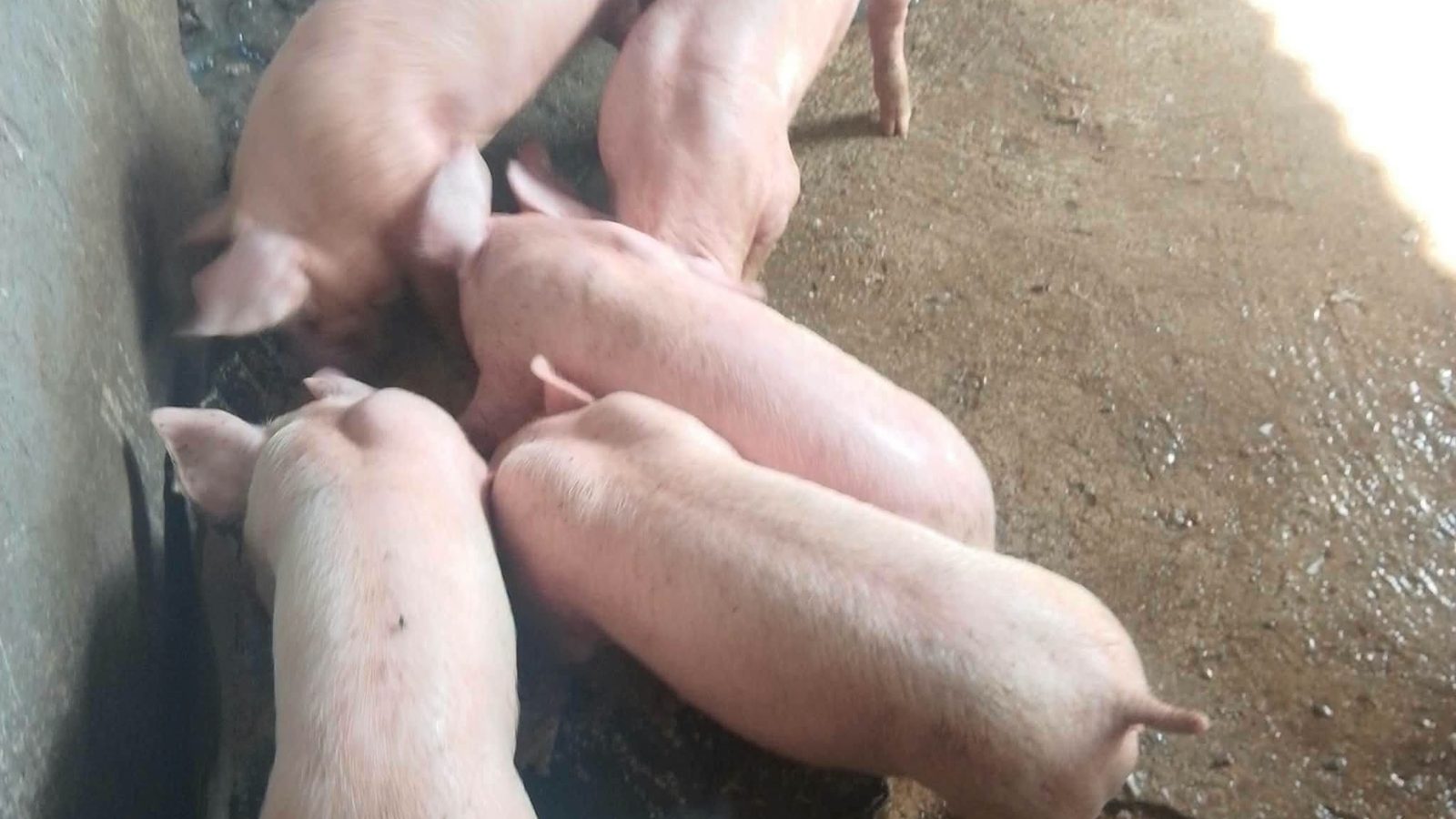
Short answer: as of mid-2026 a piggery is a thin-margin business with a high ceiling and a real chance of a zero. A clean five-month batch returns about 22% on the cash you put in at PSA's last official quarter (₱172.44/kg) and about 6% at the DA's August 2026 figure (₱150/kg), and nothing at all once you pay a caretaker and account for the pigs you lose. Everyone selling you piglets, feed, or a "business package" says yes. This is the version with the numbers and the risk attached.
The piggery number, honestly
Start with the thing being compared. A 10-head fattening batch, crossbred weaners, sold around 88-90 kg. The Philippine Statistics Authority put the Q3-2025 average farmgate price at ₱191.51/kg liveweight, but that was near the top of the cycle. It has drifted down every quarter since: PSA has Q4 2025 at ₱182.83, Q1 2026 at ₱176.03 and Q2 2026 at ₱172.44. PSA has not yet published July to September 2026 (its next update is due 6 November), but the trade has, and it says the price fell hard after June: the DA put the national liveweight average at ₱150/kg in August 2026, against ₱215 in June 2025 (Manila Times, 28 Sep 2026). That is a DA statement, not a PSA figure. So run the batch at both: ₱172.44 is the last official quarter, ₱150 is the closest thing to "today". The gap is about ₱2,100 a head on a 90 kg pig. (The ₱180-190/kg SINAG quoted in May 2026 is history now; it is not a price anyone is being paid.) Both PSA cuts are downloadable here with the retrieval date on every row: the quarterly means that show the whole slide, and the backyard-only monthly series, which is the survey a 10-head family pen falls under.
The Department of Agriculture and pig raisers agreed a ₱210/kg target farmgate price in November 2025. The DA backs it but has no legal power to enforce it. The national average has not reached it in any month since it was set. Four regions have, briefly: the Cordillera for five months, BARMM and Central Visayas for two each, and Metro Manila for one. Building a batch plan around it is how people talk themselves into a loss. Against a cost of production that producer groups put at ₱180-190/kg in October 2026, the average farm is now selling below what it costs to produce. The margin is real for a good backyard operator. It is not real for an average one.
| Line (10-pig fattening batch, mid-2026) | Clean batch | One death, one light |
|---|---|---|
| Weaners + feed + meds (cash out) | ~₱127,000 | ~₱128,000 |
| Liveweight sold | 900 kg | ~795 kg |
| Gross revenue at ₱172.44/kg (PSA Q2 2026) | ₱155,196 | ₱137,090 |
| Net before pen, labour, mortality reserve | ~₱28,200 | ~₱9,100 |
| Return on operating cash | ~22% | ~7% |
| Gross revenue at ₱150/kg (DA, August 2026) | ₱135,000 | ₱119,250 |
| Net at ₱150/kg | ~₱8,000 | ~₱8,750 loss |
| Return on operating cash at ₱150/kg | ~6% | ~−7% |
| At ₱172.44, against a fully loaded ₱180-190/kg cost | ₱6,800-15,800 loss | ₱24,900-33,900 loss |
| Cycle length | ~5 months | ~5 months |
The fully loaded row prices 900 kg at the producer groups' ₱180-190/kg cost of production, and it is the one people skip. Two clean cycles a year is about ₱56,000 of cash margin at ₱172.44 and about ₱16,000 at ₱150, on ₱127,000 recycled. Either is gone the moment you pay a caretaker ₱6,000 a month or lose two pigs. At ₱150-172/kg you do not make money on the selling price. You make it on the input side: cheap weaners from your own sow, feed bought by the ton or stretched with local corn, near-zero mortality.
And nobody is coming to lift that selling price for you. The national herd is at 8.93M head (PSA, 1 July 2026), up from 8.70M three months earlier and about 30% below the 12.70M of 1 July 2019, the last count before ASF. The quarterly inventory series is published free if you want to watch whether the rebuild ever reaches your price. Prices did not run on the shortage and they did not blink at the rebuild. Imports fill the gap: 851,760 MT of pork landed in 2025, and EO 116 in May 2026 raised the tariff-quota from 54,210 MT to 204,210 MT. Feed is going the other way, ₱34.90-38.20/kg for premium grower-finisher as of July 2026, up ₱1-2/kg through the year with no rollback announced. Feed alone is about 57% of pig operating cost (PIDS).
The other number that should keep you honest: ASF can take the whole pen, and from abroad you cannot enforce the biosecurity that prevents it. The Bureau of Animal Industry's latest national bulletin, dated 9 October 2026, counts 226 active barangays across 24 provinces. The count bottomed at 6 barangays in 4 provinces on 22 May 2026, then rose with every bulletin to a peak of 293 barangays in 31 provinces on 24 September. The resurgence started in the Visayas from late June 2026: Negros Occidental confirmed on 23 June with 1,902 pig deaths province-wide by 25 June, not all of them from ASF, Iloilo on 29 June with its first case in four years, then Bacolod and Negros Oriental on 1 July, and Capiz shut its border to pork on 24 June. BAI cleared the AVAC ASF LIVE vaccine for commercial sale on 2 September 2026, for fatteners only, sold through accredited veterinary outlets. It does not replace biosecurity, and a caretaker still has to give it on time. Build the plan on ₱150-172/kg, the DA's August figure and PSA's last official quarter, and a real chance of one bad batch every few years. Not on the clean column, and not on an old trade quote.
Model it with your own province's prices before you trust any of this:
Free Tool
Pig Profit Simulator
Your weaner cost, your feed price, your selling price — real margin per head.
Free Tool
Break-Even Price Calculator
The selling price you must hit to not lose money on a batch.
Head to head with the four usual alternatives
OFW money in the Philippines mostly goes into five things. Here they are on the same table, judged on return, risk, and how much it depends on someone other than you.
| Investment | Typical capital | Realistic return | Risk of total loss | Passive? |
|---|---|---|---|---|
| Piggery (fattening) | ₱127k working/batch | ~6-22% cash per ~5-mo cycle at ₱150-172/kg, negative with one death at ₱150 or fully loaded | High (ASF, theft) | No |
| Sari-sari store | ₱15k-50k | ~15-20% on sales, slow | Low-medium (utang, pilferage) | No |
| Tricycle (rented out) | ₱60k-180k | ~₱200-300/day boundary | Medium (accidents, line issues) | Partly |
| Rental unit | ₱800k-1.5M | ~6-10%/year gross yield | Low (vacancy, repairs) | Mostly |
| Pag-IBIG MP2 | Any amount | ~6-7%/year, tax-free | Very low | Fully |
Sari-sari store. The default OFW family business. Cheap to start, steady, but the absolute pesos are small and "utang sa suki" plus family pilferage quietly eat the margin. It rarely loses everything, and it rarely makes you real money either. Honest take: it is income support for whoever runs it, not an investment that compounds.
Tricycle. A unit costs ₱60,000-90,000 used, more new, plus the line or franchise. Rented to a driver on boundary, you net maybe ₱200-300 a day before repairs, and the absentee version means you mostly do not see the wear until it is expensive. Decent cash flow, capped upside, and the asset depreciates while a sow appreciates a litter.
Rental unit. The OFW dream and the most genuinely passive of the real assets. A small unit at ₱800,000-1.5M renting for ₱5,000-10,000 a month is a 6-10% gross yield, less after tax, vacancy, and repairs. Low drama, low return, and your capital is locked in concrete for a decade.
Pag-IBIG MP2. The benchmark nobody mentions because nobody earns a commission on it. Roughly 6-7% a year, tax-free, government-backed, zero management, withdraw after five years. This is the number a piggery has to beat after you price in your effort and the wipeout risk, not before. At 2026 farmgate prices, a piggery run at the national average does not clear it by enough to justify the stress.
So is it a good investment?
It depends on one thing, and it is not the pigs. It is whether this is a managed business or a hope.
Run actively, with an aligned caretaker, a scale so weights are not "tantya," and a camera so "okay ra ang baboy" is something you can see, a piggery still beats MP2 and a rental yield. But at ₱150-172/kg it only does that if you also win on inputs. Breed your own weaners or buy them at ₱3,500 instead of ₱4,500, buy feed by the ton, keep mortality near zero, and the margin comes back. Pay retail for everything and sell at the national average, and you have worked five months for the caretaker's salary. That is the honest yes, with conditions attached.
Run passively, the absentee owner who funds everyone but himself, it is the worst of the five. You take the total-loss risk, do the most worrying, and the leakage hands your margin to whoever is on the ground. A sari-sari store at least cannot get ASF.
The two cheap purchases that move a piggery from "hope" to "managed business" are the same ones every absentee owner ends up buying:
The single highest-leverage thing you can ship home. Weights at sale become a number, not a guess from the person being paid on those weights. Reasoning in the pig weighing scale guide.
Makes the daily report verifiable through brownouts with no barn WiFi. Setup and honest limits in the piggery camera guide.
If the answer is yes, do it right
A piggery is a good investment the way a small business is a good investment: only if it is actually run like one. The full playbook for funding and verifying it from overseas is in how to start a piggery from abroad. Before any money moves, pressure-test the decision honestly:
Free Tool
Pig Farm Readiness Wizard
An honest go / start-small / wait verdict for your money and your caretaker.
If you would rather take less risk for less work, contract growing shifts the input cost and most of the disease risk to a company, covered in contract growing pigs in the Philippines, and an informal paiwi or hatian split with a relative is the lower-trust-required cousin of that. Whichever route, read the OFW due-diligence checklist and the scams that target overseas money first. The real cost breakdown for an overseas investor is in the true cost for an OFW investor, and if you are financing it, the OWWA EDLP loan route is the one to compare against.
Bisaya / Cebuano
Maayo ba nga investment ang baboyan para sa OFW?
Mubo nga tubag: taas-taas gihapon ang kita sa baboyan kumpara sa uban (mga 22% kada batch sa lima ka bulan sa ₱172.44/kg, pero mga 6% ra sa ₱150/kg), pero pinaka-delikado pud ug dili passive.
- Baboyan: mga ₱28,200 kada batch sa 10 ka baboy kung walay namatay, sa opisyal nga farmgate nga ₱172.44/kg (PSA, Q2 2026). Sa ₱150/kg nga giingon sa DA para sa Agosto 2026, mga ₱8,000 na lang, ug kung usa ang mamatay, lugi na og mga ₱8,750. Kung ihatag na nimo ang sweldo sa caretaker ug ang gasto sa kulungan, wala nay mabilin. Ang gasto sa pag-produce ₱180-190/kg (mga grupo sa producer, Oktubre 2026), mas taas pa sa presyo karon.
- Ang ₱210/kg nga target sa presyo: gikasabotan sa industriya ug gisuportahan sa DA, pero dili kini mapugos. Ang national average wala pa makaabot ani sukad kini gi-set. Upat ka rehiyon ang nakaabot sulod sa pipila ka bulan (Cordillera, BARMM, Central Visayas, NCR). Ayaw pagsalig ana.
- Sari-sari store: barato sugdan, pero gamay ra gyud ang kita, ug daghan ang utang ug nawawala nga paninda.
- Traysikol: maayo og adlaw-adlaw nga boundary, pero magkadaut ang sakyanan samtang ang anay manganak.
- Paarkilahan (rental): pinaka-passive sa mga tinuod nga asset, pero 6-10% ra kada tuig ug dako kaayo ang puhunan.
- Pag-IBIG MP2: mga 6-7% kada tuig, walay buhis, walay hago. Kini ang sukdanan. Sa presyo karon, dili kaayo molabaw ang baboyan ani kung pasagdan ra.
Ang tinuod nga tubag: maayo ang baboyan kung i-manage gyud nimo nga negosyo, naay scale, naay camera, husto ang sweldo sa caretaker, ug barato ang imong napalit nga weaner ug feeds. Kung pasagdan ra gikan sa abroad, mao na ang pinaka-daotan sa tanan.
Bottom line
Stop asking "is a piggery a good investment" as a yes-or-no. It is the highest-risk of the five things OFW money usually goes into, and the only one whose return depends almost entirely on how it is run. Managed properly, with inputs bought well, it still beats a sari-sari store, a tricycle, a rental, and MP2. At ₱150-172/kg farmgate against a ₱180-190/kg cost of production, there is no room to spare for the average farm, whatever the people selling you weaners say. The pigs were never the variable. The system around them is.
Sources
- Philippine Statistics Authority, Average Farmgate Price of Hogs for Slaughter: Q3 2025 ₱191.51/kg, Q4 2025 ₱182.83/kg, Q1 2026 ₱176.03/kg, Q2 2026 ₱172.44/kg liveweight: psa.gov.ph
- Philippine Statistics Authority, Swine Situation Report: national herd 8.93M head as of 1 July 2026, up from 8.70M on 1 April 2026, against the last pre-ASF count of 12.70M (1 July 2019): psa.gov.ph
- Department of Agriculture via Manila Times, 28 Sep 2026: national liveweight ₱150/kg in August 2026 (trade-reported, not PSA)
- Producer groups via Daily Tribune (2 Oct 2026) and BusinessMirror (9 Oct 2026): cost of production ₱180-190/kg
- SINAG, May 2026: industry average ₱180-190/kg (history; not a current price)
- ₱210/kg industry-agreed, DA-backed target farmgate price (November 2025), not enforceable; national average has not reached it since it was set, four regions have in PSA data: da.gov.ph price monitoring and Philippine News Agency
- BAI ASF bulletins: 226 active barangays in 24 provinces, 9 October 2026 (Id 805); low of 6 in 4 provinces, 22 May 2026 (Id 706); peak of 293 in 31 provinces, 24 September 2026 (Id 798). Visayas outbreaks (Negros Occidental, Iloilo, Bacolod, Negros Oriental, Capiz) reported late June to July 2026.
- DA (2 Sep 2026): AVAC ASF LIVE cleared for commercial sale, fatteners only, via accredited veterinary outlets
- Pag-IBIG Fund, MP2 Savings program dividend rates: pagibigfund.gov.ph