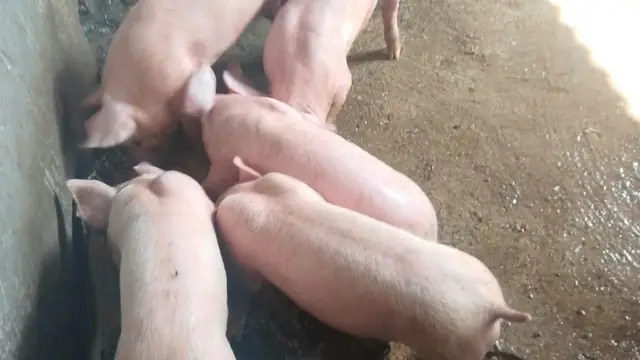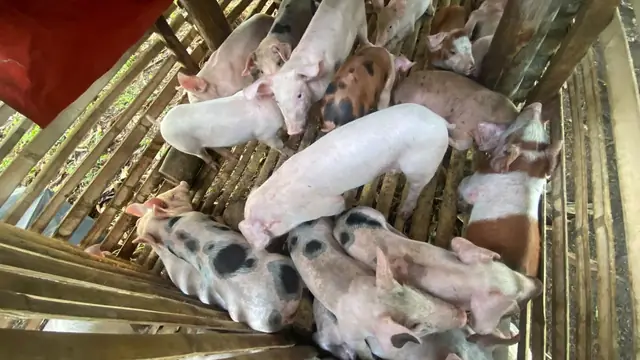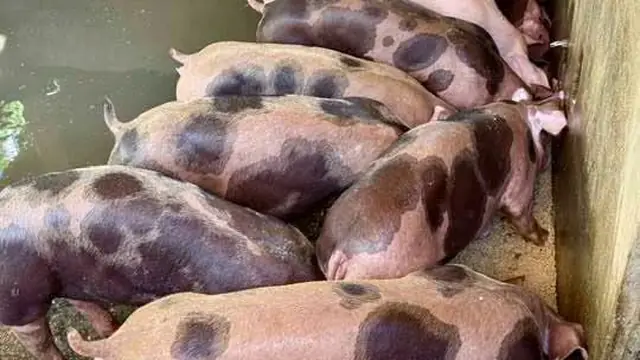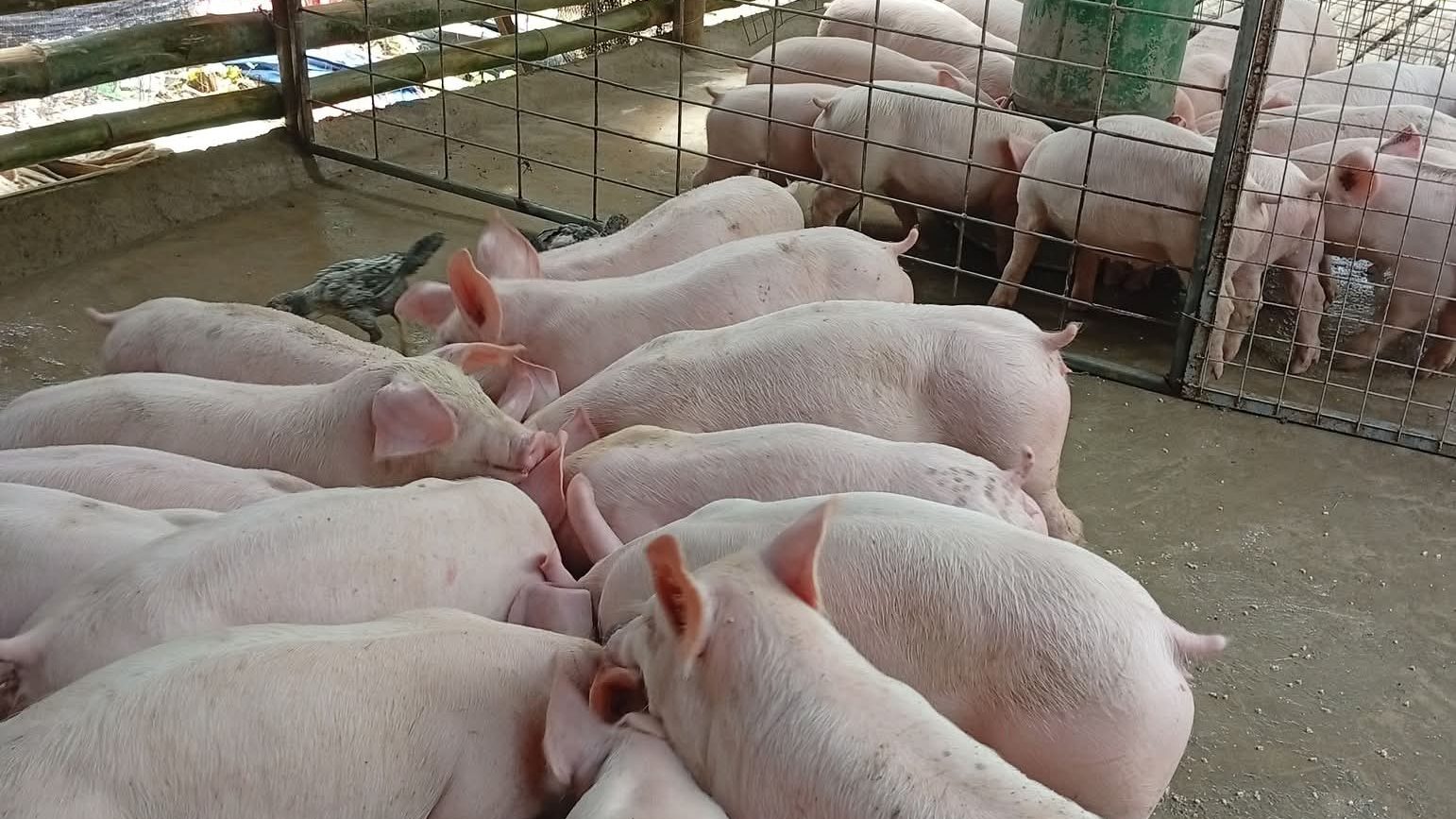
Short version: a 10-head fattening start from abroad costs roughly ₱130,000-₱180,000 (about $2,100-$2,950) in 2026 including a basic pen; a 10-sow breeder build is a different scale entirely at ₱600,000-₱1,100,000 ($9,700-$17,800). But the number you ask for is the wrong question. From overseas, how you release the money matters more than how much it is.
The fattening budget (the realistic OFW starting point)
Most OFWs should start here, not with sows. A fattening batch is short (about five months), the capital recycles, and one bad cycle is survivable. Here is the full 2026 build, separated into the one-time setup and the per-cycle working capital.
| Item | One-time (₱) | Per cycle (₱) | Notes |
|---|---|---|---|
| Simple 10-head pen (concrete + steel) | 40,000–80,000 | — | Less if family land + some labour is free |
| Water line, drinker, feeders | 6,000–12,000 | — | Size it against the daily water figures |
| Verification gear (scale + 4G camera) | 5,000–8,000 | — | The cheapest line with the highest return |
| 10 crossbred weaners | — | 35,000–45,000 | ₱3,500–₱4,500 each, 2026 |
| Feed to market weight | — | 60,000–75,000 | The biggest single cost, about 60% of the cycle cash |
| Meds, iron, dewormer, vitamins | — | 3,000–6,000 | Non-negotiable, see how to deworm pigs |
| Total | ~₱51k–₱100k | ~₱98k–₱126k | Setup is once; the per-cycle money largely returns at sale |
So the first transfer is the big one (setup plus cycle one), roughly ₱150,000-₱180,000. After that, you are mostly recycling ₱98,000-₱126,000 of working capital plus whatever the batch clears.
Be careful with that last word. Ten pigs at 95 kg, sold at the ₱185/kg where the industry group SINAG put the average in May 2026 (their range was ₱180-₱190; eFeedLink trade quotes ran ₱183-₱193), grosses about ₱176,000. Set that against ₱98,000-₱126,000 of cycle cash and it looks like ₱50,000-₱78,000 in your pocket. It is not. The table counts weaners, feed and meds. It does not count the labour your family is putting in, the pig you lose (one dead finisher is ₱17,000 gone), or the pen wearing out. Add those back and you land near the ₱180/kg cost of production that SINAG and NatFed reached independently, which is another way of saying the average farm right now is selling at about what it spent.
So do not build the budget on the ₱210/kg DA minimum farmgate price. It was set in November 2025 and the national average has never once reached it. Unless you are selling in the Cordillera, which cleared ₱210 in April, May and June 2026, nobody is paying it. It is a target the DA cannot enforce, not a floor anyone is obliged to pay you. Look up the province your relative actually sells in before you accept any projection: backyard farmgate by province is free, and in June 2026 it ran from roughly ₱120 a kilo at the bottom to roughly ₱290 at the top. Plan the batch at SINAG's ₱185, treat anything above that as luck, and read the full ROI argument in is a piggery a good investment.
Free Tool
Break-Even Price Calculator
The selling price you must hit so a sent-from-abroad batch does not lose money.
The 10-sow breeder budget (only if you are serious)
A breeder herd is not a bigger fattening pen. It is a different business with farrowing housing, crates, a longer cash-flow gap before the first pigs sell, and far more that can go wrong while you are not there.
| Block | 2026 cost (₱) | Approx $ at ₱61.6 |
|---|---|---|
| Breeder + farrowing housing, crates | 250,000–450,000 | $4,050–$7,300 |
| 10 gilts + 1 boar (or AI program) | 120,000–220,000 | $1,950–$3,570 |
| Feed + meds buffer to first sales (~6-8 mo) | 180,000–320,000 | $2,920–$5,190 |
| Verification + biosecurity setup | 20,000–40,000 | $325–$650 |
| Contingency | 50,000–80,000 | $810–$1,300 |
| Total | ₱620k–₱1.11M | ~$10k–$18k |
Be honest with yourself before committing this. A breeder herd run passively from abroad is the highest-stress, highest-loss version of this whole thing. Most OFWs are better off proving the system on two fattening cycles first, then scaling.
Free Tool
Pig Farm Readiness Wizard
An honest go / start-small / wait verdict before you commit breeder money.
Why tranches, not a lump sum
This is the part that separates this guide from every "magkano puhunan" list, including our own capital-tiers breakdown. Those tell you the total. They do not tell you that an absentee owner who wires the full amount on day one has thrown away the only control they have.
Release the money against things you can verify, roughly:
- Tranche 1 — pen + gear (≈35%). Pays for materials and the scale and camera. Released against photos of delivered materials, not a promise. The verification gear goes in first, before any animals, on purpose.
- Tranche 2 — stock + cycle-one feed (≈45%). Released only after you have seen the finished pen on camera. Now the weaners and first feed.
- Tranche 3 — mid-cycle feed top-up (≈15%). Against a weigh-in on the scale you shipped. Numbers, not "okay ra ang baboy."
- Contingency (≈5%) — held by you, sent only on a named problem. Not pre-positioned. The moment it sits in someone else's account it is spent.
A weak peso helps the math but not the discipline. At about ₱61.6 to the dollar in May 2026 — the peso near a record low — your dollars stretch further than two years ago, so it is tempting to send it all and "lock in the rate." Don't. Stagger the larger transfers across the build timeline and accept small rate noise as the price of control. Per BSP, Filipinos sent home a record $35.63 billion in 2025; an enormous share of it funds projects exactly like this, and an enormous share of that leaks for exactly this reason.
The contingency nobody budgets
The build budgets above are for things going to plan. Things do not go to plan. An ASF scare in the next barangay, a batch that scours, a feed-price jump, a typhoon on the roof — these are not edge cases over a few years, they are the base case. Keep ₱30,000-₱50,000 outside the build money and in your own account abroad, released only against a specific, named problem. Size that reserve against a real price, not an optimistic one. PSA's monthly farmgate series is the number your batch will actually be sold into, and it has fallen in four straight quarters. The free backstop worth setting up before you ever need it is PCIC swine mortality cover, which costs an RSBSA-listed backyard raiser nothing.
What protects the capital once it lands
The scale and camera in the budget are not optional gear, they are the enforcement mechanism for everything above. Without them, the tranche schedule has nothing to verify against and the budget is fiction.
Turns tranche 3 from a guess into a weigh-in. Sale weights become a number, not an estimate from the person being paid on them. What it replaces is in estimating pig weight without a scale.
Lets you release tranche 2 against a pen you have actually seen finished, and watch the build instead of hearing about it. Works through brownouts with no barn WiFi.
Bisaya / Cebuano
Pila ang puhunan sa baboyan gikan sa abroad?
Mubo nga tubag: para sa 10 ka baboy nga pa-tambok, mga ₱130,000 hangtod ₱180,000 (mga $2,100-$2,950) apil na ang gamay nga tangkal. Para sa 10 ka anay nga pang-anak, lahi na kaayo, mga ₱600,000 hangtod ₱1,100,000.
Ang pinaka-importante nga butang: ayaw ipadala ang tanan nga kwarta sa usa lang ka higayon.
- Tranche 1: para sa tangkal, scale, ug camera. Ipadala kung naa nay litrato sa materyales.
- Tranche 2: para sa baboy ug feed. Ipadala lang kung nakita na nimo sa camera nga humana ang tangkal.
- Tranche 3: dugang feed sa tunga sa cycle. Ipadala base sa timbang sa scale, dili sa "okay ra ang baboy."
- Contingency: ₱30,000 hangtod ₱50,000, ihawid sa imong account sa abroad. Ipadala lang kung naay tinuod nga problema.
Kung ipadala tanan dayon, wala nay rason ang naa sa pinas nga sundon ang plano. Ang kwarta nga wala pa napadala mao ra ang imong kontrol.
Bottom line
The headline is ₱130,000-₱180,000 for a fattening start, far more for a breeder herd. But the number that decides whether you keep it is the release schedule, not the total. Send it in tranches against things a scale and a camera let you verify, hold the contingency yourself, and start with fattening before you ever build for sows. Run the build cost on your own province's prices with the calculators above, then read vetting and managing a caretaker from abroad and the OFW due-diligence checklist before money moves. If you are borrowing the capital, compare it against the OWWA EDLP loan route.
Sources
- BSP: Overseas Filipino Cash Remittances — record $35.63B in 2025; 2026 monthly data
- BSP: Philippine Peso per US Dollar Exchange Rate — ~₱61.6/$1, May 2026
- DA minimum farmgate price: ₱210/kg liveweight — set 4 November 2025; never reached in any month or region since
- Philippine Statistics Authority: farmgate hog prices — June 2026 national average ₱171.76/kg liveweight (Q2 2026 mean ₱172.44)
- SINAG industry estimates, May 2026 — average farmgate ₱180-₱190/kg against a cost of production near ₱180/kg
- PCIC: crop and livestock insurance — free pig insurance backstop