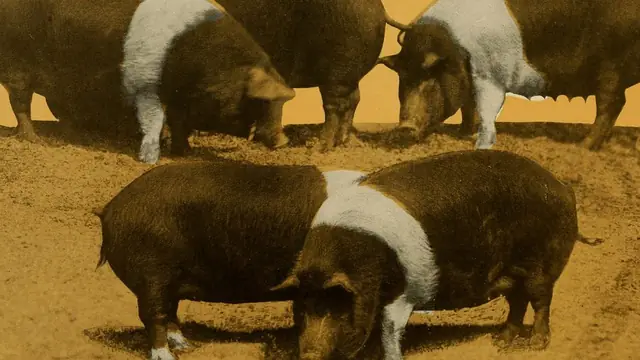
For about 95% of Philippine pig farms, Duroc is the right terminal sire and Pietrain is not. Duroc handles tropical heat, carries no stress gene, and gives the marbled pork that lechon and palengke buyers pay for. Pietrain only earns back its cost with a lean-spec processor contract and serious cooling.
Take two pigs at the same liveweight into a Philippine slaughterhouse. The Pietrain comes out leaner: lower backfat, a higher lean percentage, a slightly higher dressing yield. The Duroc comes out marbled, with more intramuscular fat, richer color, and less drip loss. Same animal weight, two different products. The whole decision is just one question: who is buying?
If it is a lean-pork processor making hot dogs and sausages, Pietrain wins. If it is a lechonero, a palengke vendor, or a family cooking sinigang, Duroc wins, and by a wider margin. Most Filipino farms still get this match-up backwards. Here is how to get it right, with the stress-gene math nobody talks about.
Free Tool
Pig Profit Simulator
Run the profit simulator with the actual price your processor or wet-market buyer pays. The right terminal sire depends entirely on the buyer. At the ₱172.44/kg official farmgate of Q2 2026, the wrong sire loses heavily and even the right one sells below its own cost unless a contract is behind it.
At-a-Glance Comparison
| Trait | Pietrain | Duroc |
|---|---|---|
| Origin | Pietrain village, Belgium | United States |
| Color | White with black spots | Red/auburn |
| Ears | Erect | Slightly drooping |
| Muscling | Very heavy (blocky, double-muscled look) | Heavy |
| Carcass leanness | Leaner (lower backfat) | Leaner than native, fatter than Pietrain |
| Lean / dressing % | ~1-2 points higher (controlled trial) | Baseline commercial |
| Intramuscular fat / marbling | Low | High (better marbling, color) |
| Drip loss / PSE risk | Higher (RYR1 lines) | Lower |
| Halothane (RYR1) gene | Often present in pure lines (PSS risk) | Absent (stress-negative) |
| Heat tolerance | Poor | Good (tropical-adapted) |
| Progeny survival | Lower in trials | Higher (lower piglet mortality) |
| Best market | Lean-pork processors | Lechon, wet market, restaurant |
| Boar price (early 2026, indic.) | ₱40,000-₱60,000 | ₱35,000-₱60,000 |
| AI semen (per dose, indic.) | ₱1,200-₱2,000 (often imported) | ₱600-₱1,200 (locally produced) |
| PH availability | Scarce, mostly imported semen | Widely available |
The breeds sit near opposite ends of the carcass spectrum: Pietrain leans toward lean yield, Duroc toward meat quality and marbling. The size of that gap is smaller than most spec sheets claim, though. In a controlled Duroc-vs-Pietrain terminal-sire trial (Journal of Animal Science, 2003), Pietrain-sired pigs were leaner by only about 2 percentage points of carcass lean and under a point of dressing percentage, while Duroc-sired pigs scored higher on marbling, color, firmness, and had less drip loss. Treat any "78-82% dressing" or "8mm backfat" Pietrain figure on a European catalog as a best-case ceiling, not what a backyard pen in Cebu will produce.
Where Pietrain Wins
1. Extreme Lean Yield
Pietrain genetics push carcass composition toward lean yield. In the controlled Duroc-vs-Pietrain trial, Pietrain-sired pigs ran about 2 points higher in carcass lean (roughly 52.6% vs 50.7%), slightly higher dressing percentage, and clearly lower backfat at the first rib, last lumbar, and 10th rib. European nucleus catalogs quote even leaner figures (high-70s to low-80s dressing, single-digit backfat), but those come from cool-climate, halothane-managed herds. Under PH backyard conditions the realized gap is narrower.
For a processor paying per kg of carcass or per kg of lean, a few extra percentage points of lean still adds up across a batch. Commodity farmgate was ₱172.44/kg on PSA's Q2 2026 figure, the last official quarter, so a lean-spec premium of ₱15-₱30 on top lands you somewhere near ₱187-₱202/kg. At the ₱150/kg the DA said the national price had fallen to in August 2026, the same premium only gets you to ₱165-₱180. On a ~90 kg carcass at that pricing, 2-3 points more lean is worth roughly ₱400-₱600 more per pig before you net out Pietrain's higher feed, semen, and mortality cost. The premium does not look as big once those costs are in.
2. Processor Contracts
Major Filipino lean-pork processors (CDO, Pampanga's Best, Purefoods, Foodsphere) spec lean carcasses for sausage, hot dog, tocino, and longganisa production. The leaner the input pork, the more flexibility in product formulation.
Pietrain (or Pietrain × Duroc cross) is the preferred terminal sire for farms supplying these processors. Contracts pay a premium of ₱15-₱30/kg over wet-market farmgate for spec-compliant lean carcasses.
3. Feed Conversion
In cool-climate trials Pietrain shows tight feed conversion, often a little better than Duroc. Less feed per kg gain means lower cost per pig, but only if the pig keeps eating normally and does not drop intake from heat stress. That "if" is the whole problem in the Philippines.
In cool conditions the FCR edge can save a few hundred pesos per pig in feed. In typical PH lowland heat the advantage shrinks or disappears once heat-related feed-intake drop is factored in. Do not budget for a feed saving you will not actually see in a Visayas or Mindanao backyard pen.
4. Supermarket and Modern Trade
Like Hampshire, Pietrain delivers the lean-cut profile that supermarket fresh pork programs spec. SM, Robinson's, Puregold, and Landers all favor lean-spec carcasses for their fresh pork lines. Pietrain × Duroc crosses are common in supermarket-spec production.
Where Duroc Wins (Almost Everywhere Else)
1. Heat Tolerance: The Philippine Game-Changer
This is the single biggest reason Pietrain is rare in the Philippines.
Heat hits every pig, but it hits Pietrain hardest. A controlled temperate-vs-tropical growing-pig study measured average daily gain falling from 834 to 754 g/day and daily feed intake dropping about 20% just moving to a tropical climate, with rectal and skin temperatures rising. That is the gap in a managed facility. In an open backyard pen with afternoon highs above 32°C, the shortfall against European catalog ADG runs deeper, on the order of 30-50% for the most heat-sensitive lines. Pietrain is one of those lines.
Duroc carries the heat far better. It was developed in the hot, humid American South under conditions closer to Philippine lowlands, and reaction-norm studies treat it as a genuinely heat-tolerant terminal sire, with "robust" sire families holding performance across environments. There is still a heat penalty, just a much smaller one.
For a backyard farm with no active cooling the practical result is simple. Duroc keeps growing through the heat. Pietrain stalls. A lean-yield edge means nothing if the pig never reaches market weight.
2. Porcine Stress Syndrome (PSS) Risk
This is the part most breed comparisons skip, and for a hot-climate backyard farm it matters more than dressing percentage. Pure Pietrain carries the halothane gene, a mutation in the RYR1 (ryanodine receptor) gene. The Merck Veterinary Manual lists Pietrain, along with Poland China and Landrace, as highly susceptible to porcine stress syndrome, while Large White, Yorkshire, and Hampshire are much less so. The trait is autosomal recessive: a pig has to carry two copies to show full clinical PSS, which is why heterozygous (carrier) animals can look fine until a stress event. Frequency of the positive allele varies by region and supplier, so do not assume a "Pietrain" is clear unless it is genotype-tested NN.
What PSS looks like in practice:
- Muscle tremors and rigidity under stress
- Pale, sweaty appearance
- Sudden collapse, then death (Merck notes death can follow within 20 minutes of a strong trigger)
- Pale, soft, exudative (PSE) meat in survivors, which processors reject and dock
Triggers are exactly the things that happen on a Philippine backyard farm: heat, transport in an open jeep at noon, fighting at mixing, vaccination handling, rough loading. Halothane anesthesia is the classic trigger the gene is named for, but heat and transport are what actually kill pigs here.
Halothane-negative (NN) Pietrain lines have been selected over decades and remove the PSS risk, but they cost more and give back some leanness. The cheaper Pietrain genetics circulating informally are the ones most likely to still carry it. If you cannot verify NN status, assume the risk is there.
3. Lechon and Traditional Markets
For lechon, wet-market liempo, and slow-cooked Filipino dishes, Pietrain is the wrong breed. Lean carcass, low intramuscular fat, less subcutaneous fat to render under the skin. The result:
- Dry lechon with weak crackling
- Tough liempo with little marbling
- Paler meat color buyers read as "low quality"
- Flat flavor in sinigang, adobo, and sisig where fat carries the taste
Sold at a palengke, a Pietrain-sired pig usually fetches less per kg than a Duroc-sired one for exactly these reasons. Pietrain only earns its keep at processor pricing. At a Filipino wet market it is a discount, not a premium.
There is one more honest mark against Pietrain as a sire: studies comparing Duroc and Pietrain terminal boars report lower piglet mortality and better meat-quality scores on the Duroc side. Fewer dead piglets per litter is real money, and it favors Duroc before the finisher even reaches the pen.
4. Sourcing and Genetics
Duroc genetics are everywhere in the Philippines: INFARMCO, Topigs, PIC, provincial multipliers, AI services. Replacement boars and semen are competitive in price and easy to source.
Pietrain genetics are scarce. Live boars come from a handful of specialty multipliers, mostly in Central Luzon. AI semen is mostly imported from Europe (₱1,200-₱2,000 per dose). Replacement requires planning and significant cost.
The Compromise: Pietrain × Duroc Terminal Cross
Most Philippine farms wanting some of Pietrain's lean-yield advantage without the full heat and stress risk use Pietrain × Duroc terminal sires.
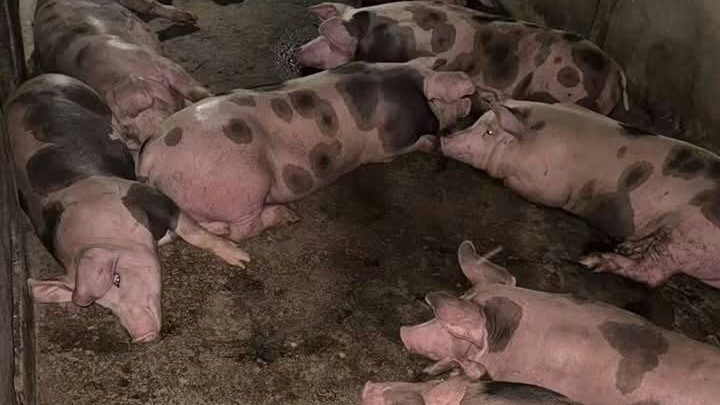
The pattern:
- F1 sow (Landrace × Large White) × Pietrain boar × Duroc boar = "Four-way cross" or rotational system
- More common: F1 sow × Pietrain × Duroc terminal cross boar = 25% Pietrain, 25% Duroc, 50% F1 dam line
This cross provides:
- Moderate lean-yield improvement (3-5 kg more lean meat per pig vs pure Duroc)
- Better heat tolerance than pure Pietrain (Duroc influence)
- Reduced PSS risk (heterozygous halothane gene status if applicable)
- Better market flexibility (can sell to processor or commodity buyers)
For farms supplying lean-spec processors but still wanting flexibility, Pietrain × Duroc is the standard compromise.
When Pietrain Pays Back
Choose Pietrain (or Pietrain × Duroc) as your terminal sire if:
- You have a confirmed processor contract paying lean-spec premium (₱15-₱30/kg above commodity)
- Your housing has tunnel ventilation or strong active cooling
- You manage stress carefully (calm handling, no rough transport, no fighting)
- You can source halothane-negative Pietrain genetics (more expensive but safer)
- Your operation is medium-to-large commercial scale (50+ sows)
- You're in Central Luzon with access to specialty AI services
This describes maybe 2-3% of Filipino pig farms.
When Duroc Is the Right Call (Almost Everywhere)
Choose Duroc as your terminal sire if:
- You sell to wet markets, traders, lechoneros, or local consumers
- Your housing has minimal active cooling (typical backyard setup)
- You're a first-time pig farmer
- You want maximum sourcing flexibility (boars, semen, replacement)
- You're running a three-way cross commercial program
- You want to avoid PSS-related mortality risk
- You're anywhere outside Central Luzon
This describes 95%+ of Filipino pig farms.
A Numbers Comparison: Same Farm, Two Sires
Run identical 10-pig batches with Pietrain-sired vs Duroc-sired finishers, both raised in a backyard with minimal cooling. Feed is priced at ₱36.70/kg, the midpoint of the ₱34.90-₱38.20 premium grower/finisher band as of July 2026. Farmgate is ₱172.44/kg, PSA's national average for Q2 2026 and the last official quarter (July to September is not yet published). The Pietrain batch is docked about ₱12 for a lean carcass the palengke does not want, to ₱160. Below each table is the same batch at the ₱150/kg the DA said the national price had fallen to in August 2026 (Manila Times, 28 September 2026). Do not run these numbers at ₱210 or ₱220. Pigs have not sold there nationally since mid-2025.
Pietrain-sired finishers (no cooling, sold to wet market):
| Item | Amount (PHP) |
|---|---|
| 10 Pietrain × F1 weaners @ ₱4,500 | ₱45,000 |
| Feed (heat-stress reduces growth; 320 kg/pig avg @ ₱36.70/kg) | ₱117,440 |
| Vaccines + vet (higher mortality from PSS) | ₱5,500 |
| Misc | ₱2,500 |
| Total cost (after 2 PSS mortalities) | ₱170,440 |
| Sale: 8 pigs × 92 kg × ₱160/kg (docked from ₱172.44) | ₱117,760 |
| Net loss | −₱52,680 |
| At DA's August ₱150, docked to ₱138: sale ₱101,568 | −₱68,872 |
Duroc-sired finishers (no cooling, sold to wet market):
| Item | Amount (PHP) |
|---|---|
| 10 Duroc × F1 weaners @ ₱4,000 | ₱40,000 |
| Feed (280 kg/pig avg @ ₱36.70/kg) | ₱102,760 |
| Vaccines + vet | ₱5,000 |
| Misc | ₱2,500 |
| Total cost (1 normal mortality) | ₱150,260 |
| Sale: 9 pigs × 92 kg × ₱172.44/kg | ₱142,780 |
| Net loss | −₱7,480 |
| At DA's August ₱150: sale ₱124,200 | −₱26,060 |
Same farm, same pens, about ₱45,000 difference in outcome. But look at what the "winning" batch actually does: it loses ₱7,480 across nine pigs, about ₱830 a head. That batch cost ₱181/kg of liveweight to produce and sold at ₱172.44. At the DA's August ₱150 it loses ₱26,060. That is not a Duroc problem. It is the market. Producer groups put cost of production at ₱180-₱190/kg in October 2026, and farmgate is below it, so the average farm is selling under its own cost. The ₱210/kg agreed in November 2025 is an industry-agreed, DA-backed target that nobody can enforce. The national average has not reached it since it was set; four regions have, in a few months (Cordillera 5, BARMM 2, Central Visayas 2, NCR 1). Do not build a budget on it.
PSA surveys two populations rather than one, and for this particular decision the split is the point: the commercial establishment series is roughly what a contracted farm sells into, and the backyard household series is what a wet-market seller sells into. Both run monthly back to 2010 and neither is ever averaged into the other here. The feed line in both tables above comes from one dated retailer listing, kept as a single honest row rather than dressed up as a national price, because nobody publishes a national price.
The Pietrain batch, meanwhile, bleeds: heat-stunted growth burns more feed for less gain, two PSS mortalities, and a price dock for lean carcasses at the palengke. Pietrain cannot carry Philippine tropical heat without serious cooling, and even with cooling it only makes sense behind a processor contract paying a lean-spec premium. These are illustrative scenarios, not one farm's books; plug your own weaner cost, feed price, and buyer price into the simulator below.
Same farm, Pietrain × Duroc cross, with processor contract:
| Item | Amount (PHP) |
|---|---|
| 10 Pietrain × Duroc × F1 weaners @ ₱4,200 | ₱42,000 |
| Feed (300 kg/pig avg @ ₱36.70/kg) | ₱110,100 |
| Vaccines + vet | ₱5,000 |
| Misc | ₱2,500 |
| Total cost (1 normal mortality) | ₱159,600 |
| Sale: 9 pigs × 95 kg × ₱200/kg processor (₱172.44 + ~₱28 lean premium) | ₱171,000 |
| Net profit | ₱11,400 |
| Same premium on DA's August ₱150 (₱178): sale ₱152,190 | −₱7,410 |
With a processor contract paying the lean-spec premium on top of PSA's Q2 price, the Pietrain × Duroc cross clears about ₱11,400, the only one of the three batches in the black, against a ₱7,480 loss for plain Duroc at the wet market and a ₱52,680 loss for pure Pietrain at the palengke. That gap is the contract, not the genetics. The ₱200/kg is a contracted price, not something you can go get at the palengke. And if the base drops to the DA's August ₱150, even the contracted batch loses about ₱7,400.
Take the contract away and that ₱11,400 collapses back toward the pure-Pietrain loss line. The math only works with the buyer locked in. Without it, Pietrain is a money pit. Sus, that is the whole article in one sentence.
Bisaya / Cebuano
Para sa mga mag-uuma
Pietrain ba o Duroc?
Para sa 95% sa Filipino pig farmers, Duroc gyud. Walay debate.
Ngano dili angay ang Pietrain sa kasagaran nga Filipino farm:
-
Sobra ka init-sensitive. Sa 32°C nga init (komon sa Pilipinas), ang Pietrain mo-drop og 30-50% sa feed intake. Walay tubo ang baboy. Duroc mo-drop ra og 5-10%.
-
Halothane gene = porcine stress syndrome. Bisan sa gamay nga stress (init, transport, away, vaccine), pwede mamatay ang Pietrain o mahimong PSE meat nga i-reject sa processor. Komon kining problema sa backyard nga conditions.
-
Lechon ug palengke, Pietrain pildi. Ang Pietrain pork lean kaayo, way marbling, way crackling, way lami. Mas mubo pa ang presyo kay sa Duroc sa wet market.
-
Mahal ang sourcing. Imported semen mga ₱1,200-₱2,000 kada dose. Boars ₱40,000-₱60,000. Limited ang suppliers.
Kanus-a maayo ang Pietrain:
- Naa kay confirmed processor contract (CDO, Pampanga's Best, Purefoods) nga mobayad og lean-spec premium
- Naa kay tunnel ventilation o strong cooling system
- Andam kang magbantay sa stress (calm handling, no rough transport)
- Naa kay budget para sa halothane-negative Pietrain lines (mas mahal pero mas safe)
- Dako nga operation (50+ sows)
- Sa Central Luzon nga naa AI services para sa Pietrain semen
Mga 2-3% lang sa Filipino pig farms ang fit para sa Pietrain.
Ang practical compromise: Pietrain × Duroc cross.
Mga farms nga gustong makakuha og gamay sa Pietrain nga lean advantage pero dili tanan ang risk:
- F1 sow × Pietrain × Duroc cross sire = 25% Pietrain, 25% Duroc, 50% F1 maternal
- Mas maayong heat tolerance kay sa pure Pietrain (Duroc influence)
- Mas ubos ang PSS risk
- Pwede ibaligya sa processor o sa wet market (mas flexible)
Mao kini ang kasagaran nga gigamit sa medium-scale farms sa Central Luzon nga naa processor contracts.
Ang yano nga balaod:
- Sa wet market o lechon: Duroc gyud
- Sa lean-pork processor contract + maayong cooling: Pietrain × Duroc cross
- Pure Pietrain sa backyard: Ayaw, mawad-an ka og kwarta
Related Reading
- Pietrain Breed Guide: full breed page with halothane and heat-management detail
- Duroc Breed Guide: the commercial-standard terminal sire for Philippine farms
- Duroc vs Hampshire Comparison: the other terminal-sire decision
- Hybrid (Three-Way Cross) Breed Guide: the standard Philippine commercial pig
- Best Pig Breeds for Small Filipino Farms: where Duroc fits in a backyard program
- Contract Growing ng Baboy: when a lean-spec processor contract actually pays
- Profit Simulator and the Break-Even Calculator: run the lean-vs-marbled buyer math on your own numbers
Sources
- Merck Veterinary Manual: Malignant Hyperthermia in Animals (porcine stress syndrome, RYR1, halothane, susceptible breeds, PSE, sudden death)
- Evaluation of Duroc- vs. Pietrain-sired pigs for carcass and meat quality measures, Journal of Animal Science 2003 (lean %, dressing %, backfat, marbling, drip loss)
- Interactions between sire family and production environment (temperate vs. tropical) on performance and thermoregulation in growing pigs, PMC (ADG 834 vs 754 g/day, feed-intake and body-temperature shifts)
- Duroc boars have lower progeny mortality and lower fertility than Pietrain boars, Translational Animal Science / PMC
- Open Sanctuary Project: Porcine Stress Syndrome (RYR1 mutation, halothane, Pietrain frequency, PSE)
- Baboy PH: Crossbreed Pig Price Philippines 2026 (Duroc-sired weaner and finisher price reference)
- Baboy PH: State of the Industry (farmgate, cost of production, and feed price tracking used in the batch math above)
Performance and price figures are indicative ranges for Philippine/tropical conditions as of July 2026. Farmgate and feed prices move; the batch math above uses PSA's Q2 2026 national farmgate of ₱172.44/kg (with the DA's August 2026 ₱150/kg, trade-reported, as the second line) and ₱36.70/kg feed. Catalog Pietrain leanness figures come from cool-climate, halothane-managed herds; backyard PH results run well below them. Confirm current semen and weaner prices with your local AI service or multiplier.